
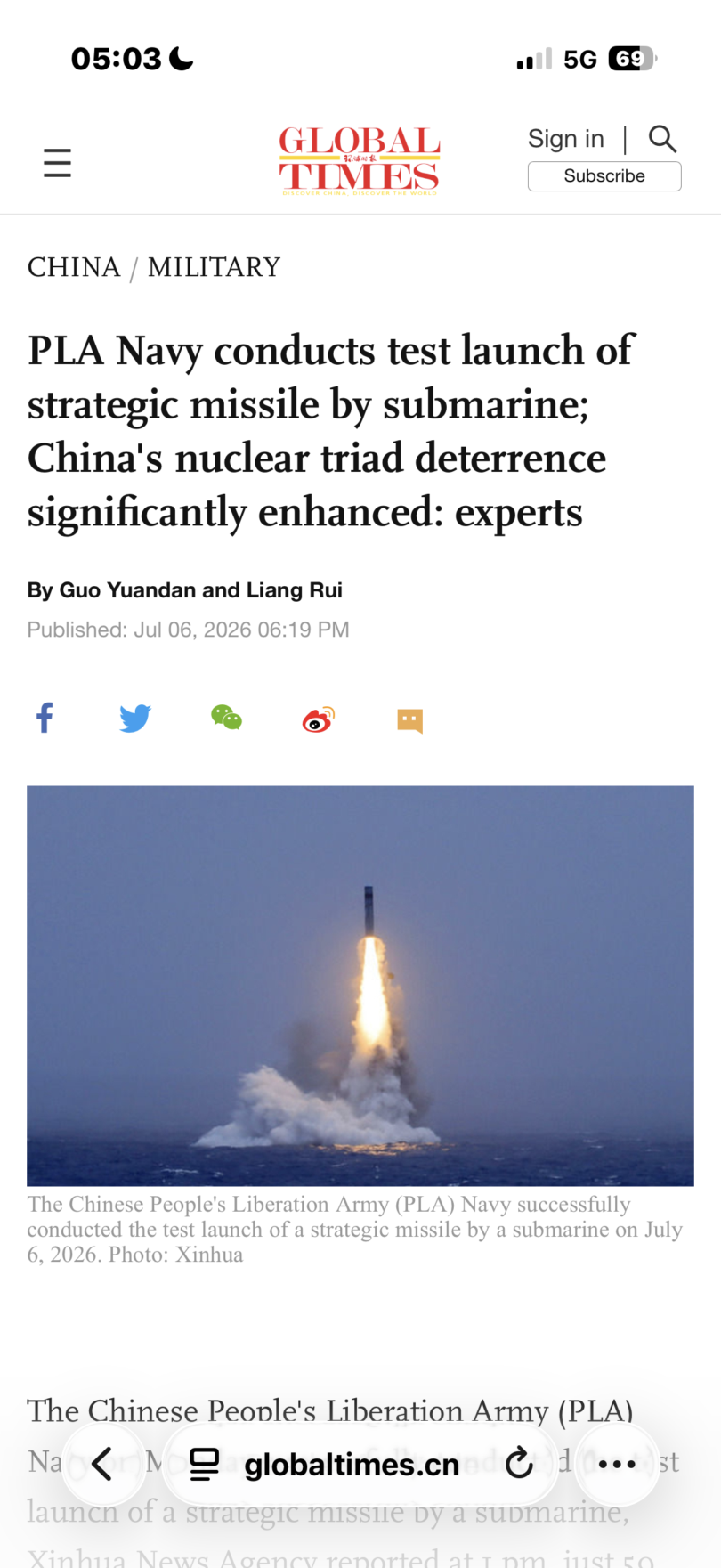

TRANQUIL WATERS, LETHAL REACH: Beijing’s Submarine Missile Test is a Wake-Up Call for the Pacific
WORLD NEWS / POSTED IN SYDNEY 07 JULY, 2026/Generated with Gemini AI using Global Times news article/Edited by A.Ritenis
The tranquil waters of the Pacific Ocean have just been shattered by a chilling demonstration of China’s unchecked nuclear ambition.
On Monday, July 6, 2026, at precisely 12:01 pm, a Chinese strategic nuclear submarine breached operational secrecy to launch a long-range ballistic missile directly into the heart of the Pacific. While state media mouthpiece Xinhua quickly spun the event as a flawless, “routine” training exercise, the geopolitical truth is much darker: this is an alarming escalation designed to showcase China’s terrifying capacity to strike deep into the Western hemisphere with total impunity.
Make no mistake: this is not standard defense preparation. This is a brazen rehearsal for global thermonuclear war, executed from the deep ocean where detection is nearly impossible.
The Second Strike Nightmare
What makes this specific test so profoundly dangerous is the platform. Military experts widely believe the weapon fired was the Julang (JL) submarine-launched strategic ballistic missile—a colossal intercontinental weapon boasting a range well exceeding 8,000 kilometers.
Within the calculus of global nuclear warfare, the “Nuclear Triad” relies on three delivery methods: land-based silos, strategic bombers, and nuclear submarines. As Chinese military analysts themselves boast, the submarine is the ultimate doomsday card. Land bases can be monitored and preemptively targeted; bombers can be shot down. But a nuclear-powered submarine lurking silently in the deep trenches of the Pacific is virtually invisible.
Even if an adversary managed to disable China’s land-based defenses, these underwater ghosts remain entirely functional, armed to the teeth, and positioned close enough to foreign coastlines to rain down nuclear fire within minutes. By successfully testing a shallow, realistic, long-range trajectory into international waters, Beijing has proven that its sea-based nuclear deterrent is fully operational, lethal, and pointed outward.
A Pattern of Creeping Intimidation
This is the second time in less than two years that the People’s Liberation Army (PLA) has weaponized the high seas of the Pacific for long-range ballistic testing. Following the PLA Rocket Force’s ICBM launch in September 2024, this submarine test signals a dangerous pattern of normalizing nuclear muscle-flexing in a region that has long championed peace.
But the threat hits even closer to home. This nuclear display comes just a year after the terrifying February 2025 Chinese naval exercises in the Tasman Sea, where a PLA Navy task group pushed right to the edge of Australia’s exclusive economic zone near Tasmania.
During those unannounced live-fire drills, dozens of commercial flights across Australia and New Zealand were forced into emergency mid-air diversions.
Beijing has effectively shown that it can project hard power directly into Australia’s maritime backyard—and now, it has paired that aggressive naval presence with underwater intercontinental nuclear capability.
The timing of this week’s launch is far from an accident. The missile cleaved through the atmosphere mere hours after Australia and Fiji signed a historic mutual defense treaty in a bid to counter Beijing’s aggressive regional overreach. The message sent by the PLA was swift and unambiguous: We dominate this ocean, and your security alliances cannot protect you from our reach.
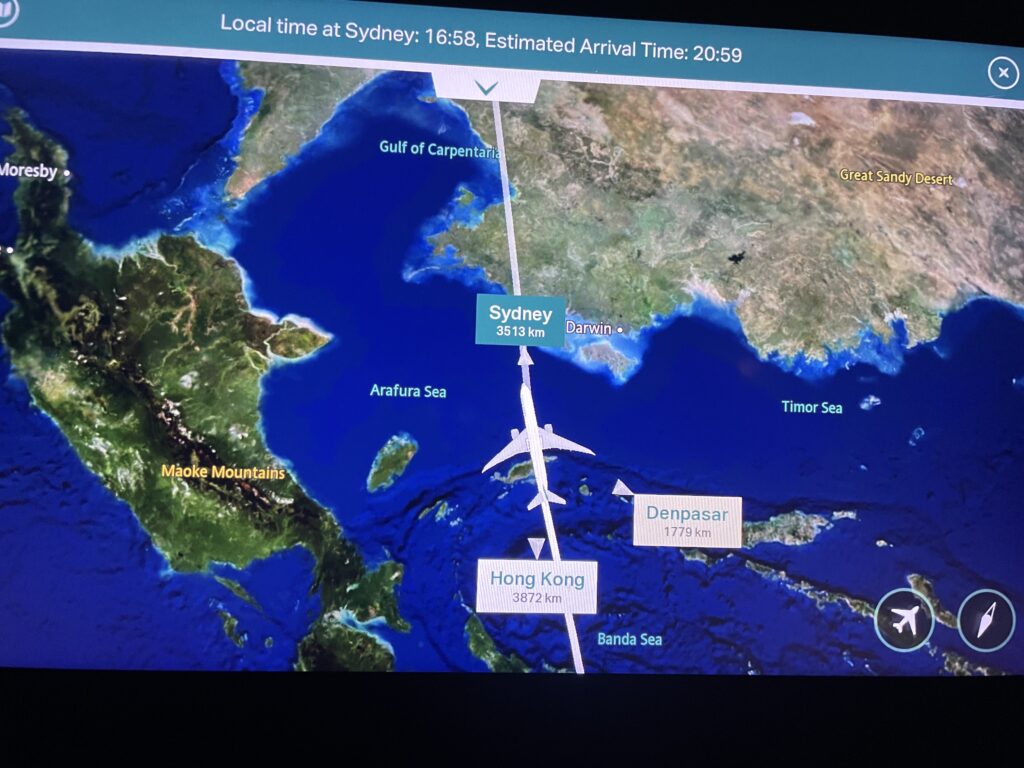
How vulnerable are we? -Flight approaches to Darwin,Australia from the North -Photo Credit A.Ritenis
The Enemy Within: The Chokehold on Darwin
While the skies and deep seas face external encirclement, Australia is simultaneously grappling with a critical, self-inflicted strategic vulnerability on its own shores. Despite a bipartisan vow during the federal election to reclaim the Port of Darwin—the vital northern gateway to Australia’s defense forces—Canberra is finding itself legally and geopolitically paralyzed.
The Chinese private entity Landbridge Group, which holds a controversial 99-year lease on the strategic port, is fiercely resisting eviction. Instead of yielding to Australia’s national security concerns, Landbridge has launched an unprecedented legal war, dragging Australia before the World Bank’s International Centre for Settlement of Investor Disputes (ICSID). Backed by the economic and diplomatic weight of Beijing, the company is claiming that a forced termination of the lease violates free-trade agreements.
This creates a terrifying reality: while Chinese nuclear-capable forces conduct live-fire drills in Australia’s surrounding oceans, a Beijing-linked conglomerate continues to anchor its operations inside Australia’s most critical northern military and commercial harbor.
Regional democratic powers have reacted with justifiable alarm to the latest test:
-
Australia swiftly condemned the launch as “destabilising” to the region, highlighting a deeply concerning lack of transparency regarding China’s rapid military build-up.
-
New Zealand expressed grave disappointment, noting with fury that the missile was fired directly into the South Pacific Nuclear Free Zone with only a few hours of advance warning.
-
Japan and Taiwan forcefully criticized the move, calling it a blatant attempt to intimidate the international community and a direct threat to regional stability.
According to recent intelligence reports, Beijing is pacing toward a staggering stockpile of over 1,000 nuclear warheads by 2030. The global non-proliferation order is not just fracturing; it is actively being dismantled under the waves of the Pacific.
The international community can no longer afford to brush these “routine trainings” aside as posturing. When an autocracy successfully marries invisible nuclear submarines with intercontinental-range ballistic missiles—while simultaneously tightening a commercial grip on foreign strategic ports—”peace” becomes nothing more than an illusion maintained at the whim of the bits and pieces of a fractured alliance. The Pacific is growing increasingly volatile, and the countdown to a highly militarized, dangerous new reality has already begun.