
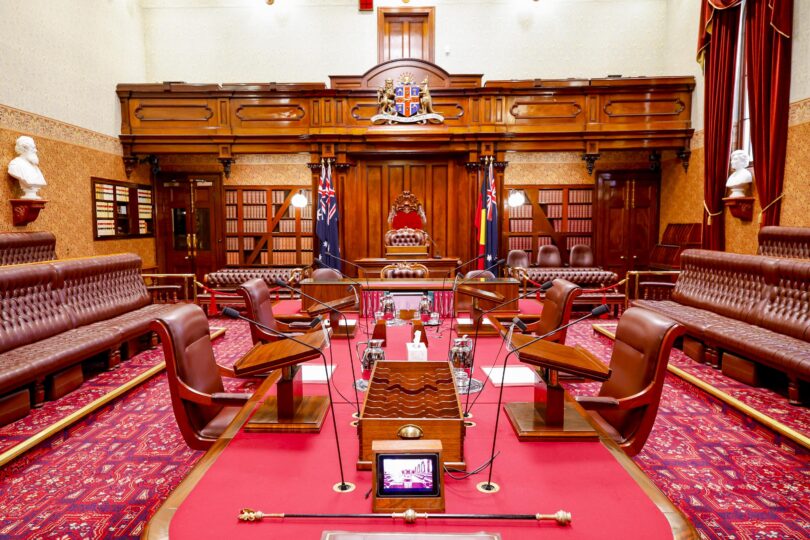

Procedural Games Paralysing government —How the Upper House is Failing NSW
STATE POLITICS /News Aggregator /Report generated with the assistance of Gemini AI /Fact checking in the Newsroom
Posted on Tuesday 27 May,2026
The New South Wales Legislative Council is rapidly replacing its reputation as a house of review with something far more damaging: a house of pure obstruction.
At a time when the state is facing a generational housing crisis, soaring cost-of-living pressures, and urgent infrastructure demands, the stalling of critical government business in the Upper House has gone beyond robust democratic debate.
It has crossed into calculated political paralysis.
“Instead of dealing with the pressing bread-and-butter issues that affect everyday citizens, the Legislative Council has increasingly weaponized its procedural powers, descending into endless political sideshows. Major pieces of legislation—including sweeping planning reforms and critical infrastructure pipelines—frequently find themselves trapped in a gridlock of minor-party posturing and opposition delays.”
When procedural gamesmanship takes priority over the basic governance of the state, it isn’t the politicians who suffer the consequences. It’s the families waiting for affordable housing, the commuters waiting for upgraded transport, and the communities waiting for real economic support.
“We Cannot Afford Pettiness” — Premier Chris Minns
Premier Chris Minns has hit back at the ongoing delays, warning that the state’s economic progress is being held hostage by minor-party grandstanding in the Upper House. Speaking on the frustration of getting critical legislation through the chamber, the Premier emphasized that the gridlock has real-world consequences.
“The people of New South Wales didn’t elect a parliament to watch politicians play procedural games with their future,” Premier Minns said.”Every single day that critical legislation gets delayed or blocked in the Legislative Council is a day we aren’t building houses, we aren’t easing the burden on families, and we aren’t delivering the infrastructure this state desperately needs.”We are dealing with major, complex challenges—particularly around housing supply and the transition to cheaper, renewable energy. We are ready to work with everyone, but we cannot afford the kind of political pettiness that treats the state budget and vital reforms as bargaining chips. It’s time for the Upper House to get out of the way and let us govern.”
“Delaying Housing is Defending the Status Quo” — Rose Jackson
The frustration is felt acutely by Housing and Homelessness Minister Rose Jackson, whose portfolio relies heavily on navigating the fragmented legislative landscape to unlock new residential supply. Minister Jackson argued that blocking or slowing down housing initiatives in the current climate is a direct failure of public duty.
“We are in the middle of a full-blown housing emergency, and quite frankly, the obstruction we are seeing is completely unacceptable,” Minister Jackson said.”When you have thousands of people locked out of the rental market or struggling to buy their first home, delaying legislation that streamlines approvals or funds social housing isn’t just a political tactic—it’s a slap in the face to vulnerable people.”Every week a bill is stalled in the Upper House means more delays for tradies on the ground and more stress for families who just want a secure roof over their heads. If you are obstructing these reforms, you are choosing to defend a broken status quo. We need solutions, not more endless committees and political roadblocks.”
The Cost of Inaction
The fundamental purpose of an Upper House is to provide a “sober second thought” to government policy. It is meant to refine legislation, protect minorities, and ensure transparency.However, when review transforms into outright paralysis, the system breaks down. By turning the chamber into a legislative graveyard for vital domestic reforms, the crossbench and the opposition risk alienating a public that has completely run out of patience with political gridlock. If the Legislative Council continues on this path, it won’t just be blocking bills—it will be entirely eroding public trust in the parliamentary process.