

First medicine for pre-symptomatic type 1 diabetes
Media Release by Sanofi ANZ/Posted Wednesday,27 may,2026
Key facts:
– First treatment to delay the clinical stage of type 1 diabetes registered by TGA.
– Approximately 25,000 undiagnosed cases of early-stage type 1 diabetes.
– Government funding decision to be made in July.
Broll and still images available here
Australians living with an early, pre-symptomatic stage of type 1 diabetes can now be treated with the first non-insulin medicine which works to slow the immune system attack that leads to the symptomatic stage of the condition that requires lifelong insulin.1
The Therapeutic Goods Administration (TGA) has registered Tzield® (teplizumab) to delay the onset of Stage 3 type 1 diabetes mellitus (T1D) in adult and paediatric patients aged 8 years and older with Stage 2 type 1 diabetes mellitus. 1 Stage 2 is an early stage of the autoimmune condition where insulin-producing cells are under attack and blood glucose levels have started to be affected, but there are no obvious symptoms associated with type 1 diabetes.5,6
Stage 2 type 1 diabetes can occur months to years before a person starts to feel unwell and requires insulin therapy.5,6 Once insulin is required, the condition has progressed to ‘Stage 3’ or ‘clinical’ type 1 diabetes (historically understood to be the point of disease onset).5,6
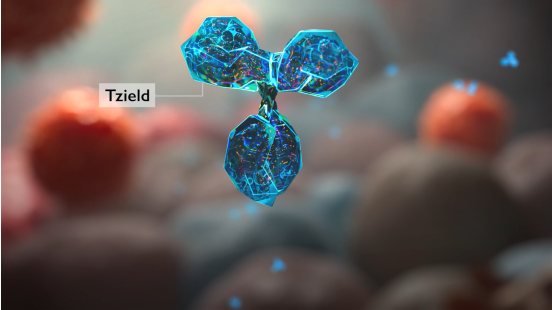
Tzield works by targeting and temporarily modifying the immune cells (known as T cells) which attack insulin-producing cells in the pancreas.1
Professor John Wentworth
Endocrinologist and Senior Clinical Research Fellow, St Vincent’s Institute of Medical Research
“This is an exciting and important development. In recent years, there has been a giant leap forward in scientific understanding of type 1 diabetes, enabling meaningful progress for both its diagnosis and treatment.
“This represents an entirely new approach to the treatment of this condition as it is now possible to detect and treat type 1 diabetes before symptoms present.”
Australia has one of the world’s highest rates of type 1 diabetes.3 More than 145,000 Australians are living with a type 1 diabetes diagnosis, with around 3000 diagnosed every year.7,8
Concerningly, an estimated 25,000 Australians are unknowingly living with the early pre-symptomatic stages of type 1 diabetes.4
Within five years, approximately 75 per cent of people with Stage 2 type 1 diabetes may progress to the clinical stage of the condition, where symptoms and potentially life-threatening complications can occur suddenly and without warning.4,6 Usually at this stage, insulin therapy becomes essential.5
Patients older than 8 years with a confirmed diagnosis of Stage 2 type 1 diabetes can be treated with Tzield.1 The diagnosis process involves a blood test to identify markers that indicate autoimmune activity directed at insulin-producing cells and a blood test for blood glucose levels.1,5,6
Australia is at the forefront of type 1 diabetes early detection and monitoring and is uniquely placed for the introduction of therapies such as Tzield, thanks to the sustained work of Breakthrough T1D, the leading global funder of type 1 diabetes research.
This encompasses funding via the Type 1 Diabetes Clinical Research Network to build a type 1 diabetes screening strategy in Australia and to support world-leading Australian scientists progress screening programs. This includes Type1Screen and the Type 1 Diabetes National Screening Pilot, which will provide a blueprint for national, population-wide screening to identify children with early-stage type 1 diabetes.3-5,9,10
Screening and early detection allow for not only early intervention, but can also provide people with the time, tools and support they need to prepare for lifelong blood glucose management and insulin therapy.3,5
Medical experts and advocates are calling on the Federal Government to introduce population-level screening to identify people with early-stage, pre-symptomatic type 1 diabetes.4,5
Dr Dorota Pawlak
Chief Scientific Officer and Type 1 Diabetes Clinical Research Network Director, Breakthrough T1D
“Tzield is the first new therapy approved for type 1 diabetes in over 100 years. This signals an incredibly exciting turning point for its clinical care. Alongside the potential for widespread type 1 diabetes screening in the future, we can transform treatment for all Australians with the condition.
“This is so important for our community. Despite significant improvements in management, type 1 diabetes is a relentless, 24/7 condition, and every day lived without it matters. After decades of supporting the research needed to advance Tzield, Breakthrough T1D and our community welcome its registration with open arms.”
While Tzield is not currently listed on the Pharmaceutical Benefits Scheme (PBS), a funding submission will be considered by the Pharmaceutical Benefits Advisory Committee in July. For more information, patients can talk to their healthcare professional.
Liz Selby
Country Lead, Sanofi Australia and New Zealand
“With a long legacy in diabetes care and a deep foundation in immunology research and development, this milestone reinforces a key area of focus for Sanofi: to understand and explore ways to modify the earliest immune processes that give rise to type 1 diabetes.
We are pleased that, for the first time, we are able to offer patients and families in Australia a disease-modifying therapy designed to address the underlying immune process of type 1 diabetes. We will continue to work closely with researchers, advocates, clinicians, policymakers and the community to advance science to help those living with type 1 diabetes and their families.”
Tzield is indicated to delay the onset of insulin-dependent (Stage 3) type 1 diabetes in adults and children aged 8 years and older with Stage 2 type diabetes.1
As with all medicines, Tzield may be associated with side-effects. The most frequently reported side-effects include reductions in certain white blood cells and rash. Bacterial and viral infections, including cases of viral reactivation have been reported with Tzield.1
Additional information about Tzield is available in the Consumer Medicine Information.
PBS Information: This product is not listed on the PBS.