
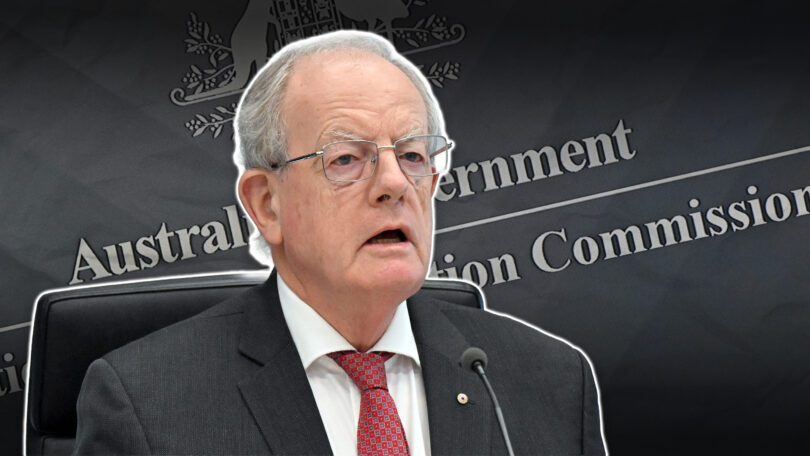

National Anti-Corruption Commissioner Paul Brereton Resigns Amid Personal Controversy
News Room/News story compiled with assistance of Gemini AI /Fact checking in the newsroom
Posted in Sydney 26 May,2026
CANBERRA — Australia’s inaugural National Anti-Corruption Commissioner, Paul Brereton AM RFD SC, has abruptly resigned from his post two years ahead of schedule. His departure follows a turbulent three-year tenure heavily overshadowed by controversies regarding conflicts of interest.
The former NSW Court of Appeal judge and military major general will officially step down on July 6, 2026.
“A Distraction From the Mission”
In a public statement released on Monday afternoon, Mr. Brereton maintained that while he would “continue to resist any suggestion of impropriety,” the persistent scrutiny on his personal standing had become a detriment to the agency.
“The ongoing focus on matters relating to me personally rather than the Commission’s work is drawing attention away from the Commission’s core purpose of strengthening integrity in the Commonwealth public sector,” Brereton said. “I believe that the Commission’s success is paramount, and not due to any single person.”
Attorney-General Michelle Rowland thanked the Commissioner for his service, acknowledging his “invaluable contribution” to building the fledgling agency from the ground up since its launch in July 2023. The federal government has confirmed that a transparent, merit-based selection process will begin immediately to appoint a successor.
Key Controversies Leading to the Resignation
Mr. Brereton’s early exit follows a sequence of highly publicized missteps and internal investigations that eroded political and public trust in his leadership:
-
The Robodebt Conflict: In late 2024, the NACC Inspector found Mr. Brereton had engaged in “officer misconduct” due to apprehended bias. He had failed to fully recuse himself from the decision-making process when determining whether to investigate six individuals referred by the Robodebt Royal Commission, despite holding a close professional relationship with one of them. The NACC ultimately reversed its initial decision not to investigate.
-
ADF Consultancy Probe: More recently, the Inspector launched an investigation into allegations that Mr. Brereton continued to perform paid consultancy work for the Inspector-General of the Australian Defence Force (IGADF) while heading the NACC. This dual arrangement—tied heavily to his previous work investigating alleged Australian war crimes in Afghanistan—drew immense scrutiny over structural conflicts of interest.
A Crossroad for Federal Integrity
The resignation has been widely welcomed by crossbenchers, greens, and transparency advocates who argue that a leadership change is vital for the integrity commission to achieve a necessary “reset.”
Independent MP Helen Haines, a pivotal architect in the establishment of the federal watchdog, emphasized that the appointment of the next commissioner must be intensely scrutinized. “We absolutely need to be very, very clear—and the public needs to see that—conflicts of interest, perceived conflicts of interest, are declared and managed,” Haines stated in Canberra.
Independent Senator David Pocock, who previously labelled Mr. Brereton’s position “untenable,” reiterated calls for broader structural reforms, including lowering the exceptionally high legislative bar required to hold public hearings.
Despite the clouds surrounding his departure, Mr. Brereton defended the NACC’s operational record, highlighting that the agency has reviewed over 92% of more than 7,600 received referrals and currently has 34 active investigations underway involving politicians, public servants, and contractors.
The outgoing Commissioner faces an immediate test of scrutiny on Tuesday evening, where he is scheduled to be grilled by senators at a tense Senate estimates hearing.