
A farm under Sydney; orchids ‘liked’ to death; and sea cucumbers save Groote Eylandt – Science Week is coming
National Science Week
The national festival that reaches more than 3 million people through more than 2,500 events is back from 15 to 23 August.
There will be stories for every round including food, arts and books, future of farming, sport, disabilities, education, and science.
More than 1,300 events and activities have registered already at ScienceWeek.net.au/events.
Look for public and private events in your area or your round. Or check out some of our highlights below, and we have state and territory highlights here.
Early highlights from across the country
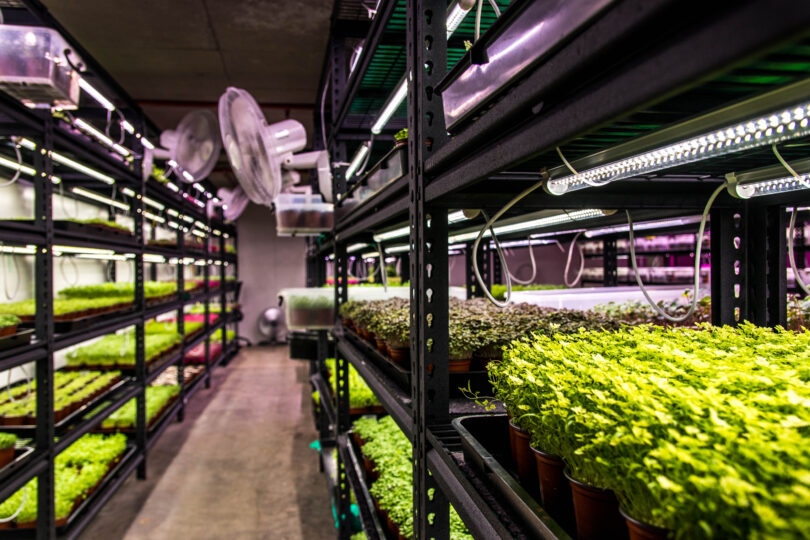
- The hydroponic food farm four levels under Sydney’s CBD.
- Iranian refugee and Trekkie founds space film festival exploring a ‘better future’ ─ Canberra.
- Orchids threatened by social media – liked to death ─ Perth.
- From mining manganese to farming sea cucumbers, First Nations enterprise secures community’s future ─ Groote Eylandt, NT.
- Still life with stem cells: what happens when medical lab gets an artist in residence? ─ Melbourne.
- The best champagne glass and other science surprises in a bottle of bubbly. Melbourne.
- Fear, love and algae blooms: surfing scientists on our relationship with the ocean ─ Eyre Peninsula SA.
- Mushrooms and MDMA: psychedelics reshaping mental health care ─ Hobart.
- Building Australia’s Moon rover and other Queensland innovation stories: meet scientists shaping Brisbane businesses.
- What do cosmic collisions ‘sound’ like and what do these signal reveal about the Universe? Ask an astrophysicist ─ National.
More on these below with direct contact details.
Visit ScienceWeek.net.au/events to find more stories in your area. Or check out our highlights by state/territory: ACT, NSW, NT, QLD, SA, TAS, VIC and WA.
Sydney’s CBD has a secret underground indoor farm, right next to Darling Harbour.
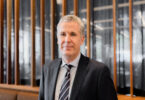
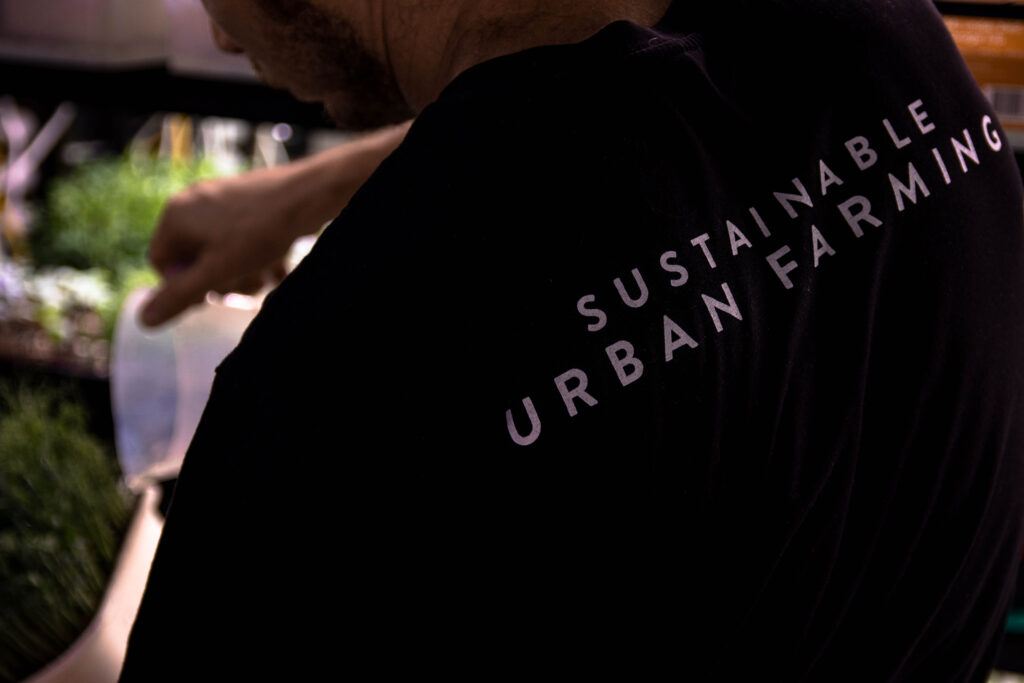
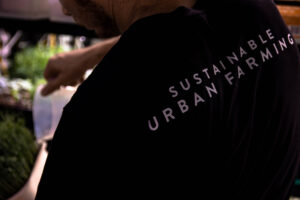
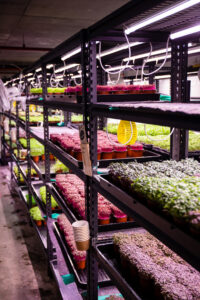
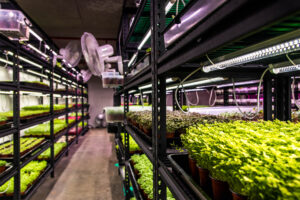
Urban Green Sydney will open the doors to its hidden hydroponic farm in Barangaroo. Set in an underground carpark, it demonstrates how cities can strengthen food security by growing food in small or underused spaces through innovation, smart design, and simple growing systems.
Owner and founder Noah Verin can talk about the use of growing mediums like coconut coir instead of soil, transforming what would otherwise be a waste product, like coconut husk, into a valuable resource for growing plants. It’s a simple example of circular farming in action, where waste is reduced and materials are reused in smarter ways.
Visitors will explore how plants grow, how modern food systems work and how simple hydroponic methods can be used at home. And they can taste a range of the most popular greens.
Schools, offices, community groups and other organisations can also take part in a nationwide microgreens growing experiment by ordering and using Seed to STEM Grow Kits.
Underground farm tours: Monday 17 August to Friday 21 August. Event details: www.scienceweek.net.au/event/
Sydney CBD pop-up: Wednesday 19 August. Event details: www.scienceweek.net.au/event/
Urban Green Sydney owner Noah Verin and client chefs are available for media interviews. Noah is a former chef and studied environmental science while at university.
Iranian refugee and Trekkie founds space film festival exploring a ‘better future’ – Canberra, ACT
Former IT professional-turned-filmmaker Masoud Varjavandi found strength watching Star Trek while growing up in a Baha’i family persecuted in Iran during the 1980s.
Today, he shares stories for a better future through Canberra’s Space Faring Civilisation Film Festival, featuring award-winning sci-fi and documentary shorts.
Masoud says: “This isn’t about escapism. It’s about reminding people that progress, peace and a better future are still within reach.”
Free stop-motion animation workshops will be held in Canberra’s shopping centres in the lead-up to the Space Faring Civilisation (SFC) Film Festival on Sunday 23 August.
The SFC Film Festival’s mission to bring together the next generation of filmmakers and science storytellers, culminating in a full-day event that includes creative workshops, Q&A panel, and screenings of award-winning sci-fi and documentary shorts with a positive perspective on science and space exploration.
Sunday 23 August. Event details: www.scienceweek.net.au/event/
SFC Film Festival director Masoud Varjavandi is available for media interviews. View the 2025 Highlight Reel.
Orchids threatened by social media – liked to death – Kings Park, WA
Social media popularity is threatening some of Australia’s most delicate orchid species, attracting well-meaning nature lovers to sensitive sites in destructive numbers, a recent study revealed.
Study co-author Dr Belinda Davis wants people to help protect these orchids. Based at Kings Park Science, she manages the only collection in WA of orchid seeds, friendly fungi and a living collection of orchids.
She will be joining Dr Magali Wright from Landscape Recovery Foundation, Tasmania for an evening talk about enjoying orchids in the wild while minimising harm, drawing on their personal experiences working with orchids.
Friday 4 September. Event details: www.scienceweek.net.au/event/
Kings Park science communicator Eugenie Au and WA orchid expert Belinda Davis are available for media interviews. Dr Davis can be filmed in the lab and working in the glasshouse with rare orchids in full bloom. She can also talk about the critically endangered Bussell’s spider orchid (Caladnia busselliana) whose seeds won’t germinate without a particular fungi partner. Conservation efforts are bringing it back from the brink.
A future for Groote Eylandt after mining – Alyangula, NT
Groote Eylandt is the largest island in the Gulf of Carpentaria. Its economy relies heavily on manganese mining… which is ending. How do you create a secure future for an island in the middle of nowhere?
Marine biology, Anindilyakwa culture and aquaculture are coming together through an aquaculture enterprise to create jobs and protect the ocean. It’s a project of the Groote Holdings Aboriginal Corporation and the Anindilyakwa community.
Sea cucumber (“trepang” in Anindilyakwa language) is the core product sold to the lucrative Chinese market where it is a culinary delicacy and is used in Chinese medicine. Dried sea cucumber is lightweight, high-value and non-perishable: important for a product that has to be shipped via a 5-day barge ride to Darwin and then exported.
The enterprise puts an ecosystem to work to raise sea cucumbers in a way that cares for Sea Country. Droppings from seaweed-eating rabbitfish provide food for sea cucumbers. The rabbitfish also remove the seaweed scum that blocks the sunlight sea cucumbers need and provide a locally grown food source for the 2,100 people who live across the archipelago. Blacklip oysters help clean the system to the extent that the effluent water from the facility is cleaner than the water that enters it.
The enterprise now produces oysters, fish for local consumption, and edible seaweed, as well as sea cucumber.
Students from local Alyangula, Angurugu and Umbakumba schools will visit the Groote Aqua facility for four days of hands-on marine science, aquaculture, microscopes, water testing and community activities exploring how science and Indigenous knowledge can build a sustainable blue economy on Groote Eylandt.
On the fourth day, the site will open to the wider community, giving everyone the chance to experience marine science in action and see the enterprise that will support lives and livelihoods after mining.
Saturday 29 August. Event details: www.scienceweek.net.au/event/
Val and aquaculture team members and Indigenous GHAC board members are available for media interviews.
Still life with stem cells: artist Patricia Piccinini spent a year in a lab – Parkville, VIC
World-renowned Australian artist Patricia Piccininni spent a year immersed in stem cell research laboratories to create her newest work, Células Madre, which revisits her seminal early work Still Life in Stem Cells 25 years later.
Patricia will explore hope, art and science in conversation with leading stem-cell expert Professor Melissa Little, as part of the EMERGENCE(Y) exhibition at the Melbourne Science Gallery.
Saturday 15 August. Event details: www.scienceweek.net.au/event/
Patricia Piccininni and Melissa Little are available for interviews.
The best champagne glass and other science surprises in a bottle of bubbly – Melbourne, VIC
From the best shape for a champagne glass to the physics of fizz, there’s a lot of surprising science packed into a lovely bottle of bubbly (and a few misleading myths).
Emma Donnelly is available to explore the science of Champagne, uncorking history, science, and the secret to a perfect pour. Emma studied Champagne through the University of Champagne-Ardenne in France before founding Culinary Science to combine her love of flavour, psychology and sensory science.
Tuesday 25 August. Event details: www.scienceweek.net.au/event/
Emma Donnelly is available for media interviews.
Do you love the ocean, or fear it? – Streaky Bay & Penong, SA
Spending time with the ocean changes how we think, feel and act.
Science in the Outback Pub will explore biophilia and biophobia – our love and fear of the sea – with two scientists who also love surfing examining how spending time by the ocean changes the way people think, feel and act.
Dr Brianna le Busque from Adelaide University examines the growing evidence behind our deep emotional and psychological ties to “blue spaces,” showing how the ocean can improve mood, reduce stress, and foster feelings of calm and energy. She’s also studying people’s anxiety around the impacts of South Australia’s harmful algal bloom.
Dr Rebecca Olive from RMIT University is turning surfers, swimmers and walkers into beach scientists. They provide photos and data for +coastal monitoring, such as day-to-day wave movements or algal bloom sitings, via CoastSnap, a citizen science platform and app. She is an expert in human-environment relationships.
They’re giving talks and bring their research out of the lab and into public venues in Streaky Bay and Penong.
Streaky Bay: Tuesday 18 August. Event details: www.scienceweek.net.au/event/
Penong: Wednesday 19 August. Event details: www.scienceweek.net.au/event/
Brianna le Busque, Rebecca Olive and event organiser Grayson Cooke are available for media interviews.
Psychedelics reshaping mental health care – Hobart, TAS
Medical mushrooms, LSD, MDMA and other once-taboo substances are reshaping mental health care.
Psychedelic plants and fungi have long been used in traditional medicine. Substances like LSD and MDMA were later scientifically studied as potential treatments for conditions from addiction to anxiety. Then came the War on Drugs, bringing most psychedelic research to a halt for decades.
Now, psychedelics are having a second act. In 2023, Australia became the first country to approve the clinical use of MDMA and psilocybin at a national level for specific mental health conditions.
Dr Paul Liknaitzky ─ head of Monash University’s Clinical Psychedelics Lab ─ has played a central role in establishing the field of clinical psychedelic research in Australia and has led several world-first studies and psychedelic trials.
He will speak at Tasmania’s Beaker Street Festival – along with a participant in a recent psychedelics trial – to discuss emerging findings, future directions, and the lived experience of psychedelic-assisted therapy.
Saturday 15 August. Event details: www.scienceweek.net.au/event/
Media enquiries: Matt Fraser, matt@moxee.au or 0401 326 007.
Paul Liknaitzky is available for media interviews.
Building Australia’s Moon rover and other Queensland innovation stories – Hamilton, QLD
Microplastics researcher Dr Cassandra Rauert and the robotics engineers building Australia’s Moon rover will headline the Science Week Business Showcase, a free evening exploring how science, technology, engineering and maths shape Brisbane businesses.
Dr Rauert, a Senior Research Fellow at the Queensland Alliance for Environmental Health Sciences, will discuss her world-leading microplastics research and industry partnerships, while EPE Engineers will share how they are building Australia’s “Roo-ver” robot for the Moon.
Thursday 13 August. Event details: www.scienceweek.net.au/event/
The sound of cosmic collisions – a musical exploration of space-time – Canberra, Wollongong, Sydney, Newcastle, Adelaide, Brisbane & online
The most violent events in the universe create elements such as gold, platinum and the iodine in human blood. Dr Karelle Siellez is listening to the aftermath of these massive kilonova through electromagnetic radiation ad gamma-ray bursts. She will explore the ‘sound’ of cosmic collisions, and what these signal reveal about the universe, during public talks across the country as part of the 2026 Marie Curie lecture series.
Karelle is an astrophysicist and lecturer at the University of Tasmania. She contributed to the first detection of a gamma-ray burst and gravitational waves from the same cosmic event, recognised with the 2017 Breakthrough Prize. She is also an award-winning science communicator who integrates art, sound, and storytelling into her work.
Media enquiries: Dr Karen Livesey and Dr Karen Siu, wip@aip.org.au or 0478 260 533.
National Science Week: background
First held in 1997, National Science Week has become one of Australia’s largest festivals. Last year about 3 million people participated in more than 2,500 registered events and activities.
National Science Week 2026 runs from Saturday 15 to Sunday 23 August. Event details can be found at www.scienceweek.net.au.
National Science Week is proudly supported by the Australian Government, alongside key partners Questacon, CSIRO, the Australian Science Teachers Association, and ABC Science.