
US and Iran: Choosing Compromise in the Shadow of Conflict
World News Desk/Posted Friday 18 June ,2026
PARIS / TEHRAN — The United States and Iran have signed a surprise preliminary accord, extending an active ceasefire and initiating a high-stakes 60-day window of technical negotiations to permanently halt the conflict.
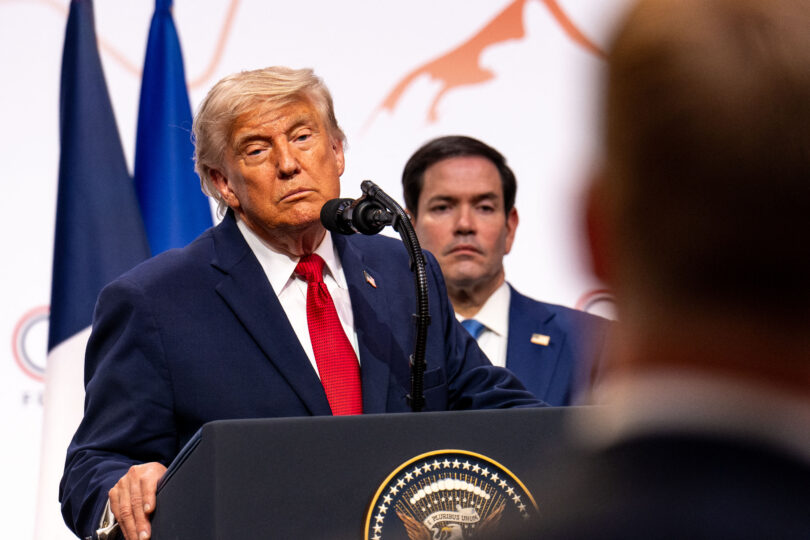
Dubbed the “Islamabad Memorandum of Understanding” (MoU), the agreement was signed abruptly on Wednesday evening following intense international pressure and rampant speculation. US President Donald Trump signed the document at the Palace of Versailles outside Paris following the G7 summit on Lake Geneva, while Iranian President Masoud Pezeshkian signed digitally from Tehran.
The deal marks the first major diplomatic breakthrough since the outbreak of the Iran war on February 28, a conflict launched jointly by the US and Israel that resulted in the death of Iranian Supreme Leader Ayatollah Ali Khamenei.
While Middle East analysts view the political will to negotiate as a positive step, experts warn that the most volatile issues remain entirely unresolved.
1. The Nuclear Standpoint: Uranium Dilution Under Supervision
Iran’s nuclear program remains the core ideological battleground. President Trump previously cited the complete prevention of a Tehran-built nuclear weapon as a primary objective of the initial military strikes.
While the text of the MoU notes that Iran “reaffirms it has no intention of manufacturing or acquiring nuclear weapons,” the practical component relies on dismantling its current capabilities:
-
Near-Weapons-Grade Stockpiles: The two nations intend to create a mutually agreed mechanism to deal with Iran’s stored uranium enriched up to 60%.
-
On-Site Dilution: The current plan dictates that these stockpiles will be diluted directly on Iranian soil under the strict supervision of the International Atomic Energy Agency (IAEA).
European leaders remain highly skeptical of the regime’s compliance. Omid Nouripour, vice president of the German parliament, warned that the US may be naive in accepting simple promises. “They’ve often made that promise but have repeatedly undermined every agreement,” Nouripour told DW.
2. The Sanctions Dilemma: Commitments vs. Economic Relief
The true test of the 60-day window will be balancing US demands for verification against Iran’s desperate need for economic survival.
“The central challenge is likely to remain the balance between Iran’s nuclear commitments and sanctions relief,” Middle East analyst Fatemeh Aman told DW. Aman noted that Tehran will demand watertight assurances that economic benefits are sustained, while Washington will remain single-mindedly focused on strict compliance verification.
3. The Strait of Hormuz: A Temporary Reopening
The most immediate global impact of the MoU is the scheduled restoration of shipping traffic through the critical Strait of Hormuz, a move desperate global markets hope will stabilize volatile energy prices.
Under the preliminary terms:
-
Iran will immediately take measures to reopen the strait to global oil shipments, guaranteeing “safe passage of commercial vessels with no charge” for the 60-day negotiation period.
-
The US will reciprocate by lifting its blockade on Iranian ports, allowing Iran to resume unrestricted oil sales.
-
Future administration of the strait will be negotiated alongside Oman after the 60-day grace period expires.
However, a long-term clash looms. While US Vice President JD Vance previously stated Washington expects the shipping lane to remain completely “toll-free” permanently, Iran’s insistence on subsequent administrative negotiations suggests Tehran intends to maintain geographic leverage over the passage.
4. The Lebanese Front: A Fragile Regional Ceasefire
The MoU explicitly calls for a permanent cessation of hostilities across all regional fronts, directly including Lebanon.
Following the outbreak of the war and the killing of Khamenei, the Tehran-backed militia Hezbollah engaged in heavy rocket exchanges with Israel. Israel responded by launching massive airstrikes across Lebanon and occupying a strategic strip of territory in the country’s south.
Crucially, Israel—the United States’ primary ally in the region—is not a signatory to the Islamabad MoU and remains deeply skeptical of any diplomatic accommodation with Tehran. Analysts warn that preventing sudden flares of violence between Israel and Hezbollah will be paramount to keeping the US-Iran talks from collapsing before the 60 days are up.