
Small Business Concessions Spared as Federal Government Overhauls Capital Gains Tax
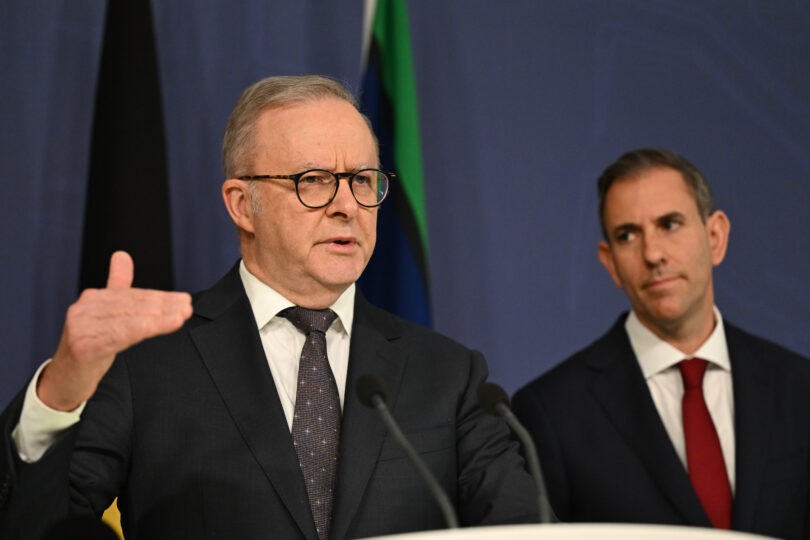
News Desk Report using Gemini AI /News Aggreagator /AAP Image
CANBERRA — Small business owners planning their retirement exits are breathing a cautious sigh of relief following the Federal Government’s sweeping overhaul of the Capital Gains Tax (CGT) system, with confirmation that foundational small business concessions will be legally preserved.
The reforms, introduced as part of the 2026–27 Federal Budget, mark the most significant shake-up to Australia’s property and investment tax landscape in nearly three decades.
The Headline Changes
Starting 1 July 2027, the Government will completely abolish the flat 50% CGT discount for individuals, trusts, and partnerships. In its place, the tax system will pivot back to an indexation model, adjusting an asset’s original purchase price for inflation so that only “real” gains are taxed.
Crucially, the new system introduces a 30% minimum tax floor on those net capital gains, designed to stop high earners from hoarding assets and selling them down in low-income retirement years to avoid heavier tax brackets.
What it Means for Small Business Owners
For corporate entities, the changes will have minimal impact, as companies have never been entitled to the 50% CGT discount. However, for the hundreds of thousands of Australian businesses operated via sole trader setups, partnerships, or discretionary trusts, the abolition of the discount sparked initial panic across the sector.
In a bid to protect the engine room of the economy, the Treasury’s official Small Business Explainer confirmed that the four core Small Business CGT Concessions will remain entirely untouched.
Eligible business owners who meet the required criteria (such as the $6 million net asset test or the $2 million turnover test) will still have access to:
-
The 15-Year Exemption: Paying zero CGT if an asset has been held for 15 years and the owner is retiring or incapacitated.
-
The Retirement Exemption: Exemption on gains up to a lifetime limit of $500,000.
-
The Active Asset Reduction: A further 50% reduction on the taxable gain of an active business asset.
-
The Rollover Relief: Deferring a capital gain when replacing an active asset.
The New Math: How a Sale Changes Post-2027
Because the 50% active asset reduction operates after the initial capital gain is calculated, the new indexation rules will alter the baseline numbers.
Under the old system, a trust selling an active business asset would first apply the general 50% CGT discount, then apply the 50% active asset reduction, effectively reducing the taxable amount to a quarter of the nominal gain. Under the new regime post-1 July 2027, the initial 50% discount is replaced by inflation indexation. The active asset reduction is then applied to that inflation-adjusted “real” gain.
If the business owner’s marginal tax rate applied to that final gain exceeds the new 30% minimum floor, they will pay their standard marginal rate, which tops out at 47% (including the Medicare levy) for major business exits.
A Crucial Exception for Trusts: To assist family businesses currently structured under discretionary trusts—which face a separate 30% minimum tax on distributions starting in 2028—the Government has announced a three-year tax-free rollover window beginning 1 July 2027. This allows businesses to restructure into companies or fixed trusts without triggering instant CGT or income tax penalties.
Strict “Prospective” Transition Rules
Small business advocates have welcomed the Government’s grandfathering provisions. The tax changes are strictly prospective, meaning any business value built up prior to 1 July 2027 will retain the old 50% discount rules, regardless of when the business is eventually sold.
For assets crossing the divide, the ATO will implement an apportionment system or allow independent valuations to “lock in” the asset’s baseline value as of 30 June 2027.
While tax experts note that a business sale executed before mid-2027 will still yield a cleaner, often lower tax obligation, the preservation of the small business concessions ensures that the ultimate goal of many operators—funding their self-funded retirement through their business equity—remains intact.