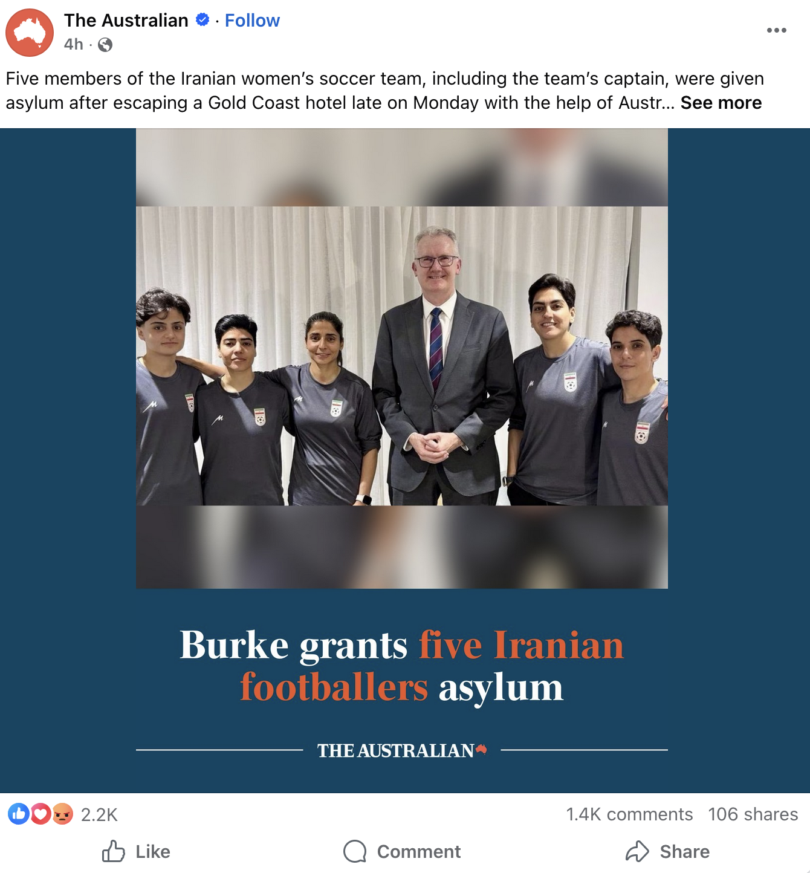

Albanese Government has granted humanitarian visas to five members of the Iranian women’s national football team.
News report posted 09 march,2026
In a move that has captured international headlines, the Albanese Government has granted humanitarian visas to five members of the Iranian women’s national football team. The decision follows a dramatic series of events during the 2026 Women’s Asian Cup in Australia, culminating in a high-stakes midnight phone call between Prime Minister Anthony Albanese and US President Donald Trump.
A Dramatic “Hotel Escape”
Following Iran’s elimination from the tournament on Sunday, reports emerged of “chaotic scenes” at the team’s Gold Coast hotel. Five players—including team captain Zahra Ghanbari, along with Fatemeh Pasandideh, Zahra Sarbali, Atefeh Ramazanzadeh, and Mona Hamoudi—successfully slipped away from their regime-appointed minders.
The Australian Federal Police (AFP) assisted the women in relocating to a “safe location” after they reportedly signaled for help from the team bus using international SOS hand gestures.
Diplomatic Pressure and the “2 AM Call”
The situation escalated rapidly on Monday when President Trump took to social media, labeling the potential return of the players a “terrible humanitarian mistake” and threatening that the U.S. would take them if Australia did not.
Prime Minister Albanese confirmed he spoke with the US President at 2:00 AM Tuesday morning.
-
The Prime Minister’s Stance: Mr. Albanese described the call as “very positive,” informing the President that the players were already under Australian protection.
-
The “Open Door” Policy: Home Affairs Minister Tony Burke finalized the visa paperwork at 1:30 AM, stating, “They are welcome to stay in Australia, they are safe here, and they should feel at home here.“
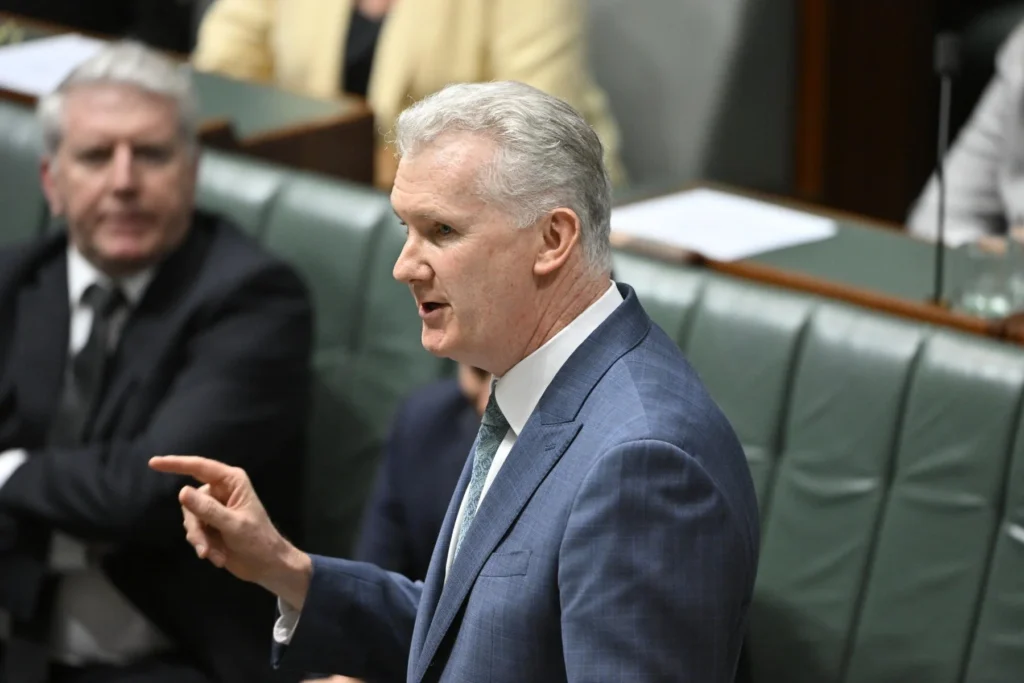
Australian Home Affairs Minister Tony Burke
-
Burke Seals “Midnight” Visas for Iranian Athletes
Home Affairs Minister Tony Burke personally oversaw the finalization of humanitarian visas for five members of the Iranian women’s national football team, signing off on the applications in the early hours of Tuesday morning.
Following the team’s elimination from the Women’s Asian Cup, Minister Burke traveled to Queensland to meet with the athletes after they were moved to a “secure location” by the Australian Federal Police (AFP).
Key Details of the Decision:
-
The Timeline: Minister Burke confirmed the processing was completed at 1:30 AM on Tuesday, shortly after conversations regarding their safety began in earnest on Monday morning.
-
The Meeting: Burke met with the five players—captain Zahra Ghanbari, Fatemeh Pasandideh, Zahra Sarbali, Atefeh Ramazanzadeh, and Mona Hamoudi—at their safe house on the Gold Coast.
-
The “Agency” Principle: The Minister emphasized that while five have already been granted protection, the offer remains open to the rest of the squad. “What matters here is that they have the best agency they can over those decisions,” Burke stated, noting the “terribly difficult situation” many face regarding family members back home.
-
Direct Intervention: The visas were granted through Direct Ministerial Intervention, providing the women with a pathway to permanent residency.
“Aussie, Aussie, Aussie”
Describing the atmosphere at the safe house, Minister Burke noted the reaction was one of “joy and relief.” He shared that once the papers were signed, the athletes broke into a chant of “Aussie, Aussie, Aussie, oi, oi, oi.”
“They are athletes who want to be safe,” Burke told reporters in Brisbane. “They are welcome to stay in Australia, they are safe here, and they should feel at home here.”
-
Why the Players Fear Returning
The players’ safety became a flashpoint after they chose not to sing the Iranian national anthem before their opening match against South Korea—a gesture seen as a protest against the regime.
-
State Media Backlash: Iranian state TV commentators branded the athletes “wartime traitors” and suggested they “must be dealt with” upon their return.
-
The Family Dilemma: While five have accepted sanctuary, other members of the squad remain in a “terribly difficult situation.” Many fear that seeking asylum would lead to government reprisals against their families back in Iran.
International Reaction
Human rights organizations and the global players’ union, FIFPRO, have welcomed the move, praising the government for prioritizing athlete safety. Meanwhile, Iran’s First Vice President has dismissed the incident as “psychological warfare.”
As the conflict in the Middle East continues to widen, this defection serves as a poignant reminder of the personal risks taken by athletes who use their platform for dissent.