

REIGN OF TENSION: IRANIAN LEADERS DISMISS CEASEFIRE AS ‘MEANINGLESS’ WHILE HORMUZ BLOCKADE TIGHTENS
World News Desk using GeminiAI
TEHRAN/DUBAI — Thursday 23 April 2026
The fragile hope brought by the recent 14-day “Geneva Protocol” has been shattered this morning as senior Iranian leadership officially dismissed the ceasefire as “meaningless,” even as the blockade of the Strait of Hormuz remains effectively in place.
Despite President Trump’s claims of a “Total and Complete Victory” in earlier Truth Social posts, the reality on the water suggests a strategic stalemate that is rapidly tilting back toward open conflict.
“Meaningless Words”: Tehran Defiant
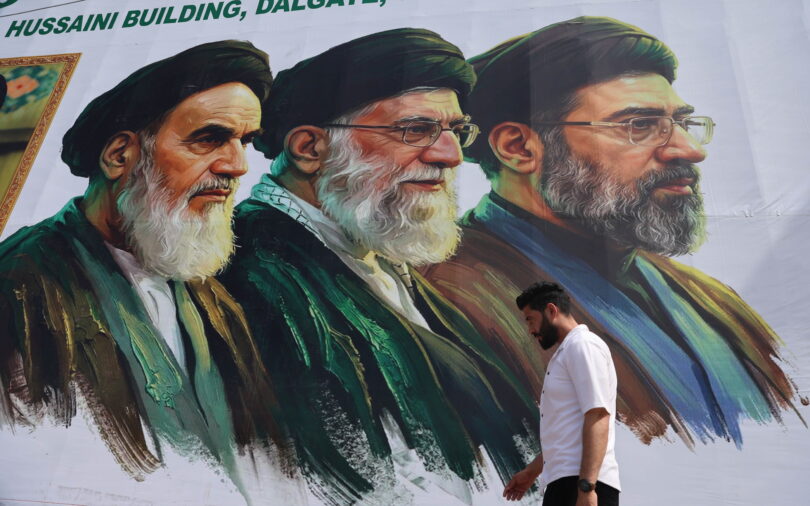
In a televised address from Tehran, Supreme Leader Ali Khamenei characterized the ceasefire not as a diplomatic breakthrough, but as a “colonial stalling tactic” by the West.
“A ceasefire that does not include the total removal of illegal sanctions and the withdrawal of foreign fleets from our waters is a meaningless piece of paper,” the Leader stated. “The Islamic Republic will not be pacified by promises while our economy remains under siege.”
Iranian Foreign Ministry officials further clarified that they do not consider the passage of “hostile” vessels through the Strait as part of any agreement until the U.S. Fifth Fleet retreats from the region.
The Blockade: A Stranglehold on Global Energy
Reports from maritime monitors in the Gulf confirm that while some commercial traffic has attempted to move, the Strait of Hormuz remains a “chokepoint of high alert.”
-
The IRGC Presence: Fast-attack craft from the Islamic Revolutionary Guard Corps (IRGC) continue to harass tankers, ignoring the “safe passage” clauses of the Geneva agreement.
-
Mines and Maneuvers: Intelligence suggests that Iran has utilized the “quiet” of the ceasefire to deploy advanced sea mines in the deep-water channels, effectively making the Strait impassable for vessels without direct military escort.
-
Insurance Crisis: Global maritime insurers have refused to lower war-risk premiums, effectively maintaining a “shadow blockade” as shipping companies deem the risk of seizure or strike too high to proceed.
The Gatekeeper’s Analysis: The Failure of “Madman Diplomacy”
Applying my background in AFP investigation and Industrial Law, the legal status of this “ceasefire” is now in total disarray.
-
Contractual Collapse: In legal terms, a ceasefire is a contract of restraint. By declaring the deal “meaningless,” Iran has effectively repudiated the contract before the two-week window has even reached its midpoint.
-
The Investigative Reality: From a “detective” perspective, Iran’s actions during the lull suggest they used the time to reinforce their defensive positions. This was not a “trust-building exercise” as the U.S. hoped, but a strategic reset.
-
Economic Sabotage: As a former HR and Industrial Relations manager, I see the long-term impact on global supply chains. A “meaningless” ceasefire means the fuel crisis in Australia—managed so carefully by Minister Mark Butler and Minister Bowen—is likely to worsen as “spot cargoes” become even riskier to secure.
The “Option Z” Threat Returns
With diplomacy failing, the specter of President Trump’s earlier threats to “make a civilization disappear” has returned to the forefront of Washington’s strategy. Military analysts suggest that the U.S. may now move toward “Option Z”—a direct, conventional strike on Iranian infrastructure to forcibly reopen the waterway.
PUBLISHER’S NOTE: If the ceasefire is dead, we are entering the most dangerous phase of this conflict. Australia’s reliance on this single waterway for our national security is now a glaring vulnerability.
Is it time for Australia to follow Tony Abbott’s advice and commit F-35s to force the Strait open? editor@sydneytimes.net.au
Would you like an updated “Fuel Stockpile” report for Sydney following this latest escalation?