


Thousands of scam websites taken down as online scams continue to cost Australians
The National Anti-Scam Centre is continuing its work to disrupt scammers as scams encountered online continue to drive the highest levels of loss.
Between 1 January and 31 March 2026, Scamwatch received 45,816 scam reports, down 17.8 per cent compared with the same period in 2025.
Of these reports, 6,775 involved a financial loss, with total reported losses of $76,703,589. This represents a 17% decrease in reported losses. Scamwatch is one of several channels available for reporting scams. Consumers may also report scam activity to law enforcement and other organisations.
ReportCyber, which reflects reports to law enforcement, received 15,391 scam-related reports to police in the first three months of 2026, with reported losses of $187.7 million, which also represents a decline.
When adjusted to remove duplicates, Scamwatch and ReportCyber received a combined 60,657 scam reports, with reported losses of $248.3 million.
Another key source of losses, reports to banks, are included in our annual Targeting Scams Report. Detailed data was not available for the purposes of compiling this quarterly snapshot; however, we understand reflects a similar decline.
We welcome any decline in losses experienced by consumers and consider that ongoing efforts by governments, regulators, law enforcement, and industry are having an impact.
That said, we caution against drawing too much from one quarter of data as reports and losses typically move around somewhat. We will continue to monitor closely to see whether this quarter’s data represents the beginning of a trend.
Scamwatch data is unique in that it includes additional elements such as contact method and demographics. This enables us to form a more complete picture of emerging contact methods, scam types and impacted communities.
Based on this analysis, online scams were the greatest source of financial harm, with Scamwatch reports showing Australians lost $38.3 million to scams that began through online contact in the first three months of 2026.
Online contact methods, including fake websites, advertisements, social media and mobile apps, accounted for around half of all reported Scamwatch losses during the quarter.
In response, the National Anti-Scam Centredisrupted thousands of scam operations during this period, with 5,834 scam websites taken down, including 1,960 fake online gambling websites.
These online scam gambling websites were also referred to Google to block advertisements on its platforms, including YouTube.
The National Anti-Scam Centre also referred 511 Facebook advertisements, profiles and groups to Meta for investigation as part of its efforts to disrupt scam activity across digital platforms.
ACCC Deputy Chair Catriona Lowesaid scammers continue to exploit the reach and speed of online platforms to target Australians at scale.
“Online platforms give scammers the ability to reach large numbers of people quickly, cheaply and convincingly,” Ms Lowe said.
“Disrupting scam websites is one of the ways we can make it harder for criminals to reach Australians online. The takedown of thousands of scam websites in just three months shows both the scale of scam activity online and the scale of the disruption work underway.”
“The National Anti-Scam Centre is continuing to work with platforms and other partners to detect scam activity earlier and make it harder for scammers to operate across digital platforms,” Ms Lowe said.
People are urged to be cautious when engaging with online advertisements, websites and people on social media, particularly where there is pressure to act quickly, promises of high returns, or requests for personal information or payment.
“Scammers are increasingly using polished and professional-looking online content to appear legitimate, which can make it more difficult for Australians to spot a scam,” Ms Lowe said.
“Consumers should be cautious if a website or advertisement creates urgency, promises high returns or asks for payment or personal information upfront.”
“Before clicking a link, downloading an app or transferring money, take a moment to stop and check that the business, website or profile you are dealing with is genuine. If you are unsure, Australians should search for a business or service independently rather than relying on links in ads, posts or messages,” Ms Lowe said.
Other Scamwatch trends
- Investment scams saw the highest reported losses to Scamwatch in the first three months of 2026, with Australians reporting losses of $45.5 million.
- Reports of relationship scams losses increased with reported losses increasing to $7.5 million.
- Phishing scams remained one of the most commonly reported scam types in the first three months of 2026, with 13,428 reports made to Scamwatch.
- Email remained the most commonly reported contact method in the first three months of 2026, with 16,759 reports to Scamwatch.
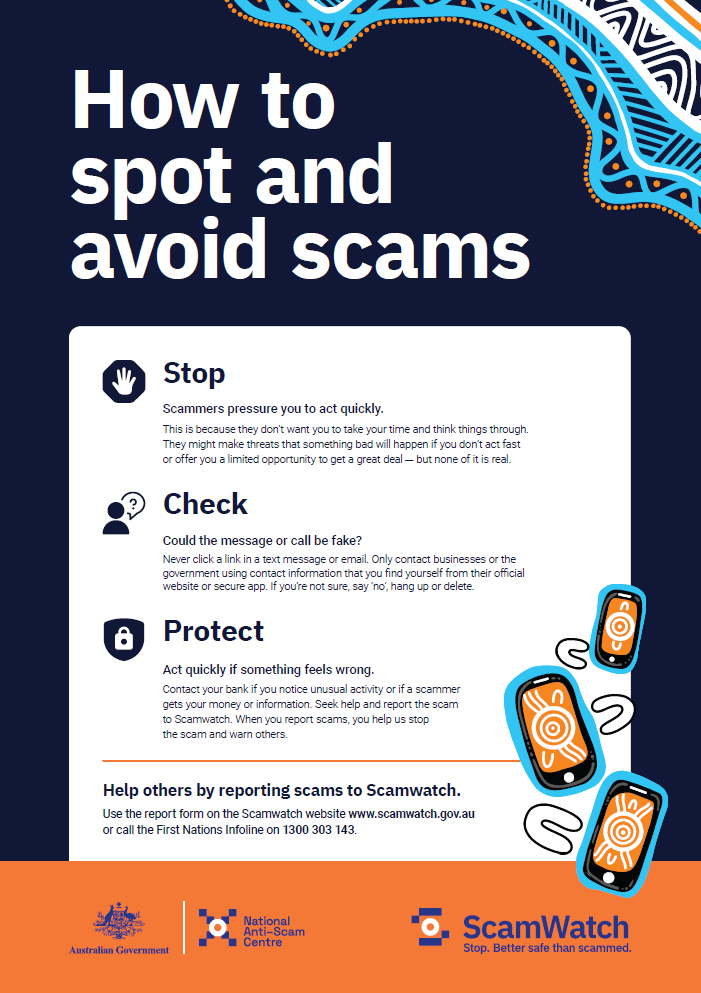
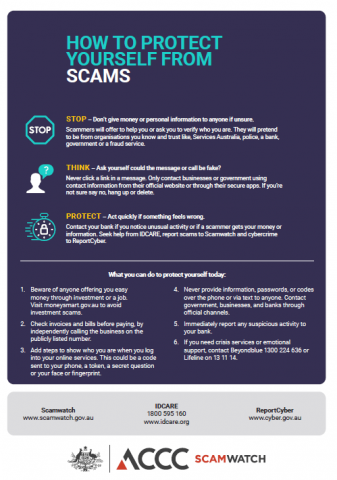
Learn how to Stop. Check. Protect. to stay safe from scams:
STOP. Always take a moment before giving your money or personal information to anyone. Scammers will create a sense of urgency to pressure you into acting quickly. Don’t rush to make decisions about money or sharing personal details.
What to do:
- Say no, hang up, or delete suspicious messages
- Take time to think before responding to unexpected requests
- Don’t let anyone pressure you into immediate action
- Trust your instincts if something feels wrong
CHECK. Make sure the person or organisation you’re dealing with is real. Scammers pretend to be from organisations you know and trust. Always verify who you’re really dealing with before taking any action.
What to do:
- Contact the person or organisation directly using phone numbers or email addresses you find on their official website or app
- Read independent online reviews before engaging with businesses
- Research investment opportunities or offers through official sources like ASIC
- Get a second opinion from family, friends, or professionals
PROTECT. Act quickly it something feels wrong. The sooner you act, the better you can protect yourself and others from scammers.
What to do:
- Contact your bank immediately if you think you’ve lost money or shared financial details
- Contact IDCARE (www.idcare.org or call 1800 595 160) if you want support to recover – they can help you create a plan to the limit damage of scams
- Report to Scamwatch (www.scamwatch.gov.au) to help protect others
- Report to police (www.cyber.gov.au)
- Change passwords and security details if you think they’ve been compromised
- Monitor your bank statements and credit reports for unusual activity
- Report the scam to the impersonated organisation and platform where the scam is happening
- Being scammed can feel overwhelming. Support is available at Lifeline on 13 11 14 or Beyond Blue on 1300 22 4636