

ABBOTT CALLS FOR F-35S AND GROUND TROOPS IN POTENTIAL GULF CONFLICT
CANBERRA — 10 April 2026
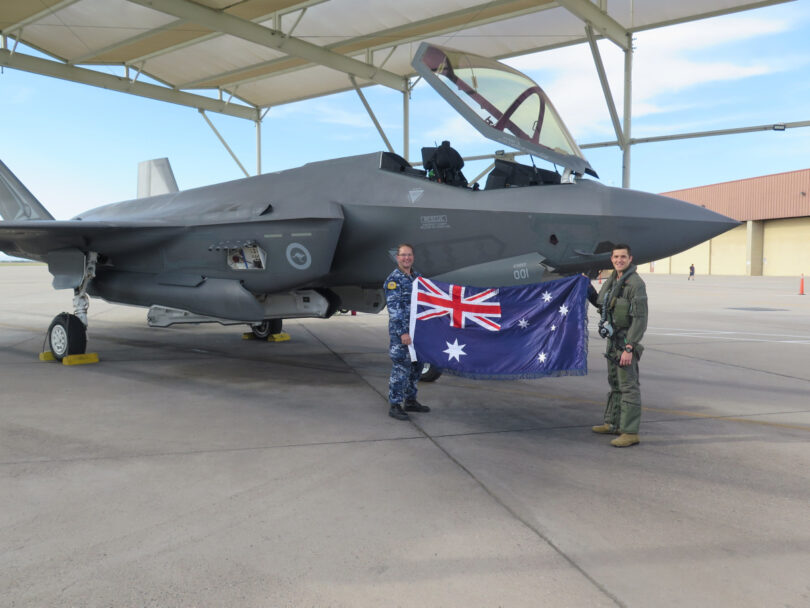
Former Prime Minister Tony Abbott has ignited a fierce national debate over Australia’s military role in the Middle East, proposing a “significant and swift” deployment of RAAF F-35 Lightning II stealth fighters and Australian Army personnel to support the United States in the escalating Gulf crisis with Iran.
In an address to a defense think-tank in the capital this morning, Mr. Abbott argued that the current 14-day ceasefire between Washington and Tehran is merely a “tactical pause” and that Australia must be prepared to stand “shoulder to shoulder” with its primary ally if hostilities resume.
The “Abbott Doctrine” on the Gulf
The former Prime Minister’s proposal calls for the immediate deployment of a squadron of F-35s to regional bases, alongside an Australian Army strike group. Abbott argued that the security of the Strait of Hormuz is a direct national interest for Australia, given the nation’s total dependence on the waterway for fuel security.
“We cannot expect the United States to do all the heavy lifting in maintaining the freedom of navigation for the entire world,” Abbott declared. “If the Strait is threatened, our economy is threatened. We should not just be passive observers of the American shield; we should be part of the force that ensures that [expletive] chokepoint stays open.”
Military Capability: The F-35 Edge
Abbott’s focus on the F-35 highlights the platform’s advanced stealth and electronic warfare capabilities, which would be critical in penetrating Iran’s sophisticated surface-to-air missile defenses.
The Proposed Deployment includes:
-
RAAF F-35A Lightning II: To provide air superiority and precision strike capabilities.
-
Special Air Service Regiment (SASR): To assist in “reconnaissance and recovery” missions, following the recent rescue of a U.S. pilot.
-
Naval Escort: Deploying a Hobart-class destroyer to provide Aegis missile defense for commercial shipping.
Political Firestorm in Canberra
The proposal has met with immediate resistance from the Federal Government and the Greens. Minister for Energy Chris Bowen, while not directly commenting on defense policy, noted that the government’s focus remains on diplomatic de-escalation and securing fuel via commercial means.
“We are not looking for a new war,” a senior government spokesperson said. “Our commitment to the alliance is unwavering, but we are currently in a ceasefire period. Talk of committing boots on the ground at this stage is premature and potentially inflammatory.”
The Greens were more blunt, labeling Abbott’s comments as “warmongering” and “relics of a failed foreign policy era.”
Sydney Times Analysis: The ANZAC Commitment
Tony Abbott’s call for intervention taps into the historic “ANZAC” reflex of supporting the U.S. in global hotspots. However, the strategic landscape of 2026 is vastly different from 2003 or 1991. With Australia already stretched by regional tensions in the Indo-Pacific, a major commitment to a “Gulf War III” would leave the nation’s northern approaches significantly exposed.
Furthermore, with the Ben Roberts-Smith trial currently dominating headlines, public appetite for a new Special Forces deployment in a Middle Eastern theater is at an all-time low.
PUBLISHER’S NOTE: The Sydney Times asks: Should Australia commit troops to the Gulf, or should we focus on defending our own shores?
Email the Editor: editor@sydneytimes.net.au