
“OPEN IT OR ELSE”: TRUMP’S PROFANE ULTIMATUM OVER GLOBAL OIL CHOKEPOINT
News aggregator /WASHINGTON D.C. — 6 April 2026
President Trump has fundamentally shifted the rules of engagement in the Persian Gulf, using a series of blunt expletives to characterize the U.S. military’s intent to keep the Strait of Hormuz open “by any means necessary.”
The comments, delivered in a high-energy address following the rescue of a U.S. pilot, targeted the Iranian Revolutionary Guard’s threats to mine the waterway—a move that would effectively strangle 20% of the world’s petroleum supply.
The situation escalated significantly during a late-night press briefing, where Donald Trump abandoned traditional diplomatic language in favor of a “scorched earth” verbal assault regarding the Strait of Hormuz.
In a move that has sent shockwaves through the United Nations and global energy markets, the President utilized heavy expletives to describe his administration’s stance on Iranian blockades.
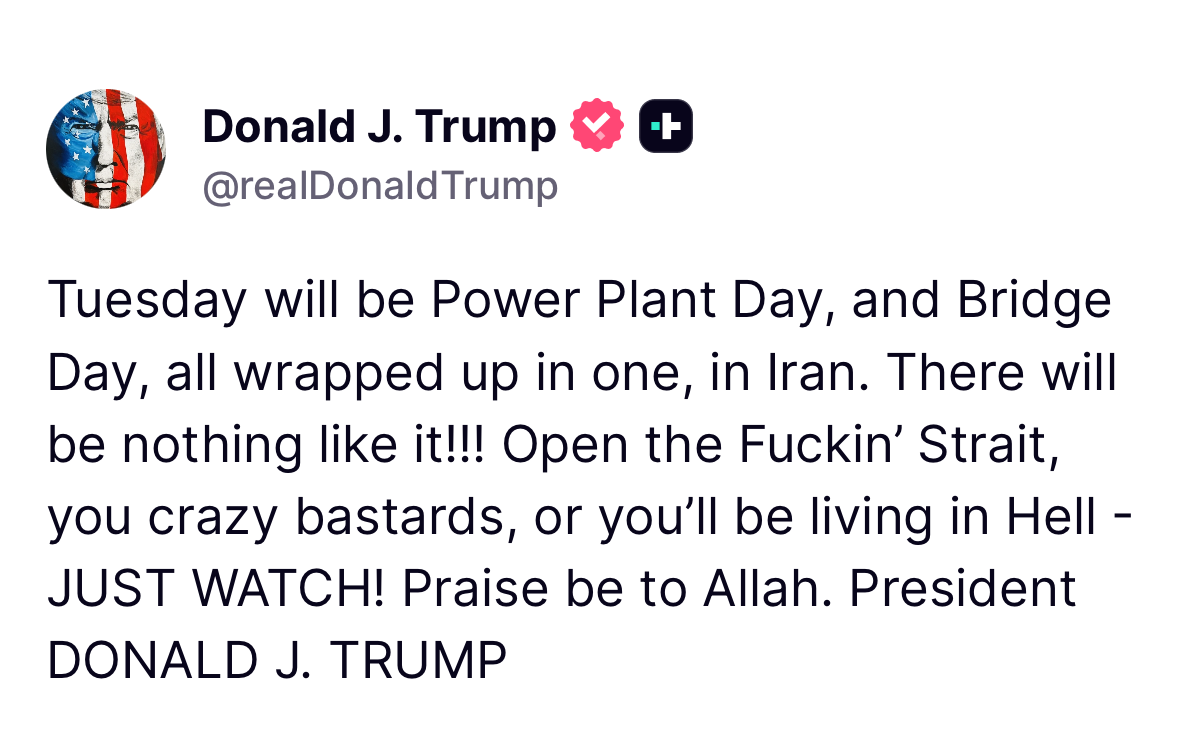
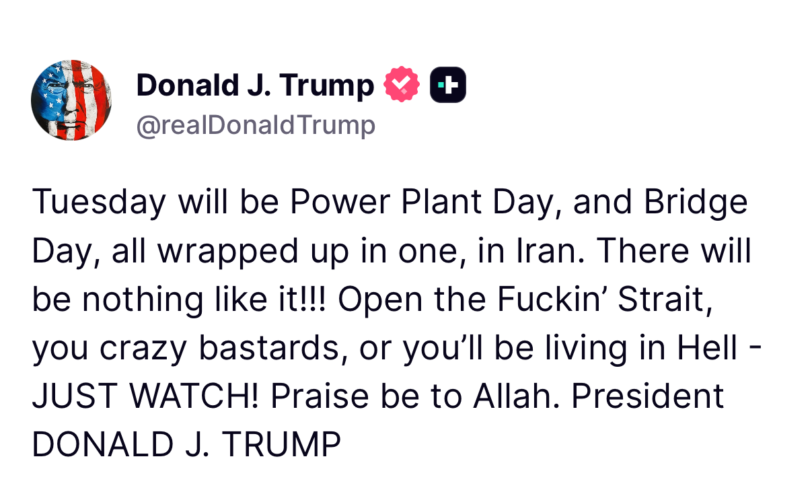
*Expletive laden threats made on Donald J TRUMPS Truth Social App
The “Gutter” Diplomacy
“If those [expletive] think they’re going to close that [expletive] Strait, they’ve got another thing coming,” Trump told a room of stunned reporters. “We have the biggest, baddest, and most [expletive] powerful Navy in the history of the world. We aren’t going to ask for permission. We’re going to open it up, and if they get in the way, we’re going to [expletive] destroy them.”
The President’s use of profanity appeared calculated to signal a total breakdown in formal negotiations. He characterized the Iranian leadership as “thugs” who only understand “the language of force.”
Strategic Impact: The 20% Chokepoint
The Strait of Hormuz is the world’s most sensitive maritime transit point. Trump’s “expletive-laden” directive is seen by military analysts as a green light for the U.S. Fifth Fleet to engage in pre-emptive clearing operations if any Iranian minelayers are detected.
-
Oil Market Volatility: Following the comments, oil futures jumped $4 a barrel in minutes as traders braced for a “hot war” in the Gulf.
-
Rules of Engagement: Defense officials, speaking off the record, suggest the President has authorized “Level 5” engagement protocols, allowing commanders on the ground to fire without seeking White House approval if they perceive a threat to commercial shipping.
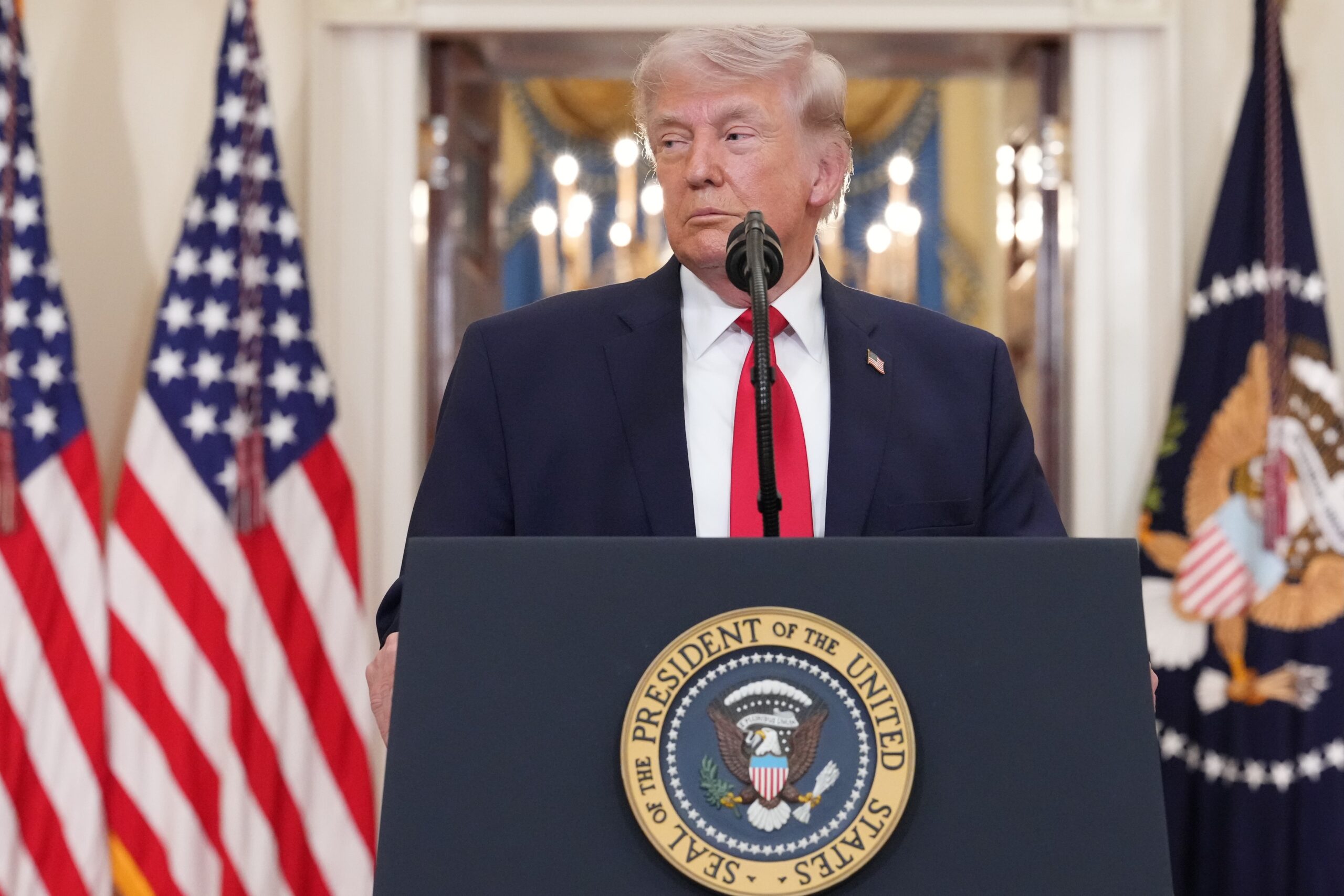
President Donald Trump pauses as he finishes speaking about the Iran war from the Cross Hall of the White House on Wednesday, April 1, 2026, in Washington. (Photo by Alex Brandon/Pool/Sipa USA)
Global Condemnation and Praise
The reaction has been split along predictable geopolitical lines.
-
The Critics: Traditional allies in London and Paris have described the rhetoric as “incendiary and unbecoming of the office,” warning that such language makes a miscalculation by mid-level Iranian commanders more likely.
-
The Supporters: Pro-defense hawks in the U.S. and regional allies in the Middle East have quietly praised the “clarity” of the message, arguing that Tehran has exploited diplomatic niceties for too long.
Analysis: The Price of Petrol
For Australians, Trump’s “Strait of Hormuz” outburst isn’t just political theater—it’s a direct threat to the price at the pump in Sydney and Melbourne. If the President follows through on his profane promise to “blow them out of the water,” the resulting conflict could see Australian fuel prices soar past $3.50 per litre within days.
As a nation dependent on refined fuel imports, Australia is now tethered to the President’s volatile “Red Line” in the Gulf.