

Xi and Putin reaffirm ties and talk energy in Beijing after Trump visit
World News Aggregator using Gemini AI /Checked in Newsroom /Posted 20 may,2026
-Chinese and Russian leaders highlight bond as Beijing balances diplomatic relations
BEIJING — Russian President Vladimir Putin arrived in the Chinese capital for a high-stakes, two-day summit with Chinese President Xi Jinping, just four days after U.S. President Donald Trump concluded a major state visit to the country.
The tightly sequenced visits have placed Beijing at the absolute center of global diplomacy. Analysts note it is a rare post-Cold War occurrence for a single nation to host the leaders of both the United States and Russia within the span of a single week, highlighting China’s unique position as an indispensable global pivot point.
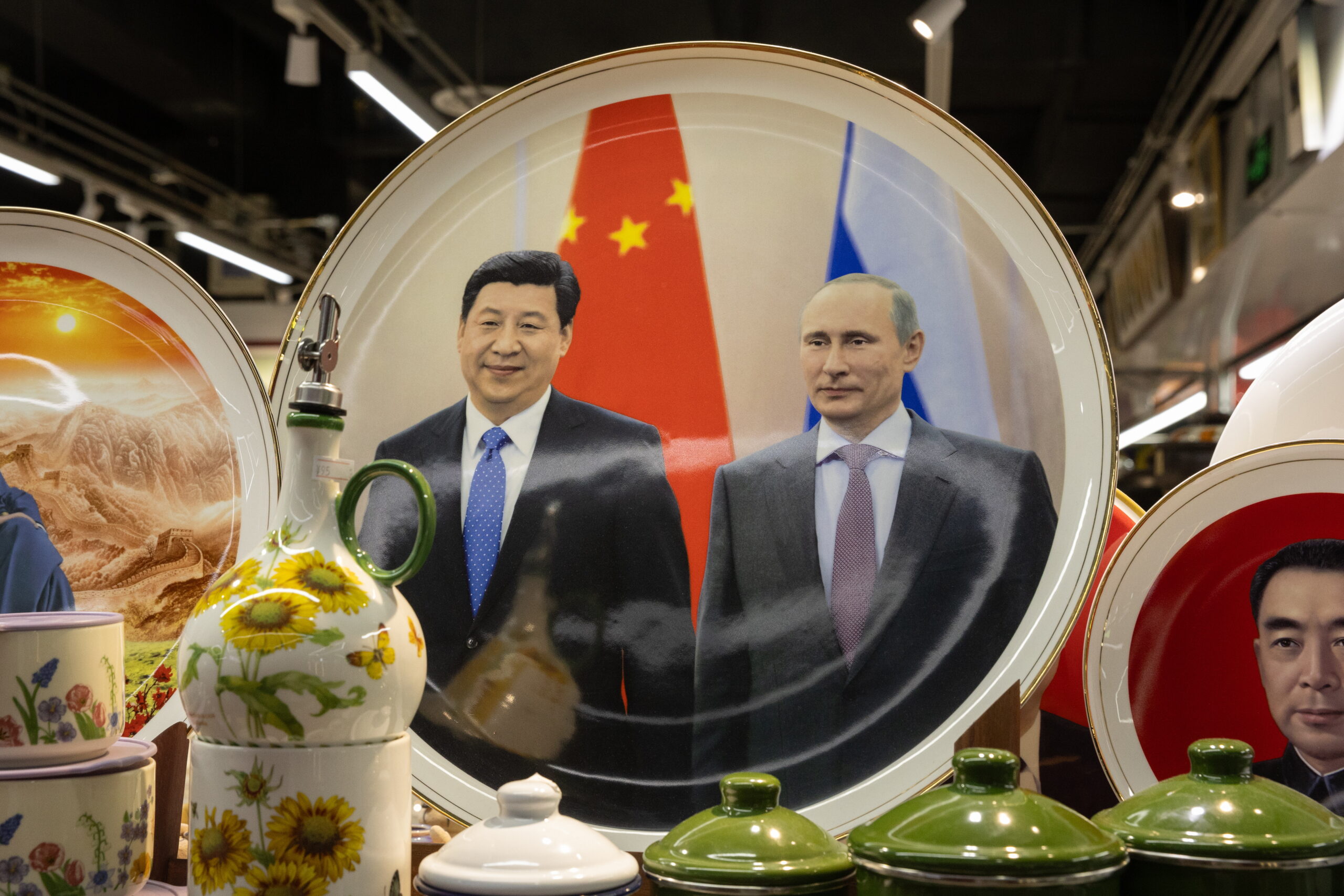
epa12973400 A plate with Russian President Vladimir Putin (R) and Chinese President Xi Jinping (L) is displayed at a store in Beijing, China, 19 May 2026. Russian President Vladimir Putin will visit China from 19 May to 20 May. EPA/JESSICA LEE
Reaffirming the “All-Weather” Bond
Stepping off the plane, President Putin was greeted by Chinese Foreign Minister Wang Yi, a military honor guard, and flag-waving crowds. The visit—Putin’s 25th to China—carries deep symbolic weight, arriving on the eve of the 25th anniversary of the historic Sino-Russian Treaty of Friendship.
Ahead of the face-to-face meetings, both leaders signaled that their relationship remains rock-solid despite intense Western pressure on Beijing to distance itself from Moscow. In a video address published by Chinese state media, Putin praised the bilateral relationship as being at an “unprecedentedly high level” and acting as a crucial factor of “deterrence and stability” in highly volatile global affairs.
For Beijing, the back-to-back visits underscore a delicate, multi-track diplomatic strategy.
“The Trump visit was about stabilizing the world’s most important bilateral relationship; the Putin visit is about reassuring a long-standing strategic partner,” explained Wang Zichen, deputy secretary-general for the Beijing-based Center for China & Globalization. “For China, these two tracks are not mutually exclusive.”
High-Stakes Energy Talks: Power of Siberia 2
While regional conflicts—including the war in Ukraine—are high on the agenda, the primary economic driver of this summit is a massive overland energy agreement.
Moscow is pushing hard to finalize details for the long-delayed Power of Siberia 2 pipeline. If completed, the megaproject would redirect 50 billion cubic meters of natural gas annually from Russia’s Arctic Yamal fields—which once primarily supplied European markets—straight into northern China via Mongolia.
The ongoing conflict in the Middle East has added structural urgency to Moscow’s sales pitch. Disruptions to maritime shipping and threats to liquefied natural gas (LNG) transiting the Strait of Hormuz have allowed Russian officials to frame land-based pipelines as an insulated, highly secure alternative for Beijing’s long-term energy needs.
The Remaining Sticking Points
Despite optimistic public rhetoric from Putin, who recently claimed that “practically all key issues have been agreed upon,” major commercial hurdles persist:
-
The Price Tag: Sources close to the negotiations report that Beijing is holding out for deeply discounted pricing, demanding a formula close to Russia’s heavily subsidized domestic gas rates.
-
Diversification Policy: Traditionally, China limits any single foreign nation from controlling more than 25% of its pipeline supply. Chinese negotiators remain hesitant to make massive, multi-decade commitments that could tie their grid too tightly to Moscow.
A Sophisticated Balancing Act
The summit offers a stark structural contrast to last week’s meeting between Xi and Trump, where the U.S. and China agreed to establish a new framework for a “constructive relationship of strategic stability.”
During those talks, Xi emphasized that Washington and Beijing should view each other as partners rather than rivals.However, the immediate arrival of Putin sends a powerful counter-signal to the West: China has no intention of abandoning its strategic alignment with Russia. Bilateral trade between China and Russia has already surged past $200 billion annually, with Beijing acting as a vital economic partner by absorbing Russian crude and supplying industrial components.
The Russian delegation—which includes major state energy executives and central bank officials—is scheduled to sign roughly 40 bilateral documents before the two leaders conclude the summit with an informal tea meeting to discuss global affairs—a traditional diplomatic gesture Xi also extended to Trump just days prior.