

Gulf airlines and Tourism Hubs Paralyzed: Tourism “Catastrophic” as Regional War Dislocates 20,000+ Flights
Travel News desk Posted 08 March,2026
DUBAI, March 8, 2026 – The “global crossroads” has ground to a stuttering halt. Following a week of unprecedented military escalation between the U.S., Israel, and Iran, the Gulf States’ aviation and tourism sectors are grappling with a dislocation analysts describe as the most severe since the 2020 pandemic—and, in terms of infrastructure damage, far more permanent.
The sudden closure of airspace across the UAE, Qatar, Kuwait, and Bahrain has effectively severed the world’s primary artery between Europe and Asia. For an economy like Dubai’s, which has spent a decade diversifying into a global tourism and residency powerhouse, the timing could not be more critical.

Aviation: The Hub Model Breaks
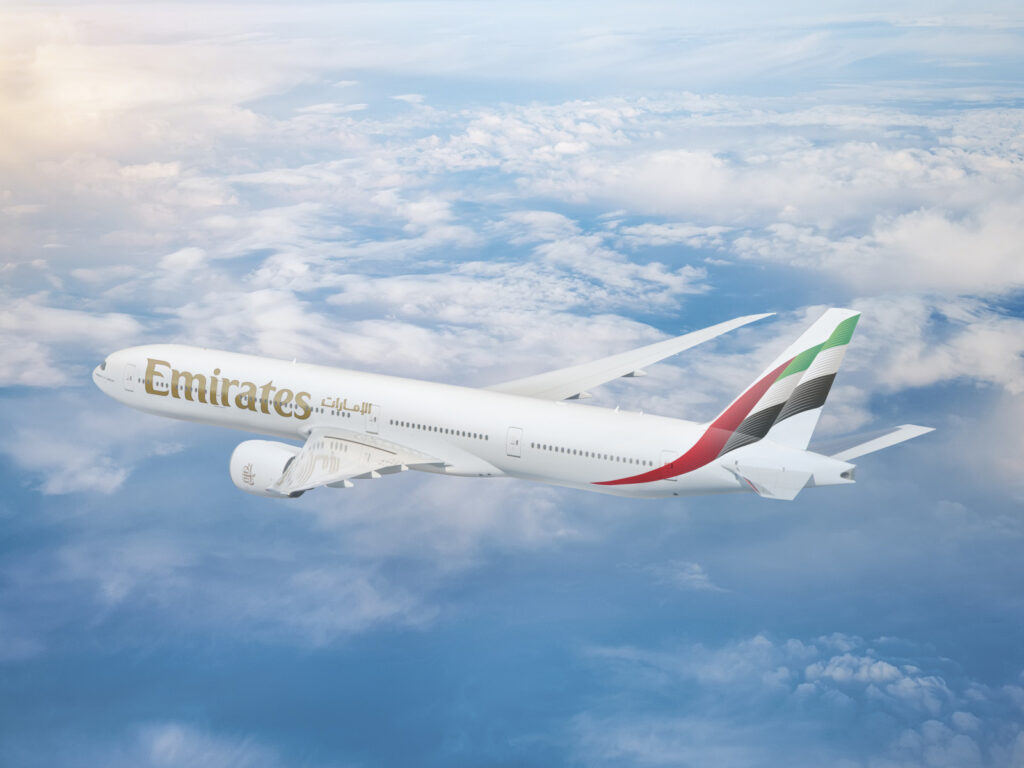
The “super-connector” strategy pioneered by Emirates and Qatar Airways is facing an existential stress test. By March 5, over 21,300 flights had been cancelled across seven major regional airports.
-
Infrastructure Damage: Dubai International (DXB) Terminal 3 and Zayed International in Abu Dhabi sustained damage from drone debris and direct strikes earlier this month. While repairs are underway, the “invincibility” of the Gulf hubs has been punctured.
-
The Transit Collapse: Transfer passengers account for roughly 40% of Dubai’s traffic and 74% of Doha’s. With these connections severed, the “ricochet effect” has hit global carriers from British Airways to Cathay Pacific, forcing them onto longer, fuel-intensive routes that avoid the Gulf entirely.
-
Financial Hemorrhaging: Arab airlines reportedly lost nearly $1 billion on the first day of the conflict alone. Cumulative losses for the sector are already estimated to have surpassed $50 billion as carriers struggle with the logistical nightmare of “out-of-position” crews and aircraft.
Tourism: High Season Halted
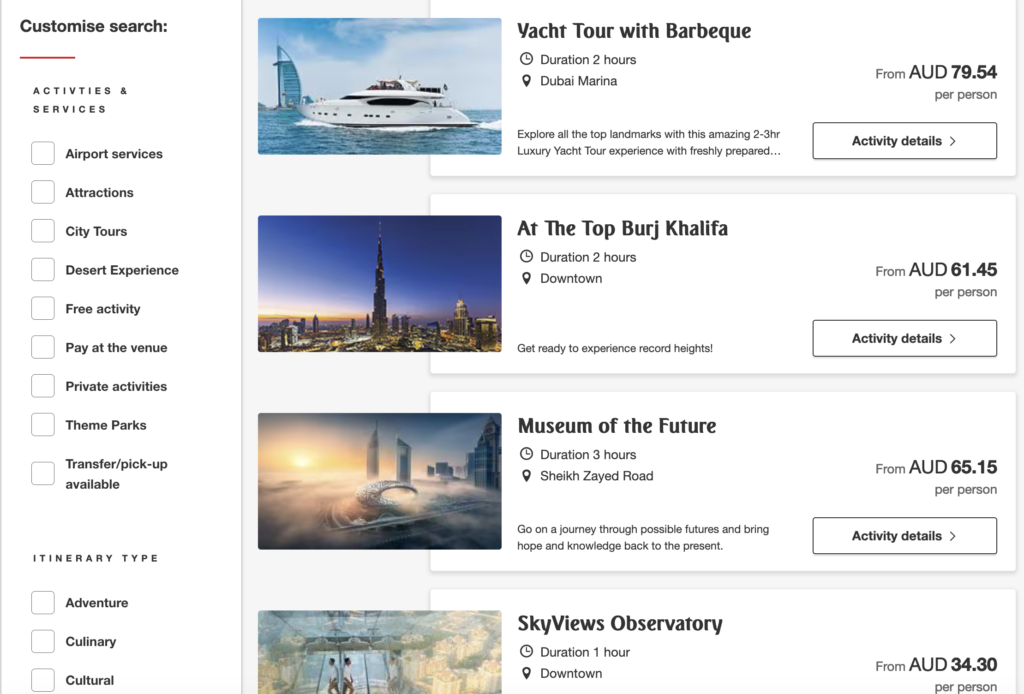
The war has struck at the dawn of the Middle East’s high tourism season. Oxford Economics has warned that even a short-lived conflict will see visitor arrivals to the region drop by at least 11% in 2026—a loss of roughly 23 million visitors and up to $56 billion in spending.
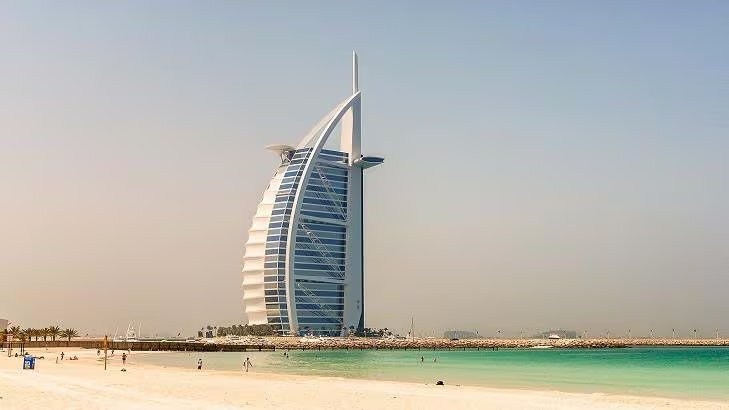
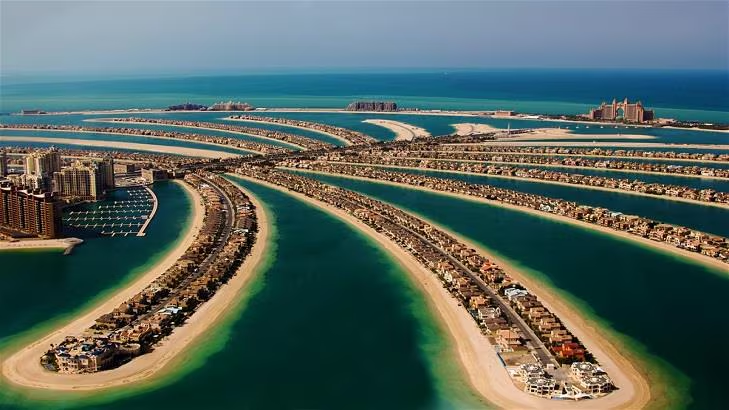
In Dubai, iconic landmarks like the Burj Al Arab and Fairmont The Palm were briefly evacuated following nearby drone incidents. “My last group of tourists left three days ago, and everything for March is cancelled,” says one regional tour operator. “After the post-COVID boom, this is catastrophic.”
The “Tax Exile” Factor: A 250,000-Person Dilemma
While tourists are fleeing, a more complex demographic remains: the “Tax Exiles.” Dubai has become a primary sanctuary for High-Net-Worth Individuals (HNWIs) fleeing high taxes in the UK, China, and India.
-
The British Exodus: Approximately 240,000 British nationals currently reside in Dubai, many attracted by the zero-tax regime on personal income, capital gains, and inheritance.
-
Business as Usual? Despite the strikes, many of the 250,000 expats in the UAE are attempting to stay put. For the “super-rich” who have moved entire family offices to the DIFC (Dubai International Financial Centre), the cost of relocating back to high-tax jurisdictions like the UK—which recently abolished “non-dom” status—is viewed by some as more “catastrophic” than the security risk.
-
The “Megabucks” Escape: Conversely, for those who do want to leave, the price of a “golden ticket” out has skyrocketed. Private charter demand has surged, with some wealthy residents paying “megabucks” for emergency evacuations to safer havens like Singapore or the Maldives.
Looking Ahead: A Fragile Recovery
The UAE government has begun operating dedicated “emergency air corridors” to repatriate the tens of thousands of passengers still stranded in airport hotels. While Emirates and Qatar Airways have signaled their intent to resume limited schedules this week, the psychological impact on the “Dubai Brand” may take years to mend.
For the tax exiles and the “global nomad” class, the question is no longer just about the tax rate—it is about whether the world’s most famous oasis can remain a mirage of peace in a region at war.