
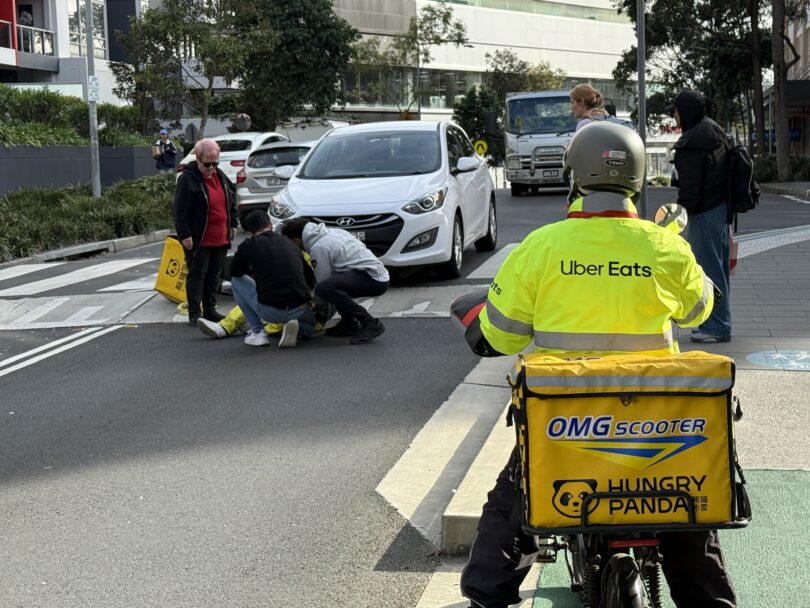

E-Bikes Revolutionize Fast Food Delivery but we need to Navigate the New Rules of the Road
News and Solutions based Article by A.Ritenis
First Posted 26 November 2025 Refreshed on Monday 08 December,2025
-As e-bikes flood Sydney’s streets, communities, regulators, and gig workers navigate the balance between convenience, safety, and sustainability.
By Axel Ritenis| Hyperlocal Community Focus | Sydney, NSW/Image Credits A.Ritenis
A Quiet Revolution on Two Wheels
Sydney’s streets are humming with a new kind of energy — the soft electric whirr of e-bikes. Once the domain of cycling enthusiasts, they’re now the workhorses of the city’s fast-food delivery industry.
From the CBD to Parramatta and the Inner West, helmeted riders with oversized insulated bags have become an unmistakable part of the cityscape — symbols of a changing economy and a new approach to urban transport.
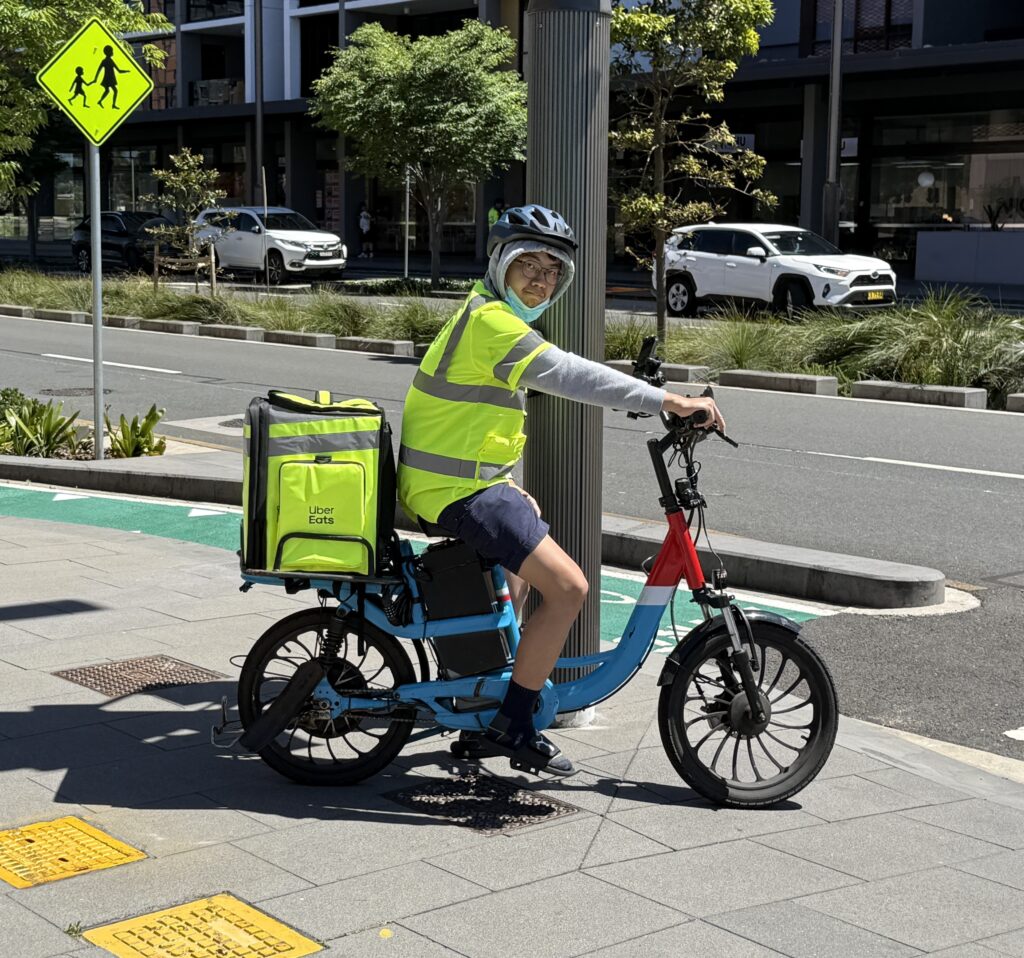
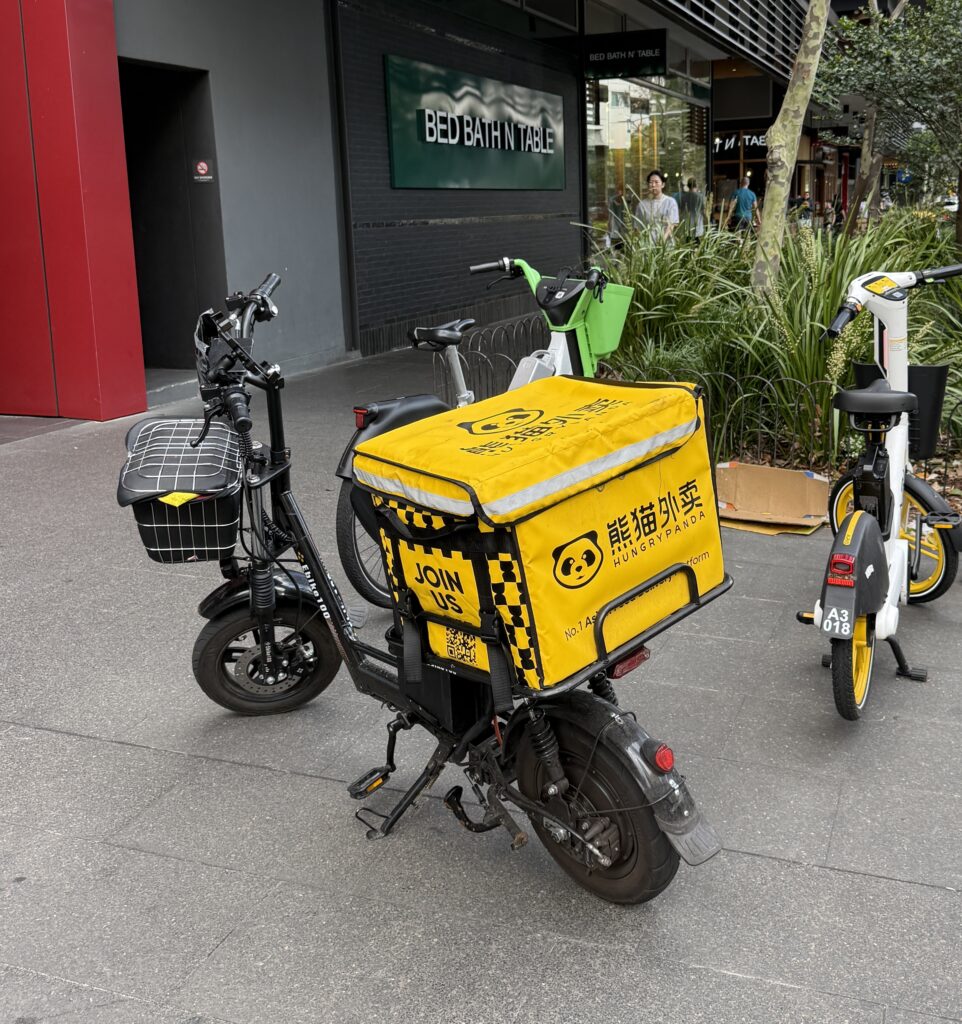
E-Bike Food Delivery bikes in Waterloo/Photo Credit A.Ritenis
Platforms like Uber Eats, HUNGRY PANDA, and DoorDash have embraced the e-bike boom, driven by a trifecta of speed, cost-efficiency, and eco-benefit. The benefits, on paper, are hard to ignore.
“It’s cheaper than petrol, faster in traffic, and better for the planet — but our rules haven’t caught up.”
— Local transport analyst, Sydney University
E-bikes have emerged not merely as a post-pandemic trend, but as a crucial symbol of sustainable, personalized urban mobility. They represent a profound, eco-conscious alternative that is rapidly transforming the cadence and character of Sydney’s city life.
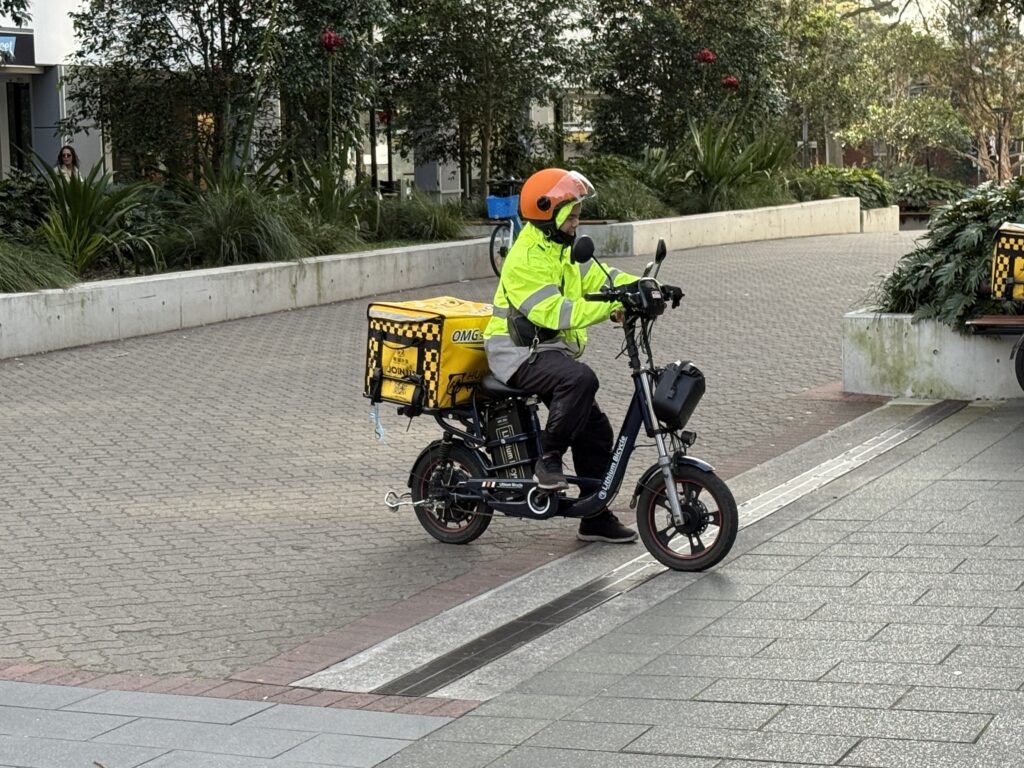
However, for this technological leap to deliver its full potential—to genuinely benefit all of Sydney, from the swift daily commuter to the resident seeking tranquil public spaces, and the city planner managing infrastructure—our regulatory framework must possess the foresight and agility to evolve at the speed of the technology itself. True wisdom lies in establishing rules that foster innovation and accessibility while proactively addressing safety, infrastructure integration, and equitable distribution of public space.
Why E-Bikes Are Taking Over
- Low Running Costs: Riders save on petrol, insurance, and maintenance.
- Faster Deliveries: Narrow lanes and traffic jams are no obstacle.
- Zero Emissions: They help clean up Sydney’s air.
- Urban Agility: Easier parking and quicker access to customers.
While scooters and cars still have their place, e-bikes have carved out a crucial niche for gig workers trying to make ends meet. Yet as the trend accelerates, questions around safety, worker protection, and public amenity are becoming impossible to ignore.
The Regulation Gap: A City Playing Catch-Up
The rise of e-bike deliveries has been so rapid that regulations haven’t kept pace. NSW and federal rules classify most e-bikes like traditional bicycles — but the reality on Sydney’s streets is far more complex.
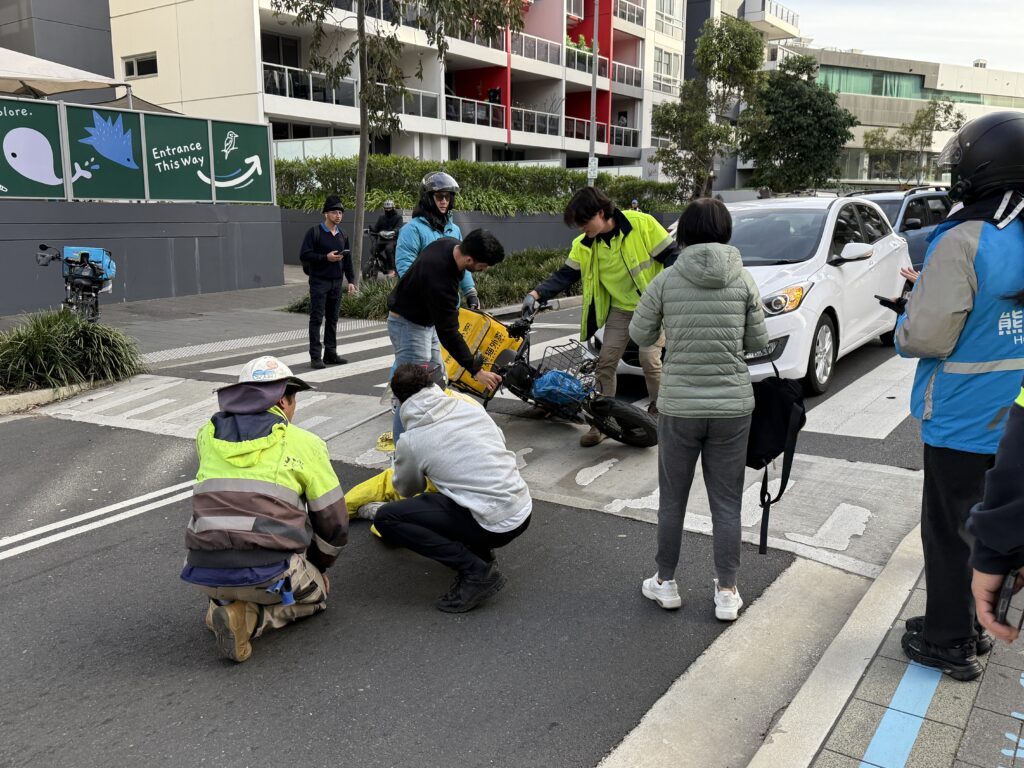
- Safety and Infrastructure Pressures
By law, e-bikes must cut motor assistance at 25 km/h, but modified or imported models easily double that. Riders report no licensing requirements, no mandated training, and few checks on equipment.
Pedestrians and motorists alike are voicing frustration at unsafe riding, cluttered footpaths, and near-misses on shared cycleways.
“They come flying down the footpath — it’s only a matter of time before someone gets badly hurt,” says Lynne Foster, a resident of Marrickville.
- Worker Rights: The Gig Economy Dilemma
Most delivery riders are classed as independent contractors, leaving them without access to minimum wage guarantees, sick pay, or superannuation. Accidents often leave riders uninsured and out of work.
Unions and advocacy groups are pushing for reform — calling for mandatory insurance coverage and clearer accountability for platforms.
Proposed protections include:
- Compulsory third-party and personal accident insurance.
- A new “dependent contractor” category granting limited worker benefits.
- A national Industry Code of Conduct for delivery platforms.
- Community Amenity Concerns
Though quieter than petrol scooters, large numbers of e-bikes can still create late-night noise, especially in high-density residential areas. Meanwhile, the scramble for parking near restaurants and pickup zones adds to street congestion.
Legislating for the Future
Experts are urging NSW and federal authorities to implement a cohesive framework — one that recognises e-bike delivery as a distinct commercial activity, not just casual cycling.
Key Recommendations Under Discussion:
- Create a Commercial E-Bike Class
Introduce a new legal category for delivery e-bikes with higher safety and maintenance standards. - Enforce Modification Rules
Impose penalties for tampering with speed limiters and strengthen import controls on high-powered models. - Compulsory Safety Training
All riders to complete online certification on road rules, defensive riding, and shared-path etiquette. - Equipment Standards
Approved helmets, lights, and high-visibility clothing to become mandatory. - Infrastructure Investment
Expand dedicated cycle lanes and build designated e-bike parking zones near restaurants and high-traffic precincts.
The Infrastructure Challenge
Transport planners say the e-bike boom could spur overdue investment in protected cycling networks. Dedicated lanes could help separate fast-moving e-bikes from pedestrians and traditional cyclists, reducing conflict and improving safety.
Urban designers also suggest integrating e-bike logistics into future developments — such as providing secure parking and dedicated delivery bays in commercial precincts.
Quote:
“E-bikes are here to stay. The question now is whether we shape the change — or chase it.”
Educating the Community
Officials and advocacy groups are calling for a public awareness campaign to promote better path etiquette and safer interactions between riders, motorists, and pedestrians.
Community feedback portals could allow residents to report unsafe practices, helping councils identify problem areas for enforcement or infrastructure upgrades.
A Turning Point for Sydney
The e-bike delivery revolution represents more than just a shift in how Sydney eats — it’s reshaping how the city moves, works, and breathes.
Handled well, it could mean cleaner air, faster service, and fairer conditions for thousands of workers. But without thoughtful regulation, the promise of progress could quickly descend into urban chaos.
Sydney now stands at a crossroads — one where innovation meets responsibility.
E-Bike Fast Facts
- Legal Speed Limit (NSW): 25 km/h motor-assisted.
- Max Motor Power: 250 watts (pedal assist only).
- Registration: Not required for compliant models.
- Helmet: Mandatory.
- Rider Age: No minimum legal age (subject to review).
- Platform Use: Uber Eats, Menulog, DoorDash, Deliveroo (legacy).
Community Voices
“We need safer cycle lanes — not just for delivery riders but for all cyclists.”
— Khoa Nguyen, delivery rider, Bankstown
“Our footpaths are not racetracks. Enforcement needs to catch up.”
— Anna Wallace, Glebe resident
“E-bikes are transforming the city. We just need rules that protect everyone.”
— Dr. Elise Robson, Urban Policy Analyst
EDITORIAL NOTE:
E-bikes have arrived as a symbol of post-pandemic innovation — an eco-conscious alternative transforming city life. But to ensure they benefit all of Sydney, from riders to residents, regulation must evolve as quickly as the technology itself.