
Strait of Hormuz is declared ‘open,’ boosting hope for a deal
-Peace in the Strait? Hormuz Reopens Amid High-Stakes Diplomacy
News Aggreagator Posted Saturday 18 April,2026
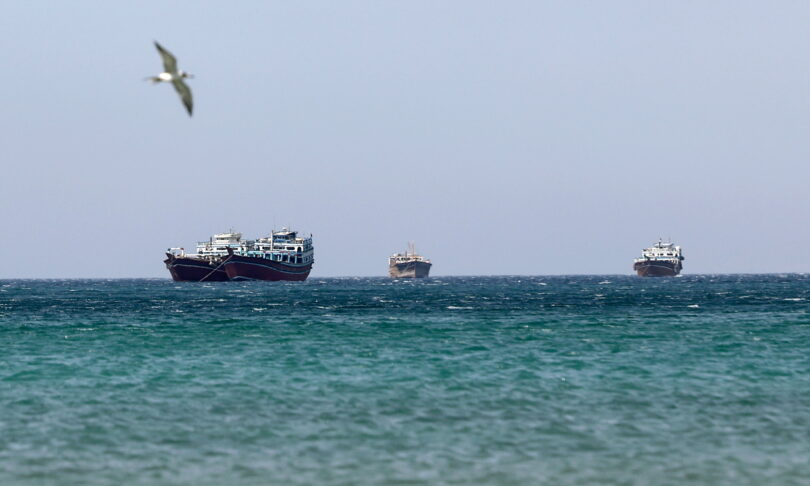
TEHRAN/WASHINGTON — In a dramatic de-escalation that sent global markets soaring, President Donald Trump and Iranian Foreign Minister Abbas Araghchi announced Friday that the Strait of Hormuz is once again open to all commercial shipping. The reopening of the world’s most vital energy artery comes alongside a fragile 10-day ceasefire between Israel and Hezbollah, fueling hopes that a comprehensive “Grand Bargain” between Washington and Tehran may finally be within reach.
A “Muddled” Normal: The Two-Tiered Blockade
While the news triggered a sharp 9% drop in Brent crude prices (falling to roughly $91 per barrel), the “return to normal” remains complicated.
-
Commercial Freedom: For the first time in weeks, tankers and cargo ships have been given the green light to transit via “coordinated routes” designated by Iran’s Ports and Maritime Organization.
-
The U.S. Naval Blockade: Despite the opening, President Trump clarified on Truth Social that the U.S. Navy’s blockade of Iranian-specific ports and sanctioned vessels remains in “full force and effect.”
-
The “Transaction”: Trump stated the blockade would persist until the U.S. “transaction” with Iran is “100% complete,” signaling that the squeeze on Iran’s own exports is being used as primary leverage in the final hours of negotiations.
Nuclear Negotiations: Uranium and “Pickaxe Mountain”
The most stunning claim from the Oval Office today involved Iran’s nuclear stockpile. President Trump told reporters he expects a deal “in the very near future,” claiming Tehran has agreed to allow the U.S. to retrieve Iran’s enriched uranium.
| Feature | Status |
| Uranium Stockpile | Trump claims a deal to remove it; Iran officially denies a transfer but remains “optimistic.” |
| Pickaxe Mountain | The “impregnable” underground facility near Natanz remains untouched by recent strikes. |
| Negotiation Window | Both sides are reportedly finalizing a memo for a 60-day formal peace talk period. |
The mention of Pickaxe Mountain (Kolang-Gaz La) underscores the urgency. Buried up to 100 meters deep, the facility has become a symbol of the limits of military force. Experts suggest that if a deal isn’t reached, this “fortress” could become the center of Iran’s future nuclear ambitions, as it is largely immune to conventional bunker-busters.
Industry Reaction: “Eyes on the Water”
Despite the political breakthrough, the shipping industry is moving with extreme caution. Global giants like Maersk and Hapag-Lloyd have stated they are “closely monitoring” the situation but have not yet resumed full-scale transits.
“The status of the mine threat is still unclear. We are waiting for a 24-to-36-hour assessment before we risk our seafarers in the channel.” — Hapag-Lloyd Crisis Committee Statement
As the 10-day Lebanon ceasefire begins its countdown, all eyes remain on the Persian Gulf. For now, the “Peace Strait” is open, but with the U.S. Navy still patrolling the perimeter and Iran’s Revolutionary Guard overseeing the lanes, it is a peace held together by the thin thread of a “transaction” yet to be signed.