
Adelaide Writers’ Week 2026 Cancelled After Mass Boycott
News Agreggator article 14 January,2025
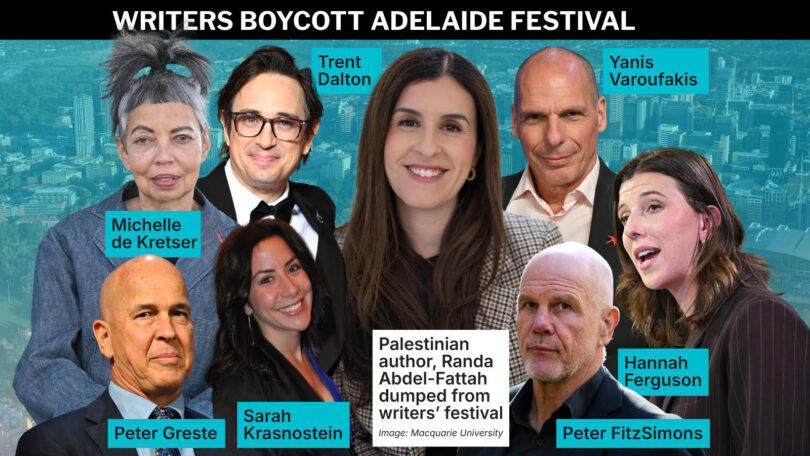
ADELAIDE – In a historic collapse of one of Australia’s premier cultural events, the 2026 Adelaide Writers’ Week (AWW) has been officially cancelled. The decision, announced by the Adelaide Festival Board on January 13, follows a week of unprecedented turmoil that saw the resignation of the festival’s director, the mass exit of almost the entire board, and a boycott by more than 180 local and international authors.
The cancellation marks the first time in the event’s 40-year history that the literary festival has been abandoned, leaving a $60 million hole in the state’s festival season and sparking a national debate over free speech and political interference in the arts.
The Spark: The Axing of Randa Abdel-Fattah
The crisis began on January 8, when the Adelaide Festival Board—reportedly under intense pressure from lobby groups and state politicians—announced it was rescinding the invitation of Palestinian-Australian author and academic Dr. Randa Abdel-Fattah.
The board cited “cultural sensitivities” following the December 2025 Bondi Beach terrorist attack, stating that while Abdel-Fattah was not linked to the tragedy, her “past statements” made her presence tenable in the current climate.4Premier Peter Malinauskas publicly supported the move, comparing the author’s inclusion to platforming “hateful rhetoric” immediately following a massacre.
Abdel-Fattah, who was scheduled to discuss her novel Discipline, hit back, labeling the move a “blatant and shameless act of anti-Palestinian racism” and an attempt to link her personal identity to a terrorist atrocity.
A Wave of Withdrawals
The board’s intervention triggered a domino effect of boycotts that made the festival logistically impossible to salvage.
-
High-Profile Exits: International literary stars including Zadie Smith, Jonathan Coe, and Masha Gessen withdrew in solidarity.
-
Political Protests: Former New Zealand Prime Minister Jacinda Ardern and former Greek Finance Minister Yanis Varoufakis (who filmed himself tearing up his invitation) also joined the boycott.
-
Internal Collapse: By January 13, over 180 participants—nearly 70% of the scheduled speakers—had pulled out.
AWW Director Louise Adler resigned in protest on the morning of the cancellation, describing the board’s decision as a “harbinger of a less free nation” and declaring she could not be “party to silencing writers.”11
The Aftermath: Board Resignations and Legal Threats
Hours after Adler’s departure, the remaining members of the Adelaide Festival Board (with one minor exception) resigned en masse. In their final statement, the board offered a “disingenuous” apology to Abdel-Fattah—not for the cancellation itself, but for “how the decision was represented.”
Abdel-Fattah has since rejected the apology and launched defamation proceedings against Premier Malinauskas, claiming his public comments were a “vicious personal assault” that put her safety at risk.
| Key Event | Impact |
| Board Intervention | Rescinded invitation to Randa Abdel-Fattah. |
| Mass Boycott | 180+ authors withdrew, leaving only 12 of 165 sessions intact. |
| Leadership Vacuum | Louise Adler (Director) and almost the entire Board resigned. |
| Financial Loss | Estimated $62.6 million economic impact on South Australia. |
What’s Next?
The South Australian government has moved quickly to appoint a “renewal board” led by former chair Judy Potter to safeguard the remainder of the wider Adelaide Festival, which is still scheduled to proceed in late February. However, the literary community remains fractured.
The collapse of the 2026 Writers’ Week is being viewed by many as a “canary in the coal mine” for the Australian arts sector, highlighting a growing tension between political “social cohesion” agendas and the fundamental principle of artistic freedom of expression.