
Beijing Summit: Trump and Xi Strike “Strategic Stability” Deal Amid Global Turbulence
World News Report /Posted Friday 15 May 2026
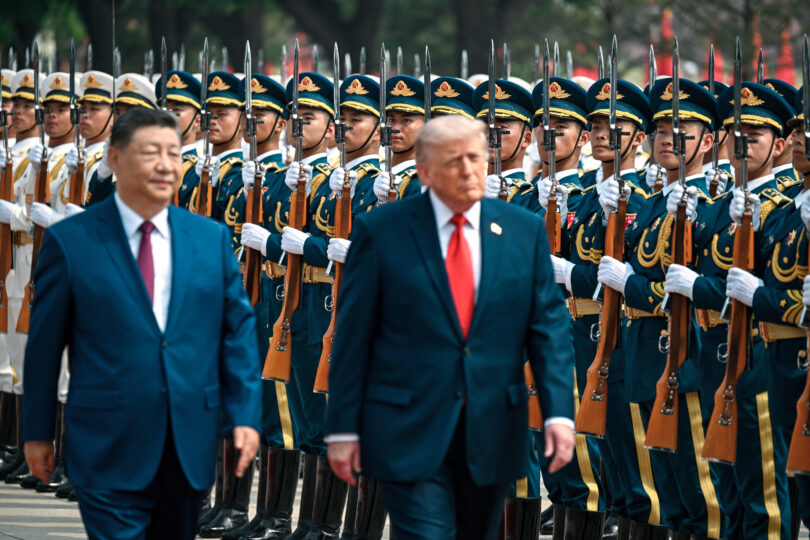
BEIJING – In a high-stakes return to the world stage, U.S. President Donald Trump and Chinese President Xi Jinping have concluded a landmark summit at the Great Hall of the People, pledging to build a “constructive relationship of strategic stability.”
The three-day state visit, which concludes today, May 15, 2026, was characterized by a blend of grand ceremonial display and intense negotiations over the ongoing conflict with Iran, the status of Taiwan, and the future of global trade.
A New Vision for “Strategic Stability”
Following hours of closed-door talks on Thursday, President Xi announced that the two superpowers had reached a “new vision” for bilateral relations. Xi emphasized that 2026 would be a “landmark year” to steer the “giant ship of China-U.S. relations” away from friction and toward predictable cooperation.
President Trump, speaking alongside Xi, lauded their personal rapport, describing it as the “longest and greatest relationship” between any two leaders of the respective nations. “Together, we can do a lot of big and good things,” Trump told reporters, signaling a desire to move past the estrangement of recent years.
Key Policy Planks & Agreements
While formal communiqués are still being finalized, the summit focused on several critical pillars:
-
Trade and “Opening Up”: Accompanied by a delegation of “titans of industry”—including Elon Musk (Tesla), Jensen Huang (Nvidia), and Kelly Ortberg (Boeing)—Trump explicitly called on Xi to “open up” China to American firms. Reports suggest a massive purchase agreement for Boeing aircraft and agricultural goods is imminent.
-
The Iran Crisis: The summit took place against the backdrop of the U.S.-led war in Iran. While Trump maintained he did not need China’s help to “win” the conflict, the two leaders discussed the stability of the Strait of Hormuz. Washington remains hopeful that Beijing will use its leverage as Iran’s top oil customer to stabilize global energy prices, which have surged past $105 per barrel.
-
The Taiwan “Red Line”: Beijing underscored that Taiwan remains the “first red line.” Discussions reportedly touched on an $11 billion U.S. arms package for the island, with Trump signaling a willingness to discuss the “nature” of future sales in exchange for strategic concessions elsewhere.
-
Bilateral “Board of Trade”: The leaders agreed to establish a new bilateral body to identify non-sensitive sectors for investment and manage tariff adjustments, aiming to prevent a return to the full-scale trade wars of the past.
Diplomacy and the “Forbidden City” Style
The visit featured the opulent “State Visit-Plus” treatment, including a 21-gun salute in Tiananmen Square and a rare tour of the Temple of Heaven—the first by a sitting U.S. president since Gerald Ford in 1975. The day concluded with a lavish banquet in the Golden Room of the Great Hall of the People.
Despite the outward amity, analysts note that the underlying competition for technological dominance—specifically in AI and critical minerals—remains unresolved. However, for now, the “uneasy calm” has been replaced by a formal commitment to dialogue, with the two leaders potentially meeting up to four times throughout 2026.