
Trump Orders Full Blockade of Strait of Hormuz After Peace Talks Collapse
World News Desk Aggregator
Monday 13 April,2026
WASHINGTON 13 April,2026
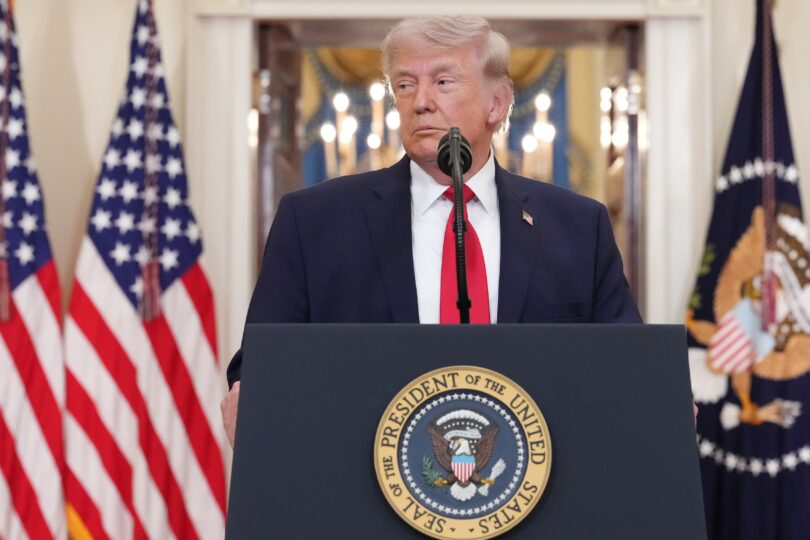
President Trump on Sunday dramatically escalated the ongoing conflict in the Middle East by ordering a full naval blockade of the Strait of Hormuz. The decision followed the collapse of high-stakes negotiations in Islamabad, where U.S. and Iranian officials failed to reach an agreement to end the six-week war.
The move marks a perilous turning point in the standoff, effectively attempting to wrest control of the world’s most vital energy artery from Tehran.
Negotiations Falter Over Nuclear Standoff
The blockade order came hours after Vice President JD Vance announced that 21 hours of intense, face-to-face talks with Iranian representatives had ended without a deal. While both sides reportedly reached “understandings” on several minor issues, the negotiations shattered over Iran’s refusal to abandon its nuclear program.
In a series of statements, President Trump laid the blame squarely on Tehran:
“The meeting went well, most points were agreed to, but the only point that really mattered, NUCLEAR, was not,” Trump posted. “Iran is unwilling to give up its nuclear ambitions!”
A Risky Strategy of “World Extortion”
The President’s directive authorizes the U.S. Navy to begin de-mining the waterway and to interdict any vessel attempting to enter or exit the strait, specifically targeting those that have paid “illegal tolls” to Iran.
The strategy appears twofold:
-
Economic Strangulation: By cutting off Iran’s ability to collect revenue and move goods, the administration hopes to force a domestic collapse or a return to the table.
-
Pressure on Beijing: The blockade is a direct challenge to China, which relies on the strait for nearly half of its oil imports. Administration officials believe that by threatening China’s energy security, Beijing will be forced to use its considerable leverage to compel Iranian concessions.
Global Economic Fallout
The markets responded with immediate volatility. Global oil prices, which had already breached $110 per barrel earlier this month, are expected to surge further. Analysts warn that a prolonged closure could push U.S. gasoline prices well beyond $4.50 per gallon, stoking inflation for consumer goods ranging from plastics to produce.
The China Factor
Beijing has reacted with sharp concern. In recent days, the Chinese Foreign Ministry warned that access to international shipping lanes “must be guaranteed,” calling for an immediate de-escalation to prevent a global economic shock.
While China played a key role in brokering a previous short-lived ceasefire, it remains unclear if they will cooperate with Washington’s blockade or view it as an act of aggression against their own national interests. For now, the U.S. Navy is moving into position, with the President issuing a stark warning: “Any Iranian who fires at us… will be BLOWN TO HELL.”