
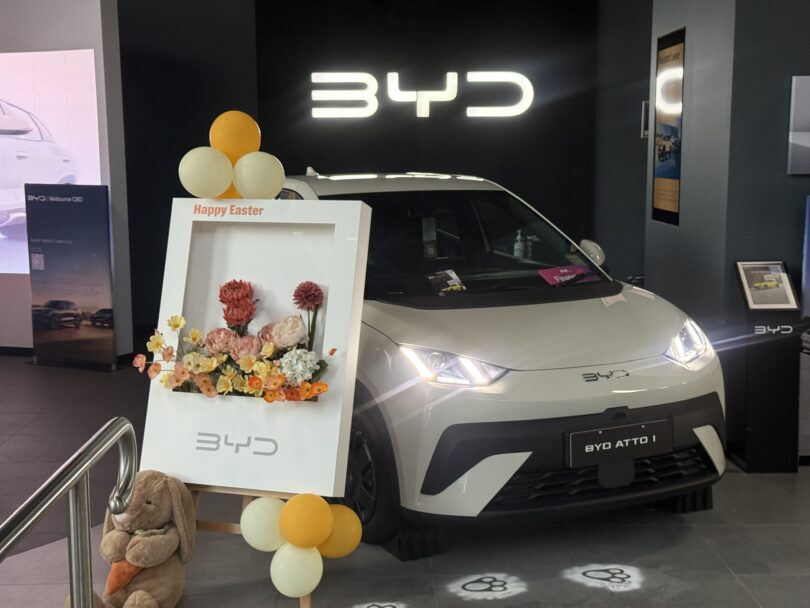

BYD Overtakes Tesla in EV Sales
SYDNEY/SHENZHEN – In a historic realignment of the global automotive landscape, Chinese EV giant BYD has firmly overtaken Tesla as the world’s leading electric vehicle manufacturer, fueled by a massive surge in Australian and European demand.
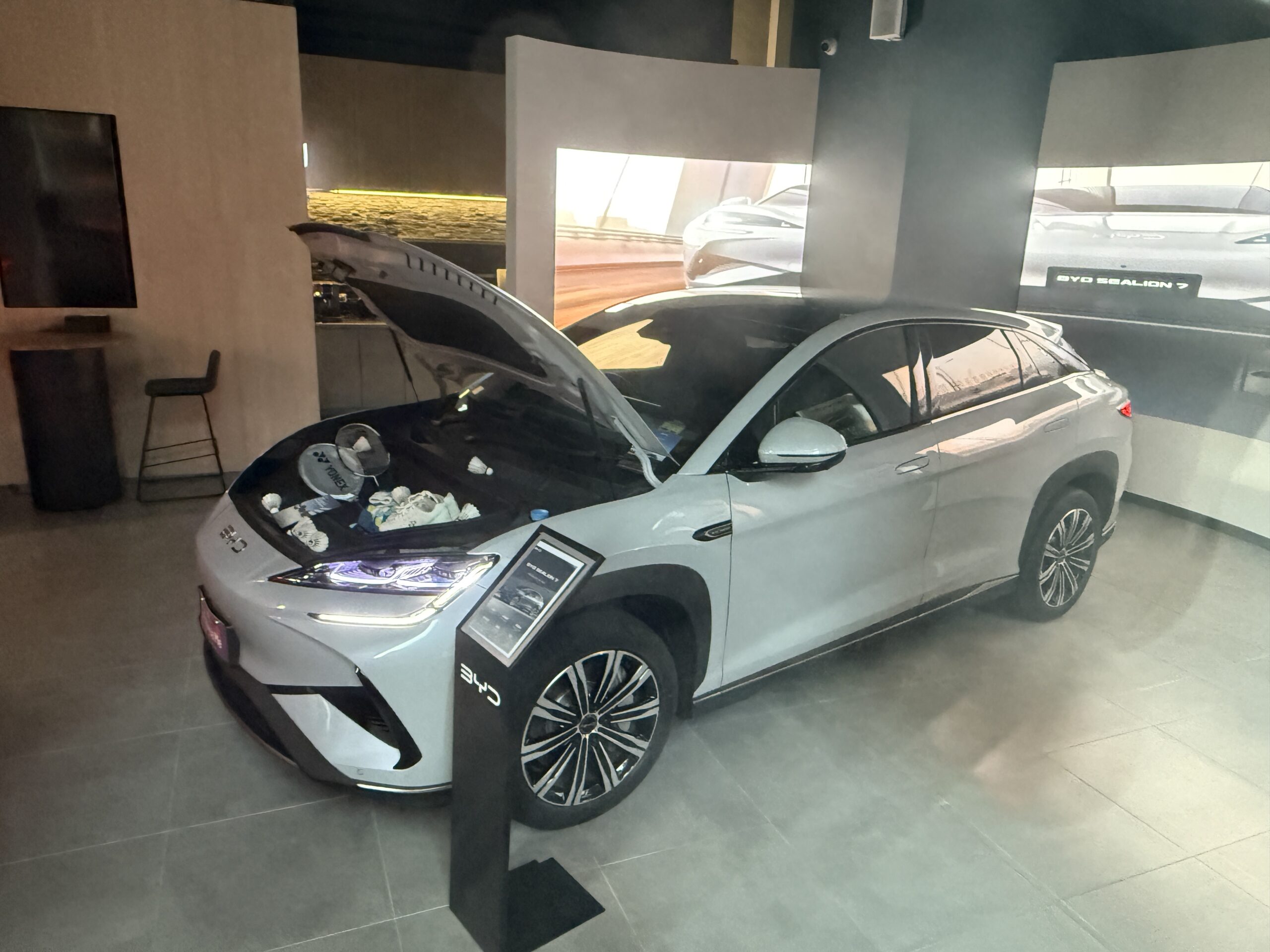
As of April 2026, the shift is no longer a forecast but a documented reality. Industry data from the first quarter of the year confirms that BYD’s multi-model strategy—ranging from the ultra-affordable Atto 1 to the premium Sealion 7—is systematically eroding Tesla’s decade-long dominance.
The “Perfect Storm”: Oil Prices Drive the Pivot
The surge has been supercharged by recent volatility in global energy markets. With crude oil prices hitting a four-year high of $100 (USD) per barrel in late March, the “math of ownership” has shifted overnight for millions of commuters.
-
Cost Efficiency: In Australia, running a petrol SUV now costs roughly 10x more per kilometer than charging a BYD equivalent.
-
Inventory Advantage: While legacy brands and Tesla have faced intermittent supply ripples, BYD’s vertical integration—manufacturing its own “Blade” batteries and semiconductors—has allowed it to maintain a steady flow of vehicles to dealerships.
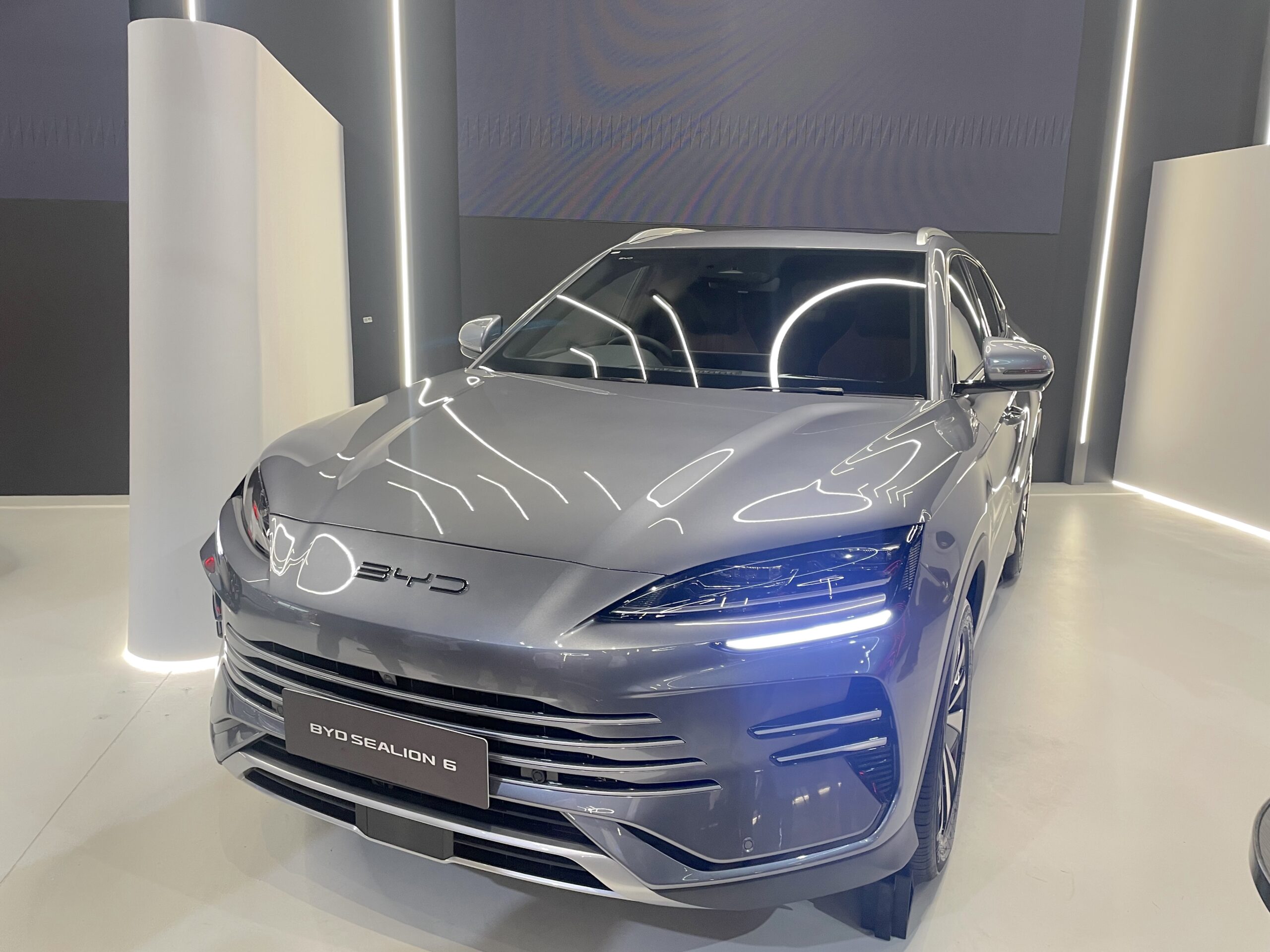
Photo Credit A.Ritenis taken at the BYD Showroom Sydney in November 2024
Australia: A Strategic Stronghold
The Australian market has become the “canary in the coal mine” for Western economies. In February 2026, China officially overtook Japan as the largest source of new vehicles sold in Australia—a milestone held by Japan for 28 years.
While the Tesla Model Y remains a top individual performer, BYD’s total brand volume across its expanded lineup (including the Shark plug-in utility and the Seal sedan) has effectively cornered the broader “New Energy Vehicle” (NEV) market.
Global Dominance: Surpassing the “T-Badge”
On the global stage, the divergence is even more stark. In the first two months of 2026, BYD outsold Tesla in Europe for the second consecutive month.
“We are entering a brutal ‘knockout stage’ in the EV industry,” noted BYD Chairman Wang Chuanfu in a recent earnings report. “Our focus is now on the global export market to offset domestic competition.”
BYD has revised its 2026 export target upward to 1.5 million units, up from a previous goal of 1.3 million. This aggressive expansion is backed by new manufacturing hubs in Brazil and Hungary, designed to bypass rising tariffs in the EU and North America.
The Road Ahead
Despite the sales triumph, the “Price War” has come at a cost. While BYD has captured the crown for volume, Tesla still maintains higher profit margins per vehicle. However, with BYD’s new 800V fast-charging platforms and Vehicle-to-Load (V2L) technology becoming standard, the value proposition is increasingly tilting toward the Shenzhen-based automaker.
For consumers currently feeling the “bowser pain” of $2.20+ per liter at the pump, the choice is becoming less about brand loyalty and more about the bottom line—a shift that BYD has positioned itself perfectly to exploit.