
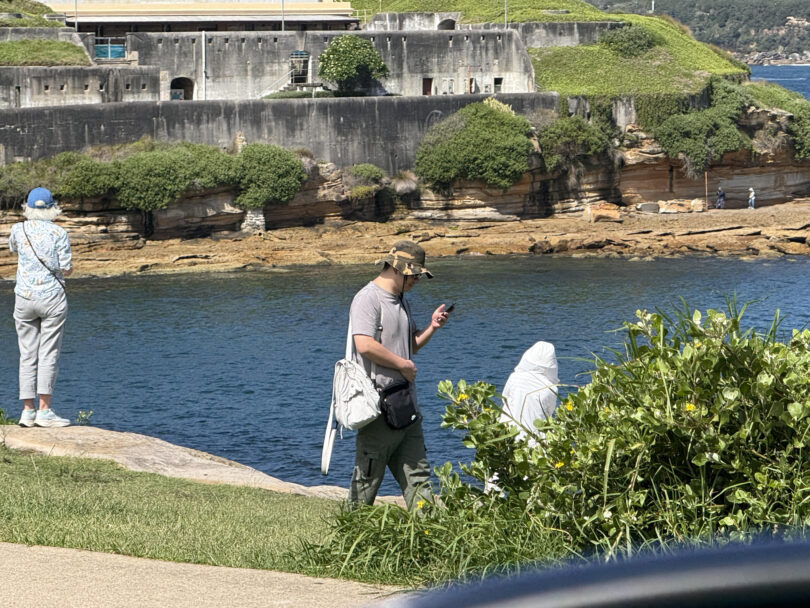

The “Tourist Spy” Phenomenon-Australia Faces Tourist Spying, Hacking Threats from Chinese
Australian security agencies, led by ASIO (Australian Security Intelligence Organisation), have identified a shift in how foreign intelligence operates. Rather than relying solely on professional case officers, there is an increasing trend of using Chinese nationals—often traveling on tourist or student visas—to conduct “reckless foreign interference.”
-
Targeting Diaspora Communities: In August 2025 and early 2026, several Chinese nationals were arrested in Canberra for covertly gathering information on a local Buddhist association. Authorities allege they were acting under the direction of Chinese security agencies to monitor and intimidate groups considered “dissident” by Beijing.
-
Transnational Repression: This involves monitoring the activities of Australians with Chinese heritage. By using visitors to track “enemies of the state” abroad, foreign powers aim to silence criticism and ensure loyalty within the diaspora through the threat of repercussions for families back home.
Digital Espionage and Hacking
While physical monitoring occurs on the ground, the more pervasive threat resides in the digital realm. ASIO Chief Mike Burgess recently warned that Australia is at the “threshold of high-impact sabotage,” with Chinese state-sponsored groups like Salt Typhoon and Volt Typhoon actively probing Australian infrastructure.
1. Monitoring Australians at Home
Recent reports from the Signals Directorate indicate that hackers are increasingly targeting remote workers. By hijacking home routers and “smart” IoT devices (cameras, thermostats), they create backdoors into corporate and government networks.
-
Method: “Living off the Land” (LotL) techniques, which use a system’s own legitimate tools to hide malicious activity, making detection extremely difficult.
-
Goal: To steal intellectual property (IP) and commercially sensitive data, estimated to cost the Australian economy $2 billion annually in stolen trade secrets.
2. Political Surveillance
In 2025, it was revealed that Chinese hacking groups, specifically APT31, targeted Australian Members of Parliament. These attacks used “tracking pixels” in phishing emails to monitor the online behavior and device locations of legislators, likely to gather intelligence on Australia’s foreign and economic policies.
The Policy Dilemma
The Australian government faces a delicate balancing act. In July 2025, Prime Minister Anthony Albanese signed a Memorandum of Understanding to boost Chinese tourism, recognizing its vital role in the national economy. However, the security community maintains that “national security is now everybody’s business.”
“Authoritarian regimes are now willing to go even further… they are actively and aggressively mapping our systems to enable sabotage at a time of their choosing.” — Mike Burgess, ASIO Director-General (November 2025)
What Can Australians Do?
Security experts suggest several proactive steps to mitigate these risks:
-
Secure Home Networks: Ensure all routers have updated firmware and that default passwords on “smart” devices are changed immediately.
-
Digital Hygiene: Be wary of unsolicited emails or messages, even if they appear to be from legitimate news or research outlets.
-
Reporting: The National Security Hotline (1800 123 400) remains the primary contact for reporting suspected foreign interference or intimidation within the community.