

Tankers Burn as Iran’s “Liquid Blockade” Chokes the Strait
By Axel Ritenis Publisher & Editor, The Sydney Times
THE STRAIT OF HORMUZ – The world’s most critical energy artery has become a graveyard of burning steel. As of this morning, Friday, March 13, 2026, the Strait of Hormuz is effectively a “no-go zone,” with at least 16 major merchant vessels struck by Iranian projectiles, drones, and mines since hostilities erupted late last month.
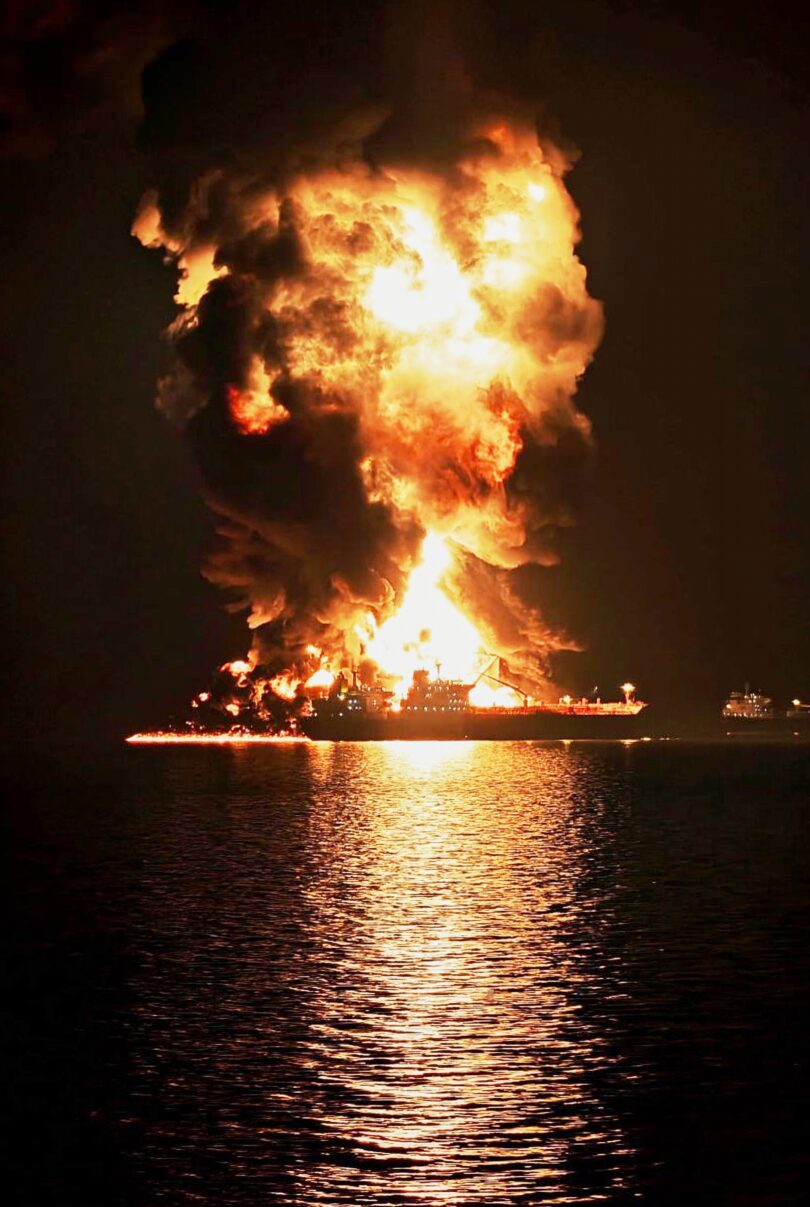
The horizon off the coast of Oman is thick with the acrid black smoke of the Thai-flagged Mayuree Naree, which remains ablaze after being struck by two projectiles on Wednesday. While the Royal Navy of Oman rescued 20 crew members, three remain missing, believed to be trapped in the ship’s engine room.
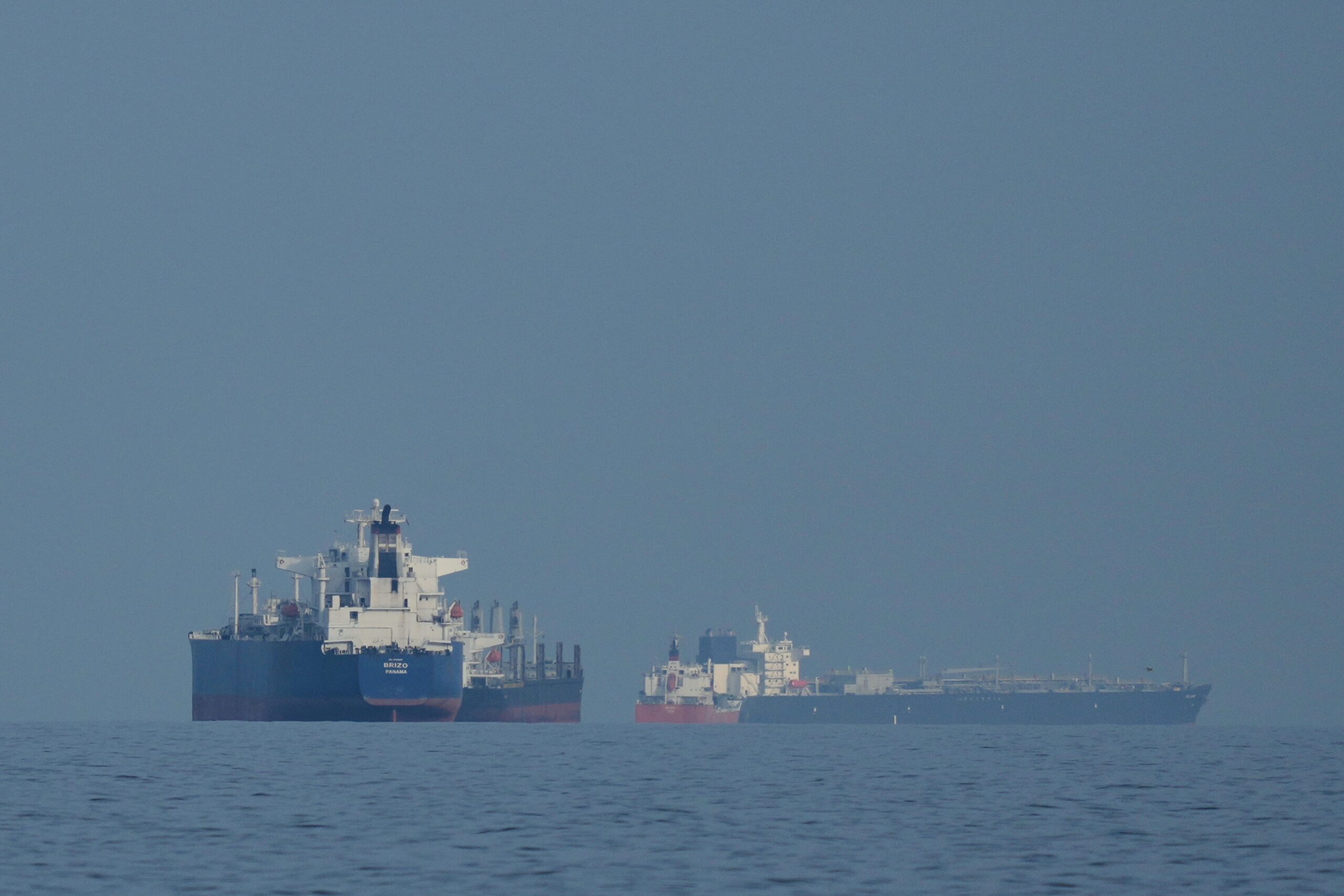
Oil tankers and cargo ships line up in the Strait of Hormuz as seen from Mina Al Fajer, United Arab Emirates, Wednesday, March 11, 2026. (AP Photo/Altaf Qadri)
A Total Shutdown of Global Energy
Iran’s Islamic Revolutionary Guard Corps (IRGC) has made good on its chilling promise that “not even a single litre of oil” will leave the region if US-Israeli strikes on Iran continue.
-
The $200 Threat: Tehran has warned the global community to prepare for $200-a-barrel oil. Brent Crude has already surged past $120, a price point not seen in years, as traders price in the total loss of the 20 million barrels that ordinarily transit the Strait daily.
-
Shipping Standoff: Industry giants Maersk, CMA CGM, and Hapag-Lloyd have suspended all transits. Insurance risk premiums have reached “prohibitive” levels, meaning even the boldest captains are refusing to enter the Gulf.
-
The “Dark” Dash: Some vessels, like the Saudi-loaded Shenlong, have successfully reached ports in India by “going dark”—turning off their AIS tracking signals and hugging the coast—but such successes are becoming the exception rather than the rule.
The Architects of the Firestorm
The humanitarian and economic toll is mounting, fueled by what many analysts call the “uncompromising” stances of the conflict’s central figures.
Donald Trump: “Finish the Job” From the campaign trail, US President Donald Trump has maintained a characteristically aggressive posture. Despite reports of 1,100 children among the casualties of the broader war, Trump told a rally in Kentucky on Wednesday that the US has “practically nothing left to target in Iran” and urged military forces to “finish the job.” Just hours later, the US military released footage of strikes destroying 16 Iranian mine-laying vessels.
Bibi Netanyahu: The Regional Tinderbox In Israel, Benjamin Netanyahu’s government continues to frame the strikes as a necessary pre-emptive measure against Iranian nuclear and drone capabilities. However, by taking the war to Iran’s maritime doorstep, the “Bibi Doctrine” has inadvertently triggered a global energy shock that is now hitting the “lives and households of everybody,” as UK Prime Minister Keir Starmer warned this week.
The Sydney Impact: Beyond the Pump
For us in Australia, this is more than just a distant war. The closure of Hormuz hits the “Australian Pincer”:
-
Energy Inflation: Rising fuel costs are already feeding into transport and logistics, threatening to reignite domestic inflation.
-
The Tech Squeeze: As power-hungry AI data centers (the very ones replacing Atlassian workers) face skyrocketing electricity costs, the “digital revolution” is hitting a literal power wall.
As the Mayuree Naree continues to burn and the IRGC begins laying naval mines in the channel, the world watches to see if the “Architects of Ruin” can find a way to reopen the Strait—or if they are content to let the global economy sink with the tankers.