
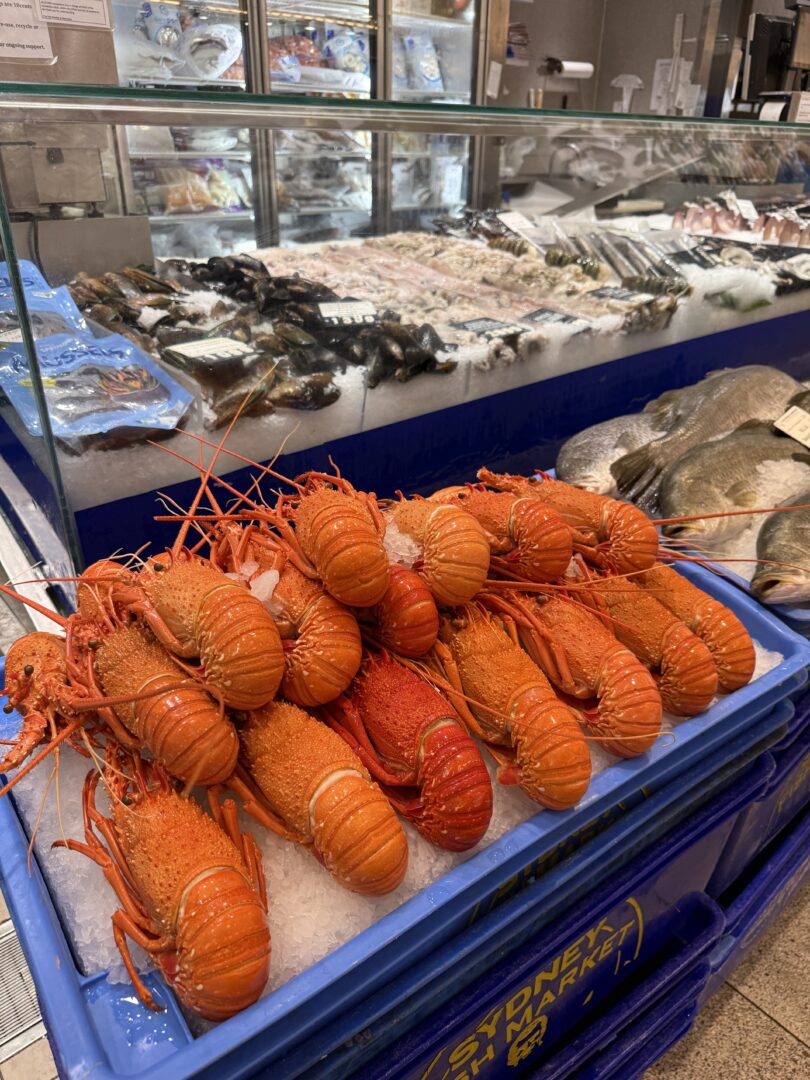

Christmas Seafood Sticker Shock – Why Your “Lobster” is a Crayfish, and China is Driving Up the Price
*Sydney Times Food Guide article researched by A.Ritenis /Formatting and flow Gemini AI for formatting /Fact checking in the Fish Market!
SYDNEY, NSW – The traditional Australian Christmas seafood feast is facing another round of sticker shock, with Western Australian cooked “lobster” hitting prices of approximately $99.99 per kilogram for many mid-sized specimens. Consumers are not only grumbling about the exorbitant cost for what is technically a crayfish (or rock lobster), but also pointing the finger at the renewed appetite of Australia’s largest export customer: China.
For many, the return of high crustacean prices signals the end of a brief, post-trade-dispute reprieve that saw locally available lobster at half the current cost. Now, with the critical China market fully reopened, local consumers are once again competing with global demand.
The China Connection: From Glut to Gouge
Australia’s rock lobster industry, particularly in Western Australia, relies almost entirely on the export market, with China historically taking over 90% of the live catch.
-
2020-2024 Trade Ban: When China imposed import restrictions in late 2020, Australian fishers were forced to redirect stock into the domestic market. This created a massive, temporary lobster glut which saw prices plummet to unprecedented lows, often under $40/kg in some direct sales—a Christmas miracle for local seafood lovers.
-
The Price Surge: The recent full resumption of the live rock lobster trade with China has instantly reversed this trend. Exporters can now command premium prices for live product overseas, drawing stock away from domestic retailers and driving the price of remaining cooked product back towards pre-ban highs.
“The price of seafood at Christmas is a direct reflection of what the live export market is willing to pay,” explained one industry analyst. “When China is buying, the price becomes astronomical for the local consumer. It’s simply too valuable as a luxury gift item overseas to stay affordable here.”
Is it Lobster or Crayfish? The Claw Confusion
The confusion over price is often compounded by nomenclature. The premium crustacean sold at Australian fish markets, particularly the Western Rock Lobster (Panulirus cygnus) and Southern Rock Lobster (Jasus edwardsii), is almost universally referred to as a crayfish (or “cray”) by locals, but often marketed as “Lobster” to the wider public.