

Minns Labor Government’s legislation to ban deepfakes
-NSW Government will criminalize creation and distribution of sexually explicit deepfakes
NSW PARLIAMENTARY QUESTION TIME – THURSDAY, 7 AUGUST 2025
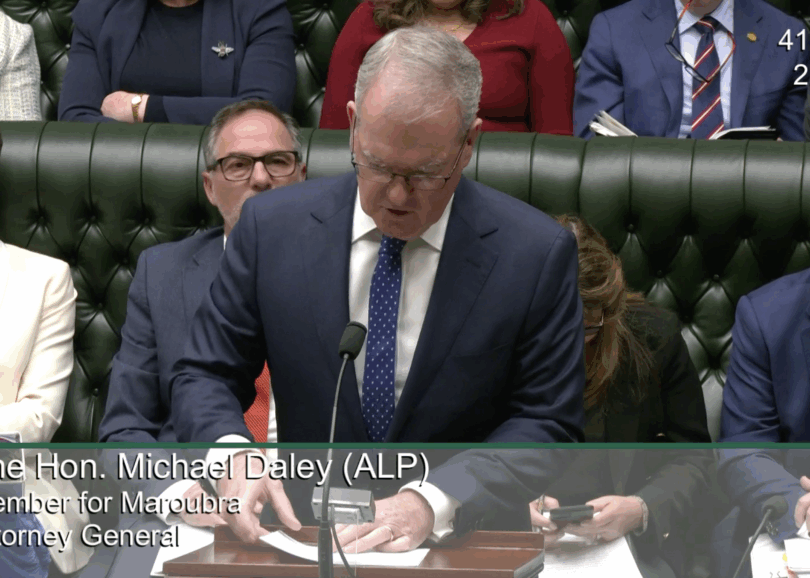
Today during NSW Parliament Question Time, the Attorney General, Michael Daley, answered a question on the Minns Labor Government’s legislation to ban deepfakes.
Transcrip and Video Footage t below PARLIAMENTARY QUESTION TIME – THURSDAY, 7 AUGUST 2025
Member for South Coast – My question is to the Attorney General, can the Attorney General please update the House on the Minns Labor Government’s plan to create a safer New South Wales by criminalising the creation and distribution of sexually explicit deepfakes.
ATTORNEY GENERAL:
Thank you, Mr. Speaker, can I thank the Member for South Coast for her question and for her ongoing efforts in her community to make New South Wales a better and safer place for women. Mr. Speaker, the Minns Labor Government is changing the law to strengthen protections against image based abuse. The rapid development of technology, such as artificial intelligence, has introduced new threats to women and young people. Existing intimate image offenses pre-date the development of this kind of technology that can be used to inflict real and lasting harm. By introducing legislation to criminalise the creation and distribution of sexually explicit deepfakes, we are rectifying a potential shortcoming in the law that leaves people vulnerable to technology facilitated abuse.
Mr. Speaker, I think it’s worth stepping through what the law already covers and what we’re changing better, to better protect against image-based abuse. Currently in New South Wales, the recording, the recording, alteration and distribution of intimate images without consent is a crime.
Under the Crimes Act 1900 is it is an offense to record or capture intimate images by any means, distribute intimate images, including images that are altered to be an intimate image, or threaten to record or distribute an intimate image. The maximum penalty for these offences is $11,000 or three years imprisonment or both.
Mr. Speaker, our bill amends the definition of intimate image to include a digitally-generated image that purports to be a genuine depiction of a real, identifiable person, including by artificial intelligence. It criminalises creation of such images without consent and it will also provide for the following offences for non-consensual conduct: altering an image to be an intimate image, because currently, only distribution of such images is unlawful; distributing a digitally generated intimate image; recording or creating explicit audio material, so audio material will be captured for the first time, or altering audio to be sexually explicit; distributing explicit audio material and; threatening to do any of the above.
The bill continues to require the DPP to approve the commencement of proceedings against children under 16 years, and it works within the existing intimate images framework. This is important because it means that things like rectification orders, that allow courts to make orders that a person do things like remove or destroy intimate images, will continue to apply to the new offences. It also means that carefully thought through exemptions, such as an exemption where conduct is engaged in for a genuine medical or scientific purpose, will also apply.
Mr. Speaker, it will also complement Commonwealth … [MEMBER FOR SOUTH COAST REQUESTS AN EXTENSION] ATTORNEY GENERAL:
Thank you. Mr. Speaker, it’ll also complement existing Commonwealth penalties that make the non-consensual sharing of such explicit material using a carriage service an offence punishable by up to six years in jail. Mr. Speaker, where the person also created the deepfake that’s shared without consent, an aggravated offence carrying a higher penalty of seven years jail applies.
And so Mr. Speaker, these amendments will bring New South Wales in line with other jurisdictions that have criminalised the non-consensual production and distribution of explicit material involving adults, regardless of how it’s created. Mr. Speaker advocacy services such as Full Stop have told us that this type of tech-facilitated abuse is on the rise.
And I want to thank CEO Karen Bevan for assisting the Government in the consultation phase and also for standing up with me and the Minister for Women and the Prevention of Domestic Violence this morning to add her undoubted expertise to public discussions and the development of this law. The eSafety Commissioner last year found there’s been a significant rise in explicit, deepfakes.
They pointed to a potential 550 per cent year on year increase since 2019. Mr. Speaker, in April, the Premier said we’re looking very closely at changes in the law to protect people. So now, the government’s done the work to develop a bill and a carefully and considered manner. . Mr. Speaker, this work will continue to be looked at. There’s a 12-month statutory review. We’ll be watching developments in technology very closely to make sure that the law does not lag behind technology.