

Turning Point for Science: CSIRO Secures $387 Million Budget Lifeline to Stability and Jobs
News Aggregator/Science and the Economy/Article generated using Ministerial transcripts and Gemini AI /Posted on Monday 18 May,2026
SYDNEY — The Federal Government has announced a major financial lifeline for Australia’s premier scientific body, injecting an additional $387.4 million over four years into the Commonwealth Scientific and Industrial Research Organisation (CSIRO).
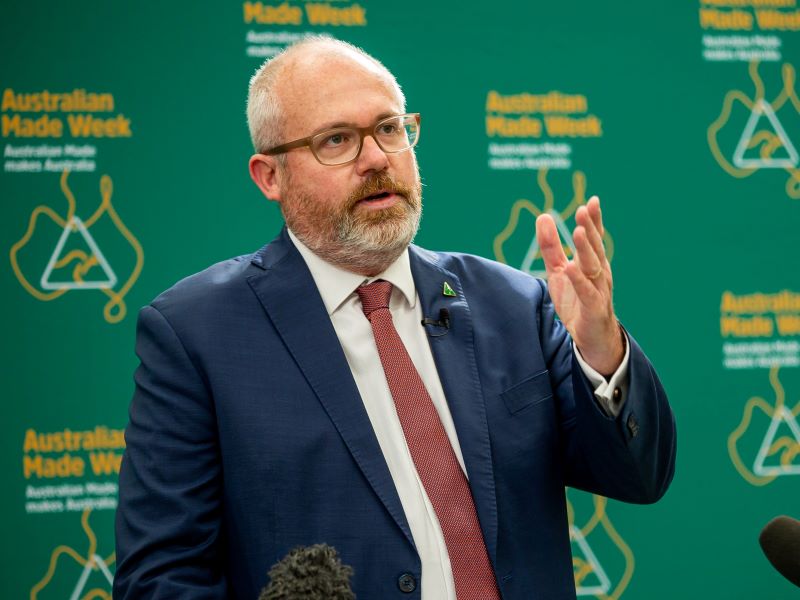
Announced by the Minister for Industry, Innovation, and Science, Senator Tim Ayres, during a doorstop interview at the CSIRO Westmead Health and Innovation Precinct Facility, the funding comes ahead of the upcoming Federal Budget. The cash injection is designed to reverse years of compounding financial strain and offer widespread workforce stability across the organization.
The funding is on top of the approximately $1 billion the government already allocates annually to the science agency.
End to Decades of Strain and Job Fear
The announcement comes at a critical juncture for the agency, which had recently faced scrutiny over projected cuts to hundreds of research roles due to immense budgetary pressures.
CSIRO Chief Executive Officer Dr. Doug Hilton hailed the injection as a monumental “turning point” that addresses a 30-year accumulation of organizational sustainability challenges.
“This funding injection gives us real workforce stability into the future,” Dr. Hilton said, reassuring staff that the era of immediate job insecurity has been averted. “Science is a creative process, and people need the confidence of future funding to be able to do the best possible science.”
While Dr. Hilton acknowledged that minor shifts would still occur to keep skills aligned with modern national priorities, the overarching theme of the investment is stability, facility modernization, and robust cybersecurity.
Disease Preparedness and Capital Upgrades
A key pillar of the pre-Budget announcement is targeted directly at national health security. The government will lock in an additional $38 million per year starting from the 2030–31 financial year for the Australian Centre for Disease Preparedness (ACDP) based in Geelong.
Furthermore, the upcoming Budget will detail a distinct capital funding package aimed at critical physical upgrades to ensure the Geelong facility remains fit-for-purpose.
Minister Ayres emphasized that global pandemic threats are far from a remote possibility, making human, agricultural, and wildlife disease preparedness a fundamental pillar of national resilience.
“We’re backing Australian science because Australian science is crucial for our health, for our welfare, for our future prosperity, and for our resilience,” Minister Ayres stated.
Expanding the “Future Made in Australia” Scheme
Beyond the lab benches of the CSIRO, Minister Ayres leveraged the event to announce a massive administrative shakeup designed to streamline multi-billion-dollar green and heavy industry investments.
The Investor Front Door initiative, currently overseen by the Treasury, will officially migrate into the Department of Industry, Science and Resources.
By merging the Investor Front Door with the existing Major Projects Facilitation Agency, the government intends to place it at the nucleus of its broader Future Made in Australia initiative—which Ayres dubbed the largest pro-industry and pro-manufacturing package in Australian history.
The structural shift aims to cut through bureaucratic regulatory processes and more effectively tie massive sovereign investments to public financing mechanisms, including the National Reconstruction Fund. The goal is to rapidly clear paths for transformational regional projects, such as onshore critical metals production, iron, and steel manufacturing.
Geopolitics and Budget Headwinds
The pre-budget reveal took place against a volatile international backdrop. Addressing the ongoing economic pressures stemming from the war involving Iran, Minister Ayres labeled the conflict “the biggest energy shock in the world’s history.”
Ayres credited the government’s Minimum Stockholding Obligation frame—introduced in 2022—with acting as a domestic shock absorber for freight, trucking, and agriculture. However, he admitted that global instability has heavily weighed on calculations for the broader budget strategy, reinforcing the necessity of localized manufacturing and industrial sovereignty.
When pressed on swirling media speculation regarding potential changes to migration points testing or changes to negative gearing and capital gains tax, Ayres held a firm line, refusing to spoil the Treasurer’s Tuesday night address.
“The Budget isn’t a sort of Excel spreadsheet,” Ayres said. “The Budget is a statement of the Government’s priorities and the Government’s values… I’ll let the Budget speak for itself, and I’ll let Jim [Chalmers] set those propositions out.”