
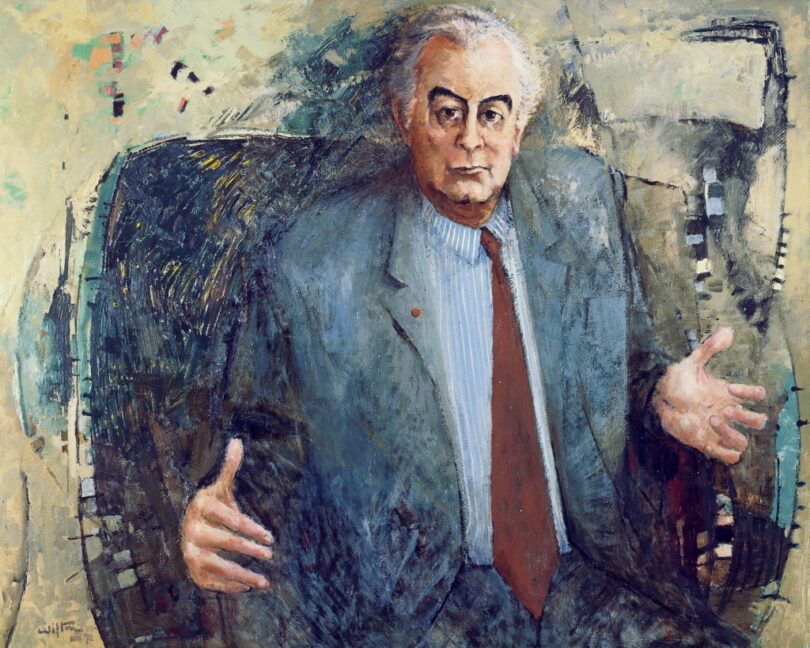

Australia Marks 50th Anniversary of Whitlam’s Dismissal
This News article with analysis was generated by Google Gemini AI and fact checked by A.Ritenis
CANBERRA, Australia – November 11, 2025 – Half a century to the day, Australians are marking the 50th anniversary of “The Dismissal”—the moment Governor-General Sir John Kerr controversially sacked Gough Whitlam’s elected Labor government, triggering the nation’s most profound constitutional crisis.
The anniversary has ignited fresh debate on the political, constitutional, and historical ramifications of the day, with current political leaders and historians reflecting on the sudden removal of a Prime Minister whose government drove sweeping social reform.
A Day Etched in History
On November 11, 1975, amid a tense political deadlock where the Opposition-controlled Senate was blocking key budget bills (“supply”), Sir John Kerr used the Constitution’s reserve powers to dismiss the government. He immediately installed Opposition Leader Malcolm Fraser as caretaker Prime Minister, on the condition that he call a general election.
The dramatic scene that followed on the steps of Old Parliament House—Whitlam’s fiery address to the crowd after the dissolution of Parliament was proclaimed—remains an iconic image in Australian history.
“Well may we say ‘God save the Queen’,” Whitlam declared to a furious crowd, “because nothing will save the Governor-General.”
A “Partisan Political Ambush”?
Commemorative events across the nation have been dominated by strong commentary, reigniting the decades-old argument over the legitimacy of the act.
In a powerful address delivered on the eve of the anniversary, current Labor Prime Minister Anthony Albanese emphatically labelled the dismissal as “not a ‘constitutional crisis’—it was a partisan political ambush.”
He accused conservative forces of orchestrating a “calculated plot” that sacrificed conventions for the pursuit of power.
The PM also used the occasion to announce the commissioning of a statue of Gough Whitlam to stand in Canberra, commemorating his visionary reforms and his enduring legacy.
Constitutional Questions Persist
While the Dismissal led to no significant constitutional changes regarding the Governor-General’s powers or the Senate’s ability to block supply, the events of 1975 have forever shaped the nation’s political consciousness.
Historians and commentators continue to analyse whether Kerr’s use of the reserve powers was a necessary constitutional intervention to resolve a budgetary deadlock, or an unconstitutional breach of democratic convention.
The release of the ‘Palace Letters’ in 2020, which revealed communication between Kerr and the Queen’s private secretary in the lead-up to the dismissal, only served to deepen the historical scrutiny.
The Museum of Australian Democracy at Old Parliament House is hosting a special program of exhibitions and panel discussions featuring former Prime Ministers, journalists, and constitutional experts, offering varied perspectives on the tumultuous period.
A Transformative, Polarising Legacy
Regardless of one’s view on the means of its end, the Whitlam government (1972-1975) is widely acknowledged for its extraordinary burst of legislative reform. In under three years, it abolished university fees, introduced the precursor to Medicare (Medibank), established the Family Law Act, ended conscription, and dramatically shifted Australia’s foreign policy towards greater independence and engagement with Asia.
For a generation of Australians, the dismissal was a profound shock—the abrupt termination of a government that promised and delivered sweeping modernisation. For others, it was a welcome end to a period of economic instability and government dysfunction.
Fifty years later, the Dismissal remains Australia’s sternest test of democracy, ensuring that the name Gough Whitlam and the date November 11 will continue to spark passionate debate for generations to come.