

17 Nations including Australia Unite to Safeguard Vital Subsea Cables and Pipelines
World News Desk/News Aggregator using Gemini AI and fact checking in newsroom
Posted on Monday,01 June 2026
SINGAPORE
In a major step toward addressing a critical but often hidden vulnerability in global connectivity, 17 nations have officially launched a collaborative framework to defend critical underwater infrastructure against deliberate attacks, sabotage, and accidents.
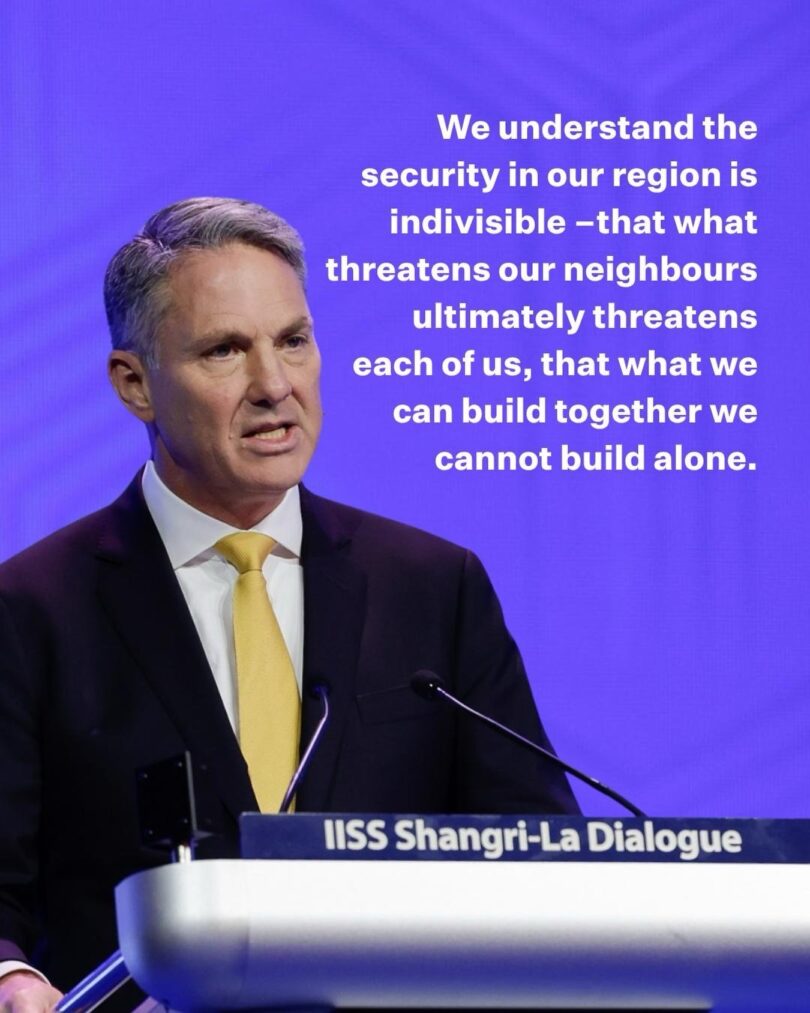
The Guiding Principles for Underwater Infrastructure Defence Exchanges (GUIDE) initiative was officially unveiled on May 30 on the sidelines of the 23rd Shangri-La Dialogue. Spearheaded by Singapore, the agreement marks the first cross-regional defense framework specifically tailored to confront undersea security challenges.
“Undersea networks are the quiet backbone of the modern economy, carrying more than 95% of all international internet and data traffic, alongside critical energy pipelines. Despite their strategic importance, these cables and pipelines face escalating threats ranging from everyday maritime accidents to sophisticated state-sponsored sabotage and vandalism.”
The participating nations represent a unique alliance bridging Europe, the Middle East, Oceania, and Southeast Asia. The initial coalition includes Singapore, Malaysia, Australia, Brunei, Estonia, Finland, France, Italy, Latvia, Lithuania, the Netherlands, New Zealand, the Philippines, Qatar, Sweden, Thailand, and the United Kingdom.
While managing and repairing underwater systems has historically fallen on civilian entities and private telecom giants, the new framework acknowledges that military and defense forces must play a vital role in protecting these networks.
“Critical underwater infrastructure systems and related elements are essential to connectivity and economic growth, with global communications networks dependent on subsea telecommunications cables that carry more than 95 per cent of all internet and data traffic under the ocean.”
“States also rely on subsea energy transmission infrastructure, such as oil and gas pipelines and power cables.”
Quote from Singapore Straits Times
The GUIDE framework will focus primarily on cultivating robust, inter-regional information sharing to track maritime anomalies and provide early warnings for potential infrastructure incidents.
t also aims to establish clear guidelines on how to safely lay, maintain, and deter bad actors from disrupting subsea grids. Because the framework is voluntary and non-binding, it is designed to maximize flexibility and rapid communication between defense establishments during emergencies.
Going forward, the initiative is expected to open up to the broader international community, with officials expressing hope that a unified front will deter future threats against the world’s shared digital and energy pipelines.