
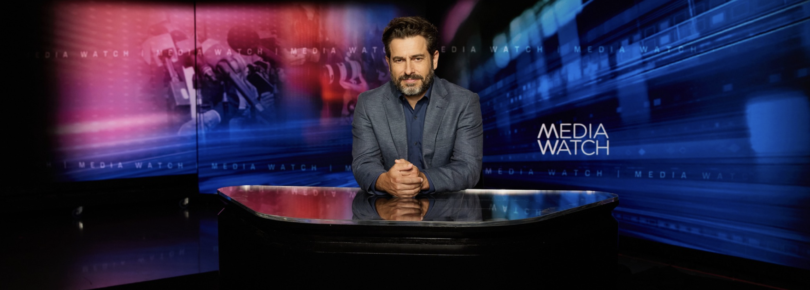

ABC’s Media Watch hosted by Clinton Besser highlights the watershed moment in the legal accountability of “Big Tech.”
The recent California court case and the accompanying report from the ABC’s Media Watch hosted by Clinton Besser) marks a watershed moment in the legal accountability of “Big Tech.”
-The following is an article and media summary regarding the landmark verdict and the program’s analysis of how Meta (and YouTube) were exposed for their role in the youth mental health crisis.

This photo illustration created on January 7, 2025, in Washington, DC, shows an image of Mark Zuckerberg, CEO of Meta, and a phone displaying the download page for the Facebook app. – Social media giant Meta on January 7, 2025, slashed its content moderation policies, including ending its US fact-checking program, in a major shift that conforms with the priorities of incoming president Donald Trump. (Photo by Drew ANGERER / AFP)
The Verdict: “Engineering Addiction” Under the Microscope
In a historic decision on March 25, 2026, a Los Angeles jury found Meta and YouTube liable for the mental distress of a young woman, identified in court as “KGM” or Kaley. The jury awarded $6 million in damages ($3 million compensatory and $3 million punitive), determining that the platforms were not just passive hosts of content, but defective products designed to hook developing brains.
Key Findings of the Case
-
Design, Not Content: Crucially, the jury focused on the design features of the apps—such as the infinite scroll, autoplay, and predatory notifications—rather than the content of the posts themselves. This allowed the case to bypass “Section 230” protections that usually shield tech firms from liability for what users post.
-
The “Tweens” Strategy: Internal documents revealed during the trial showed executives strategizing to “win big with teens” by targeting them as “tweens.”
-
Liability Split: Meta was found 70% responsible, with the jury specifically citing the testimony of Mark Zuckerberg, which some jurors described as inconsistent and unconvincing.
Media Watch Summary: Exposing the “Big Tobacco” Moment
The Media Watch segment (led by Paul Barry) dissected how the media—and the tech giants themselves—handled this exposure. The program highlighted a stark contrast between Meta’s public PR “safety” campaigns and the internal realities revealed in court.
1. The PR vs. Reality Gap
Media Watch noted that for years, Meta executives (including Instagram head Adam Mosseri) have publicly denied that social media is “clinically addictive.” However, the program highlighted internal reams of documents presented to the jury that showed the company was well aware of the “cyclical and harmful nature” of their psychologically manipulative features.
2. Challenging the “Complex Factors” Defense
The program critiqued Meta’s standard media response: that “teen mental health is complex and cannot be linked to a single app.” Media Watch argued that while mental health is complex, the court found Meta’s design was a “substantial factor” in causing harm—a legal distinction that shifts the burden of proof away from Meta’s favorite talking points.
3. The Shift in Media Narrative
The segment observed a “Big Tobacco” shift in global media coverage. Much like the 1990s lawsuits against cigarette companies, the narrative has moved from “user responsibility” to “product safety.” Media Watch emphasized that this verdict acts as a “bellwether,” likely opening the floodgates for over 2,000 similar pending lawsuits from parents and school districts worldwide.
“Today, a jury saw the truth and held Meta and Google accountable for designing products that addict and harm children.” — Plaintff’s Legal Team, as featured in Media Watch analysis.
Summary Table: The Case vs. The Defense
| Feature | Court Finding / Plaintiff Argument | Meta/YouTube Defense |
| Infinite Scroll | Designed to prevent “stopping cues” in the brain. | A feature to help users “stay connected.” |
| Internal Research | Meta knew features were harmful but suppressed data. | Meta invests in safety because it’s “good for business.” |
| Responsibility | Products are “defective” by design. | Mental health issues stem from “turbulent home lives.” |
| Outcome | $6 Million total damages awarded. | “We respectfully disagree and will appeal.” |