
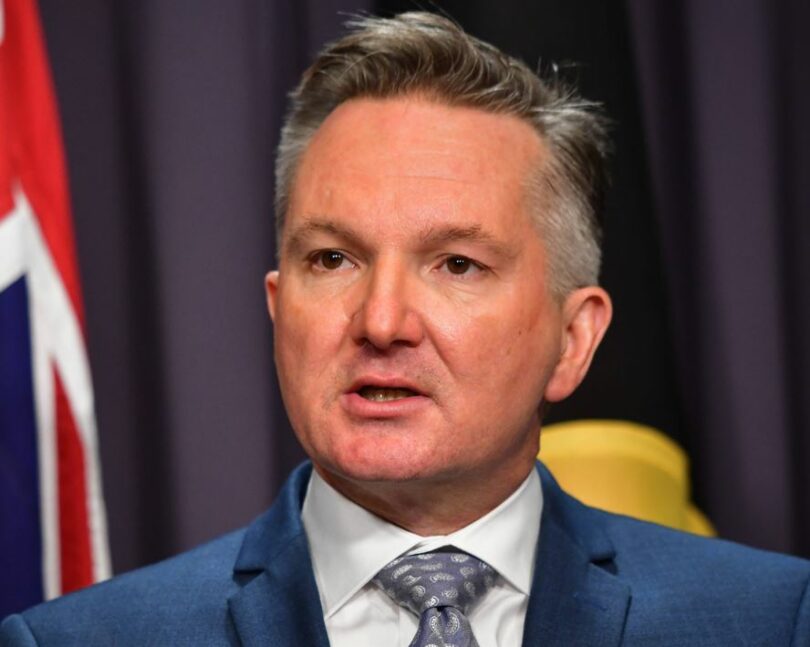

Energy Minster Chris Bowen Issues National Energy Update Amid Global Supply Concerns
Strategic Fuel Reserves and Data Centre ‘Self-Sufficiency’ Rules Front and Centre at Canberra Briefing
News summary of Media Transcript generated using Gemin AI /Posted 09 March,2026
Federal Energy Minister Chris Bowen addressed the media in Canberra today, providing a comprehensive update on Australia’s energy security as global market volatility continues to put pressure on local prices.
During the wide-ranging conference, the Minister sought to balance public anxiety regarding Middle Eastern tensions with a long-term roadmap for managing the country’s burgeoning digital infrastructure and renewable transition.
The Bowser Outlook: Resilience Over Panic
Addressing the immediate concern of rising petrol prices, Mr. Bowen confirmed that the federal government is in “constant contact” with international energy partners. While acknowledging that the conflict in the Middle East has introduced a “risk premium” to global oil markets, he emphasized that Australia’s physical supply remains robust.
“We are currently sitting on the strongest strategic fuel reserve this country has seen in 15 years,” Mr. Bowen told reporters. “As of this week, we have 36 days of petrol, 34 days of diesel, and 32 days of aviation fuel in our domestic stocks.”
Despite the healthy reserves, the Minister warned against speculative buying. He noted that the Treasurer has officially written to the ACCC to ensure that any price hikes at the pump reflect genuine international costs rather than opportunistic “gouging” by local retailers. “There is enough fuel in the system,” he stated firmly. “The best thing consumers can do is maintain their normal purchasing patterns.”
The ‘Data Centre’ Challenge
A significant portion of the media conference was dedicated to the rapid expansion of high-capacity data centres across New South Wales and Victoria. With these facilities projected to triple their electricity consumption by 2030, concerns have been raised about the potential strain on the National Electricity Market (NEM).
Mr. Bowen revealed a new policy direction aimed at ensuring Big Tech companies do not drive up costs for everyday households.
“The message to data centre operators is clear: if you are bringing massive new demand to the grid, you need to bring your own supply to match it,” the Minister said. The proposed “Renewable Self-Sufficiency” framework, slated for a May rollout, would require new large-scale data projects to invest in or contract their own renewable energy generation, effectively insulating the broader public from the infrastructure costs.
Home Battery Scheme: A $7.2 Billion Milestone
The Minister also used the briefing to celebrate the success of the Cheaper Home Batteries program. Since its inception, more than 250,000 Australian households have taken up the rebate, significantly increasing the nation’s “distributed storage” capacity.
To manage the unprecedented demand, Mr. Bowen announced a scheduled “recalibration” of the scheme. Starting May 1, the program will move to a tiered rebate system. While the total funding pool has been bolstered to $7.2 billion, individual rebates for high-capacity industrial-scale residential batteries will be slightly reduced to reflect the global drop in lithium-ion manufacturing costs.
“This isn’t a step back; it’s a step toward sustainability,” Bowen explained. “By adjusting the tiers, we can ensure the program remains open to more families for a longer period of time.”