
Free Solar Power for Australian Households- Government Unveils ‘Solar Sharer Scheme’
News article generated using Google Gemini AI surveying and summarizing the Scheme /Fact checking A.Ritenis in the Newsroom
Friday 07 November
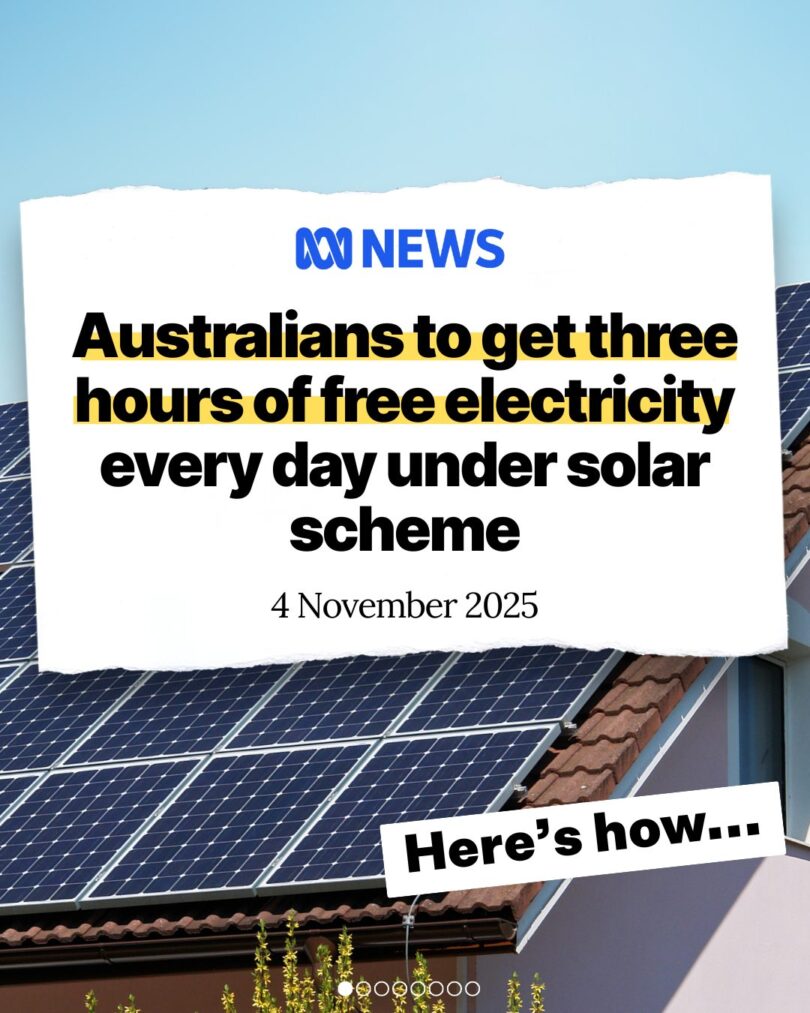
CANBERRA, Australia – The Albanese Government has announced a new initiative, the “Solar Sharer Scheme,” designed to extend the benefits of Australia’s massive rooftop solar capacity to more households, including those without their own panels. The scheme will require energy companies to offer eligible customers up to three hours of free renewable energy daily.
The Federal Minister for Climate Change and Energy Minister Chris Bowen revealed the initiative, framing it as a crucial step in ensuring the renewable energy transition delivers tangible benefits and cost relief directly to consumers.
Promotional image of the scheme on the FB page of the Minister Chris Bowen
How the Scheme Works
The “Solar Sharer Scheme” leverages the nation’s overwhelming success in domestic solar uptake. Australia currently boasts over 4.2 million homes with rooftop solar panels, a capacity so large it frequently drives wholesale electricity prices down—and sometimes even negative—during the middle of the day.
Minister Chris Bowen explained the logic behind the new regulation:”Energy companies aren’t paying for that energy [the solar generation] and I don’t think consumers should therefore pay their energy companies.”
- Mandatory Offer: The scheme will legally require energy retailers to make the “Solar Sharer” offer available to eligible customers.
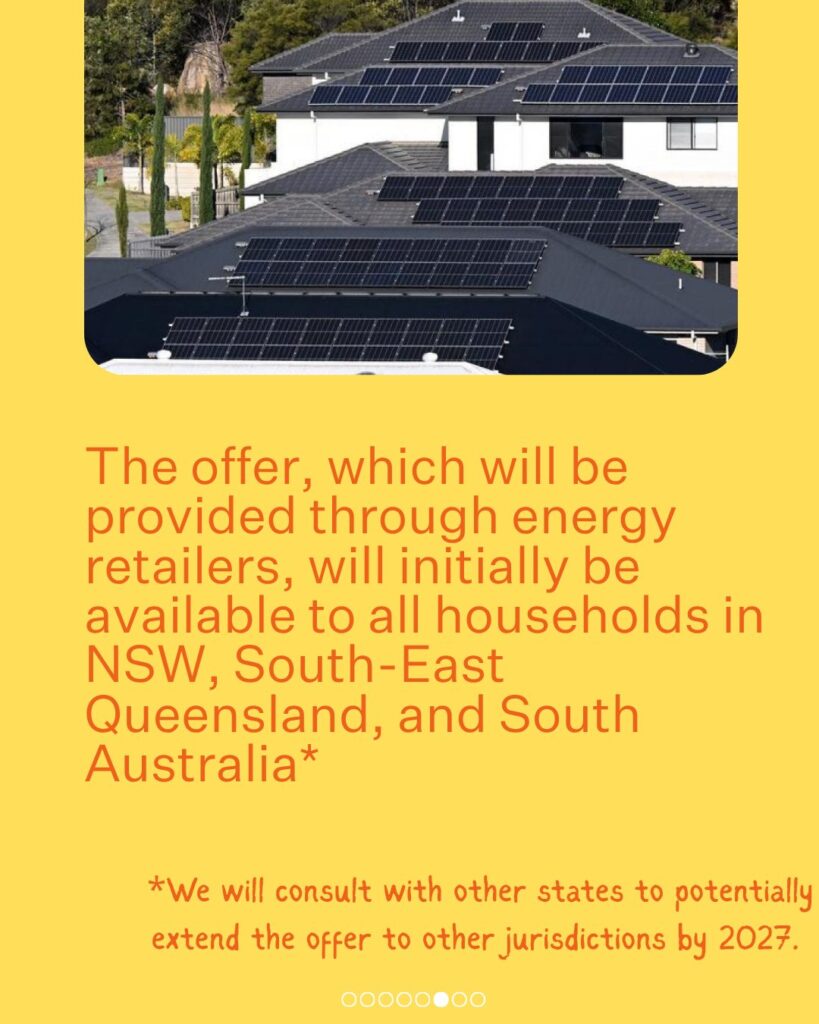
- Eligibility: It is initially targeted at account holders who are on the Default Market Offer (DMO) in New South Wales, South Australia, and parts of Queensland.
- Regulatory Oversight: To build consumer confidence, the regulator will be required to approve every plan offered by the energy companies, ensuring customers are not “ripped off somewhere else in a deal that looks good that maybe isn’t so good.”
- Not Compulsory: While the offer must be made, it is not compulsory for customers to take it up.
The government is also allowing households that already have solar panels or batteries to participate, further maximising the value of distributed energy resources.
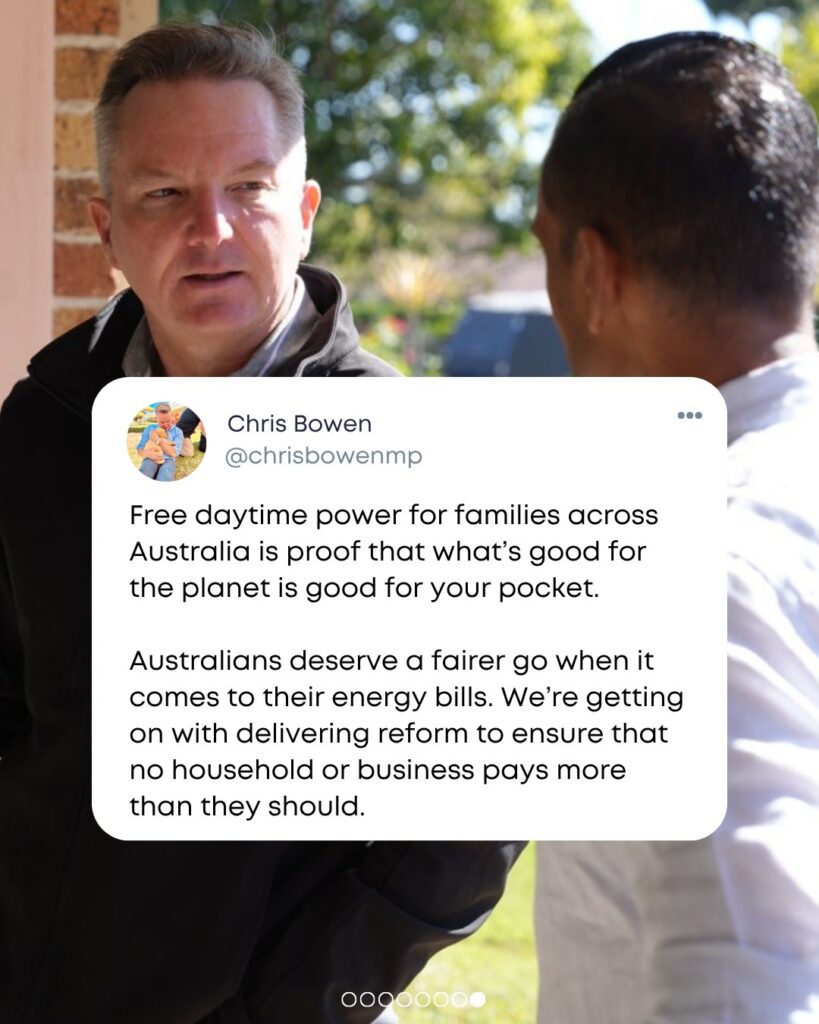
Promotional image of the scheme on the FB page of the Minister Chris Bowen
Timeline and National Expansion
The scheme is set to be rolled out in the initial states starting July 1, 2026.
The Climate Change and Energy Minister Chris Bowen has expressed his ambition to see the scheme extended nationwide but noted that discussions with state governments outside the DMO framework are required.
“I’ll have discussions with the other states about rolling it out. They’re pretty sympathetic and supportive by and large, but there are some issues that we need to work through,” he said, hopeful that the “good offer” could be made available to more Australians soon.
Economic and Political Context
The announcement comes amidst a busy parliamentary period for the government, which is pursuing an ambitious renewable energy transition and facing pushback from the Opposition Coalition, which is debating walking away from its net zero commitment.
The scheme acts as both a cost-of-living measure and a way to socialise the economic benefits of the country’s world-leading renewable energy integration, reinforcing the government’s message that the transition is both an environmental imperative and excellent economics.